Showing posts with label Creation Records. Show all posts

Wednesday, February 8, 2012

Noel Gallagher's High Flying Birds: live in Melbourne, 2012 (review)

Venue: The Palais
Date: 31/01

Re-emerging only last year with a new band - The High Flying Birds - and whole new set of songs, the elder of OasisGallagher brothers, Noel set himself the unenviable task of starting from scratch. Although most of the songs on the High Flying Birds’ album were written in 2008 while Noel was still in Oasis, his writing more than hinted at a severing of old ties. 2011 single, the no-hold’s barred The Death Of You And Me, heralded Noel’s new life as a solo artist, and showed a promising, more purposeful direction than most latter day Oasis. Of the new tracks, which are spread equally throughout ‘the classics’ tonight at his Melbourne Big Day Out sideshow, none can be written off as mere ‘Oasis-lite’ rehashing. Still, expectations for Noel’s solo gig were pretty moderate for me I confess.

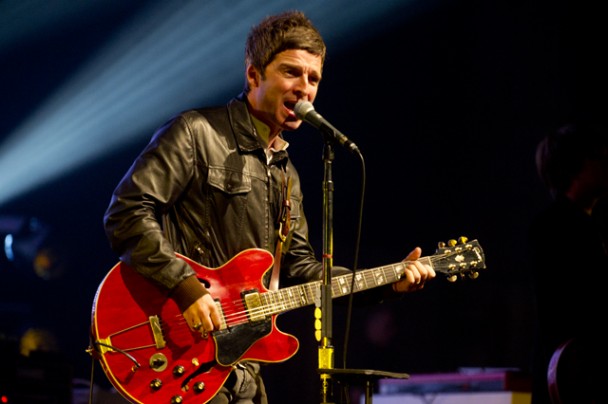
Would the shadow of Oasis hang heavily over proceedings, as a half-full arena of disgruntled fans just mark time until Wonderwall? Well as it turns out, not even close. Gallagher is the very picture of the fabled phoenix from the ashes of his old band. Standing before us drenched in red and blue lights, age defiant was a possibly even more cocky Noel than the one who once celebrated a life of ‘cigarette’s and alcohol’. Tonight, he confidently reminds all who had forgotten how brilliant a performer he actually is, and how many bloody good songs he’s written. In place of the geezer trying to relive the glory days I half expected, was a master showman proving you can’t beat experience - fuck knows, nothing has beaten Noel Gallagher.

Following a standing ovation on his arrival, Gallagher kicks off with (It’s Good) To Be Free, and the choice is a master stroke. This old b-side, which has surely taken on new meaning for Gallagher in recent times, gains an immediate reaction from the packed in crowd who seem determined to match Gallagher and his band in volume. Its all the warm up he and his audience need too, as the show’s momentum and crowd response continue to elevate – especially once Gallagher wonders aloud ‘why is everyone sitting down?’ As we all gladly surrender our comfort, the band delivers a run of six tracks from High Flying Birds’ debut, each a triumph of thrilling, edge-of-your-seat rock. If High Flying Birds remind me of Oasis at all, then it’s the best elements of serendipitous sophomore (What’s The Story) Morning Glory and bust-up album, Dig Out Your Soul, which tellingly was recorded at the same time High Flying Birds was taking shape. If I Had A Gun ranks closest to ‘the Oasis sound’, offering a peak into what might have been, and also a ‘last look back’ moment before the brand new as-yet-unreleased, Freaky Teeth.

Midway through, and the electric guitar makes way for an acoustic and Noel’s band depart, leaving only him and keyboardist, Mike Rowe. Tuning up, Noel reads the crowd for a moment and gets a cheer. “Who was Saint Kilda?” He yells, while strumming something familiar. “It’s not in the Bible – I’ve checked.” Out of the laughter, a fan offers; “She was a prostitute!” Noel scoffs in return, “You’re a fucking prostitute, mate.” The laughter soon turns to cheers as Whatever (I’m Free) is suddenly upon us, along with the customary sing-a-long. The already up mood inside the Palais plateaus and Noel draws the moment out with a stunning, stripped back rendition of Supersonic - Oasis’s debut single which although has been ‘re-imagined’ still holds its power as one of the most fun songs Gallagher ever wrote.

We then welcome the rest of the band back on stage for the 'most fun' song High Flying Birds have in their cannon – (I Wanna Live In A Dream In My) Record Machine. Noel’s all about momentum tonight, he’s brought his audience up and is determined to keep us there. The second set seems to fly by, as each carefully chosen song forms a kind of ‘greatest hits’ package. New gems such as Soldier Boys and Jesus Freaks meld into unsung classics, Half A World Away and Talk Tonight. The many ex-pat Brits in the audience, hoarse from belting out the words along with Noel, near topple over each other in a bid to shower praise on the man as the triple banger encore comes around. Little By Little, The Importance of Being Idle and closer, Don’t Look Back In Anger made their homes long ago in the hearts of Brit-pop fans at closing time sing-a-longs and blurry-eyed cab rides home. Tonight, Gallagher’s fans share with their idol the fondness each and every one of them hold for these songs. Noel knows to not even bother singing on Don’t Look Back In Anger – the entire audience unite in a roof-raising effort all their own – and Gallagher’s uncharacteristic grin speaks volumes in its own right, as he enjoys a momentous end to a show by one of the classiest come-back's in recent times. Nice one, 'our kid'.

lEIGh5


THE PALAIS SET-LIST, 31/01/2012

(It's Good) To Be Free
Mucky Fingers
Everybody's On The Run
Dream On
If I Had A Gun
The Good Rebel
The Death Of You And Me
Freaky Teeth
Whatever (I'm Free)

Supersonic
(I Wanna Live In A Dream In My) Record Machine
What A Life!
Talk Tonight
Soldier Boys and Jesus Freaks
Broken Arrow
Half The World Away
The Wrong Beach
encore:
Little By Little
The Importance of Being Idle
Don't Look Back In Anger

Tuesday, March 15, 2011

Mark Gardener (Ride) interview: 2011 (Part 1)

ON THE ROAD TO NOWHERE

It's near-impossible to think of a more fitting image to sum up Oxford's Ride than the huge arching wave, captured moments before breaking that adorns their debut album, 1990's Nowhere. The band who would later be dubbed the premier shoegaze act, offered up a whole new brand of guitar-based rock with the emphasis on layering, effects and slow-building walls of noise, which they captured in a rare, startling potency. Now, 21 years after Nowhere, ahead of its anniversary reissue, singer/guitarist Mark Gardener is on the phone from his home studio in Oxford, admitting that the wake of that album was more powerful than he or his band could have imagined… or even hope to have survived.

Unlike many of his Creation records co-signings, Mark Gardener and band have resisted the reunion tour trap, despite their once rocky friendships now fully repaired. Ride had ended badly, but as Mark unfolds his bands' story, he does so affably and remembers it as being a good time, if not always a healthy one. To help jog his memory of those days, I begin by asking Mark to take me back to his last tour with Ride in Australia and whatever lasting impressions he has.

"I did a few solo shows in Australia probably 7 or 8 years ago, but the last time I was there with Ride was too long ago to contemplate!" He says cheerily. In fact it was 1992 when the Oxford lads last toured here. Mark, upon being reminded, snaps his fingers and begins to ease into story-teller mode - his most natural state I discover... "That’s right!" he exclaims, "I mean the years just go by  when you get to my age, but I remember we supported Ratcat and, I haven't spoken to him for a while, but I got along really well with Simon (Day) and we actually stayed in touch for years." Mark adds, "It was a great tour for us to be a part of because Ratcat were so huge that year and we got to play to much bigger crowds than maybe we would have on our own. Australia was our last stop on that tour also and I remember feeling this sense of just winding down a letting some kind of normality creep back in, and knowing we could go home soon." After walking out of Ride in '96, Mark's sense of 'normality' needed some readjustment as he explains later. But despite messy endings, for the 21st anniversary edition of Nowhere, the original four members all sat in on the remastering sessions, "just like old mates". Mark describes his finely tuned ear's impression of the 21 year-old debut and the feeling it has left him with.


"It's strange because at the time we were so involved with it, but now because I'm doing a lot of production myself I listen to it with a kind of producer’s ear I guess and to me it sounds very unconventional.” He decides. "There's a naivety about it but I think it kind of works. Recording it was haphazard at the time, and it felt like we were doing a tightrope walk and we could fall off at any minute I guess." He continues, "Listening now though it takes me back to being in the studio and us all just being nocturnal for the whole process. Alan McGee (Creation label boss) was coming down to the studio a lot too, I mean it was early days for Creation so Alan was very keen on encouraging us and just making himself available for whatever we needed. I think it helped a lot having that kind of support and it's something I always try and do with bands I work with now." McGee, it is proposed, was barely hanging on financially when Nowhere was being made. The recording of My Bloody Valentine’s Loveless record was costing the label enormously, and so is it reasonable to think he was hanging high hopes on his latest signing?

"Yeah at the time, our first two EPs had gone into the mainstream  charts - which was a first for Creation - so Alan was excited but also just into letting us get on with doing our thing. He was a keen observer of our progress though." In those early stages of making the album, I wonder if Mark had the sense of a great plan coming together. "As far as having any kind of plan for Nowhere, we had the material written and just set up as though we were playing live and kept belting out songs all through the night in this old converted church called Blackwing studios." He adds eerily, "I remember just weird, spooky stuff kept happening with the recording equipment and we were convinced there were spirits in the room!" Mark exclaims. Naturally, Gardener is understated when describing Nowhere, but the confidence to pull off such a non-derivative record at the age the band were still seems remarkable, I propose. Mark responds.

"Interestingly when I hear Nowhere back, I totally get that we were all clicking and being very instinctual with the music." He offers, "We were at a place in our minds collectively that was all about fulfilling our childhood dreams of making an album. We knew that if it failed then we would probably just go off to university and get real jobs, so it was also a time of no pressure, let's-just-see-how-we-go, which was a great feeling." Mark adds, "But having said that, I had made a decision, and I think Andy (Bell) did too, that being in a band was all I really wanted to do." Gardener delights in remembering Ride's beginnings without a hint of remorse for what would prove to be a short-lived halcyon time.  "It was the best time of my life (in Ride) and I wouldn't wish to change a thing about it. I mean we had our first record contract when I was 18 and its only really now that I can see it all for what it was – four mates who were incredibly lucky to be connecting with people through music we wholly believed in." Inspiration for the incredible sound on Nowhere, Mark states, was best summed up by Ride co-lead guitarist, Andy Bell.


"Andy once famously said his childhood memory of hearing The Beatles playing while his mum was doing the hoovering had a huge impact on him!" He laughs, "That whole melody and droning noise clash kind of sums up what Ride were about in the early days, but we were all into My Bloody Valentine as well and how they were doing really interesting things with guitars after the '80s big solo thing was kind of dying a death." As a vocalist, Mark added perfectly matched monotone voice-scapes, seemingly more for the purpose of offsetting the wailing guitar, than offering insightful lyrics. He decides, "With my singing at the time, I really didn't know what I was doing so I just sort of mumbled a bit," Mark laughs, "I think I’m a more confident singer now, but listening back to that album I think my voice actually kind of works on those songs." His impressionist singing on the album's most colossal moments, Vapour Trail, Dreams Burn Down and Paralysed gave Ride their only real subtlety, while the main focal point was always on Andy Bell's and Mark's guitar washes filling every possible space in the music, while rhythm section Steve Quarelt and Loz Colbert added heaving bulk for contrast. With the one exception of My Bloody Valentine, no other band had at that time succeeded so fully in stealing soaring guitar music off dreary dinosaurs (fuck you, Santana) and harnessing it with such youthful flair. Sadly though, Ride's rare chemistry was also a timebomb and Mark knew it, or so he claims.

lEIGh5

(Interview continues on next post....)


Monday, March 14, 2011

Mark Gardener (Ride) interview: 2011 (Part 2)


Continued from previous post...

"We left at the right time I think. A lot of great love affairs don’t go on for 20, 30 years just as Ride's season of intense creativity wasn't meant to. I think a lot of bands kid themselves quite well that they can maintain the intensity of their first rush, but we opted not to fool ourselves or our audience by doing that." Gardener adds that his life was becoming all consumed by Ride, "The strange thing was when our bubble burst, I suddenly realised I was about seven years behind my friends who weren't in bands in terms of building an actual life. That's probably why I went a bit funny and ended up living in a walnut orchard in France for a couple of years." As Mark continues elaborating on his life after Nowhere, living with nuts soon stops sounding like such a bizarre life choice.

"When Ride finished, life just seemed to be such an anti-climax really." He reveals, "I filled that gap by turning my house in Oxford into a kind of non-stop night club, but then after a year of that you just go 'shit, this is really not good' and I had to get away from there altogether. So that's what I did." I wonder with time being touted as a great healer and considering some of Creation’s most popular acts are touring again, is the temptation to re-join the party there at all? "How would you feel about maybe going back to your past and reliving a part of it that was so intense and ridiculous…?," He says searching for the words, "Playing together again would be like going back to an ex partner and shagging them long after you’ve moved on…." He pauses again, "I mean we always get gig offers and so it's been brought up a lot and we've all discussed it and agree that no time thus far has felt right." Despite that fact, Gardener has maintained a love for Ride playing acoustic versions of their songs on tour and frequently giving interviews discussing the band at length. But more recently he been integral in a new project celebrating Creation Record's boom-time.

"In the last week, Alan (McGee) and I have been doing press conferences around Europe for a new film about Creation to be released later this year." Mark, who has also written the score for the film, reveals he and Alan have remained close ever since Gardener's initial signing to the label. "Alan, as well as being my manager, used to be my drug brother but our friendship has thankfully lasted longer than Ride or our indulgences." Mark laughs, "I've always seen him as like an older brother really. Alan didn’t bail out when the business or drug side to our friendship ended and that makes him a true friend in my eyes." The film, titled Upside Down, aims to put Creation Records - "The last great independent label"'s - wild story into some kind of context. Mark explains.

"This film is the last word on the whole Creation family. It covers absolutely everything and everyone of the acts Alan signed, but at the same time it’s not a pat on the back to him or the bands involved." Mark adds, "There was no room for big egos when you're in a meeting with the label boss smoking a joint and sitting on a crate." Ride, like many of the acts Alan signed, were there because McGee liked them as people. Mark  continues, "That's probably why in the end he had to walk away. He invested so much of himself into his acts because he believed in us and wanted us all to be great mates as well. In the finish I think he was kind of heartbroken from some of those friendships failing for various reasons and he had a break-down." Gardener has hinted in the past that he himself suffered a near-breakdown in 1996 resulting in him walking out on the band one week before their infamous final album Tarantula was released. "I was starting to get bored with it all, and I'm a restless sod anyway.” He decides. But as far as Ride's drug-use goes, Mark refuses to admit it destroyed the band and that he was "never out of control and just attempting to pass the acid test".

"That can help you decide if what music you’ve made is… you know great or not." He laughs, "Plus when you do drugs with people you tend to cut through the crap a lot. I mean I wouldn't say we were fucked up on it, but for a little period in our lives that was going on and it added a lot of fuel to our fire." He then adds, "The only thing with adding fuel like that is you can get burned quite easily. We lasted just long enough to realise that I think, but you know we when were writing and actively recording our albums we were working fucking hard man.” He confirms, "Working hard to do our best possible music and not just sound like a bunch of wasted guys bashing out some tunes on the weekend."

As the film, Upside Down testifies, virtually no one involved with the label sacrificed the quality of their music for a cheap thrill and a few hits. While the music of the Madchester scene sometimes came second to the band's excesses, Creation celebrated the making of music above all else. Mark, being the musical director of Upside Down, had the mammoth task of making sure all of Creation's bands were represented in the all-important score. "I also did a lot of the incidental music for Upside Down." He adds, "I mean there are obviously two or three tracks by each of the bands featured, but all the music playing during the narratives, I made. It just goes from house music whenever somebody's talking about that scene to this weird discordant noise used when Bobby Gillespie's talking about having a drug psychosis." He laughs, "So it was a kind of fun soundtrack to work on."

As for who had the final word on what music ended up in the film ,that was down to the artists themselves. "I think that apart from My Bloody Valentine, everyone was quite happy to be on it." Mark says, "When they realised the legacy was in good hands and the film wasn't going to be some ridiculous dramatisation or whatever, I think everyone was okay with clearing their music for use in the film." My Bloody Valentine's departure from Creation has been well documented. The general gist of it is, they were "unceremoniously booted off" by Alan McGee for putting the label in debt, coupled with the fact that McGee and Kevin Shields couldn't stand one-another personally. "It was all over between those two parties very early on." Mark confirms. My Bloody Valentine however remain one of the labels greatest success stories, perhaps second only to Oasis - another band who's extravagant demands cost McGee's struggling label dearly. Despite Oasis's familiar bravado however, Mark reveals a surprising reaction by Noel Gallagher to the film during it's pre-production. "Noel said to me, 'It's just gonna be another film about bloody Oasis, mate!'" He laughs, "I think even he was fed up with hearing about Oasis at that stage and about how important they were." He continues, "Oasis in fact come in quite late in the story, you know. They were actually the end of the Creation story as it happened." Mark recalls, "When Oasis played Knebworth to a quarter of a million people, that's when Alan had his moment and said, 'this isn't us anymore. It's not Creation as I saw it.' It was like the moment when the Roman Empire got to its zenith and immediately started to crumble." Mark adds dramatically.

"Strangely enough, it was the early period of Creation when there was no money that felt like the strongest time within the label." Mark says, "We were refusing excesses, refusing to repeat ourselves, refusing to become over-blown or self-important and the same can be said for Primal Scream, Swervedriver, The House Of Love and many of the other bands, but Oasis I think started to repeat themselves after their first two or three albums until they ended up just referencing everything they'd done already." Mark suggests, "Ride were kind of criticised for making album's that didn't sound like our first one, but we simply weren't interested in repeating what we had already done, you know." Mark touches on a good point, but I can't help thinking that making a follow up to such a striking debut album was never going to be a simple task for a young band still deeply interested in experimenting. Nowhere was a sizable bump in the road, and a revelation to my ears at least. In hindsight it was for me perhaps what The Byrds' Eight Miles High might have sounded like to a youth in the 1960s. Digressions aside, Mark shifts his focus from the discussion and briefly moans about how cold he is as I'm suddenly reminded that England is currently going through its worse winter in decades.

"I can't complain too much though, at least its warm in the studio, where I spend most of my time these days." He smiles. His comment sparks a further discussion of one factor in making music I'd rarely contemplated. "I would love to be out in the Australian sunshine all the time but I wouldn't get any work done if I was." He laughs, "There's something about the dark skies and that slight feeling of melancholy that I find creatively stimulating. I've heard people say that because it rains so much in Manchester there's so much music being made. You almost can't deny the connection between that kind of environment and the kind of bands that came from that scene. A prime example of a band that appears to be affected by the climate here in Oxford is Radiohead. If they had've come from LA or somewhere like that, I can't imagine they'd be making album's like Kid A." He says, cracking up.

"I think LA would be the most boring place on earth to live, even though the Beach Boys came out of LA who were genius, but whatever, I see it as being incredibly one-dimensional." He ads, "In Melbourne I know you have sometimes quite weird weather patterns which results in quite interesting music, but LA is pretty much the same season all year round and therefore seems to be a very creatively dead place. I think because of how people need varying dimensions in their environment to keep kind of mentally stimulated, the weather must play a role in that seeing as we are circumspect to it." I suggest to Mark that a global meteorological/musical hot spots map could easily prove or disprove his theory, "All I know is that when we were making Nowhere, it was during many long cold nights and as I said to you before, that is my overriding memory of that time, and the feeling I get from hearing those songs back now is largely connected to the climate." Just as our conversation turns to Kate Bush's 1985 single, Cloudbusting and the songs' proposition that science could possibly harbor the secret of the weather control, and further more what that could mean for music, Mark's manager calls to remind him he has a cue of callers waiting. "I think this means we have to stop talking!" Indeed it does feel like a cliff hanger ending to our talk, but Mark is a man in demand, as you would expect of the creator of Nowhere - one of music's great indefinable pleasures.

lEIGh5


Meeting Mark Gardener: An unforgettable moment!


Tuesday, February 15, 2011

Adam Franklin (Swervedriver) interview: 2011

BACK BEHIND THE WHEEL


Oxford's Swervedriver are best remembered for thrilling and enchanting fans into the heavier end of the shoegaze/fuzz-guitar scene spiraling out from Creation Records stable around the birth of the '90s. But from their debut album Raise, up til their final effort 99th Dream, the band experienced the greatest extremes from critical adoration to being left high and dry following the first true wave of mass-label disintegration. Swervedriver's story could've just been another one of those was-never-meant-to-be sidenotes, but in their absence, a notable crop of late arrivals were all but bursting to name-drop them in interviews to grab a little extra cred. So for Swervedriver's actual story, it's over to singer/guitarist Adam Franklin; A generous interviewee, who ahead of his band's long-awaited reunion tour, reminds me that Australia was in fact intricately connected to Swervedriver's initial demise.

"It's true, the last time Swervedriver played together (before reforming) was in Australia was 1998." Adam recalls. It was on an extended break between gigs that Adam and the rest of the and decided to finish the Australian shows and call it a day rather than simply ''fade out of existence''. "Well, there was also a lot of shit going on in the band leading up to that, so the time just felt right to say goodbye." Adam continues, "Doing this interview now, actually reminds me of the first time we played there," he says, brightening up, "I remember we'd landed in Perth and were all completely jet-lagged, so when we got to the venue we just passed out back-stage. Anyway the tour manager was at us to wake up because we were literally due on stage in, like two minutes." He says, "Next thing we knew were walking on stage rubbing the sleep out of our eyes and ''bang'' the crowd gave this huge roar and we were just lifted.... it's still the best kind of alarm call I can think of." But not all of Adam's tour experiences are told with such relish I soon discover. After Swervedriver  decided to bow out in '98, solo touring kept Franklin away from home (and his old band) for much of the next few years - but not exactly for the love of it.  
 
"My take on touring is now much the same as it was then; there's a lot of drudgery about it." He moans, I mean we played loads over in the States in '90s and as great as that all was there were just endless road trips… I know I sound like I'm complaining, and yeah I am, but anybody who tells you touring isn't drudgery is lying." Unlike many of the floppy-fringed Creation acts who enjoyed great success in Britain, Swervedriver found a receptive audience in the US. Put it down to their songs apparent themes of gas-guzzling cars or masculine perspectives on love if you like, but whatever they were selling, America identified with. It's reported that Creation founder, Alan McGee signed Swervedriver after hooning around LA listening to their demo on his car stereo - perhaps the ideal environment, as he saw it, for the then fledgling band. McGee typically got it right with Swervedriver, but despite their initial US interest, timing it soon proved was against the band. Dropped by Geffen before the ink had dried on their contract due to management changes, Swervedriver's taste of victory over their Oxford peers was all too brief. But the second blow to the band's plan came not from overseas, but Creation itself when the label was in its death throes. 
 
"The lack of label support did probably have a huge impact on us looking back." Adam comments, "I think when we first got dropped by Creation, we were still on a roll as I saw it. We had just put out our third album (Ejector Seat Reservation), but Creation had just bought in all these new music biz guys in an attempt to capitalise on Oasis' success who weren't really in the spirit of Creation. I remember one of these executive blokes asking me at the time; 'oh, what are you gonna do now - is Swervedriver breaking up?' and I must've just glared at him and I said, 'no we're not breaking up - the band can survive without fucking Creation!'" Adam exclaims, annoyed in his memory of the exchange. "I think in a way that made me feel stronger for a period, but then Geffen signed us (in America) and they wanted to put out our third album, but we were already recording our fourth." He continues, "The person who'd signed us got that sack and we were dropped right in the middle of making our album, so it didn't look good for us. To be fair though, there were also bombs going off with the four of us at the time, so the end seemed inevitable." Following several reunion shows in 2008, Swervedriver have rebuilt their friendships and, in Adam's words, still play like they've 'never lost that feeling'.
 
"Playing together again now hasn't hardly changed since then. I mean the amount of time Swervedriver was asleep for has been a bit longer, but like that concert in Perth, we just plugged in and played like no time had passed at all." In fact its 20 years since the band first peaked on albums like Raise and Mezcal Head - albums that according to Adam, he can't listen to anymore. "The way people know the songs, the versions we ended up recording in the studio all those years ago obviously sound quite different to how we play them live now and because of this everyone in the band can't listen to the old recordings because of how flawed they seem to us now, but that's the beauty of taking the songs out on the road." Adam smiles, "That's where the songs really exist for me, in their live form…. not on a bunch of old tapes." The band's four albums in 2008 were given the full remastered/reissued treatment, but Adam's detachment from the recorded versions of his songs kept him from overseeing the project.

"No, the last time I went through the recordings was in 2005 for a compilation album Sanctuary records put out." He confirms, "They contacted me and said they wanted us involved in putting it together and it was really good to be there for the remastering and we got to choose the order of the tracks." Adam smiles, "That was the first time we had all listened to those songs in a studio since they were originally recorded." He adds, speaking for his band mates. "I think because so much time had passed, we can listen to the songs now with enough detachment that it's like hearing them being played by another band. We could have ironed out the wrinkles here and there and cut out some excess fat, but at the time when you're right in the middle of recording music, you're taking just a snap-shot of one of many ways a song could be played. I know now that it takes a long time to hear our music the way other people do." In at least one case however, Adam claims embarrassingly, he was caught out 'hearing' his own song as someone who'd never even heard of Swervedriver.

"I remember being in a bar in New York with friends a couple of years ago and all of a sudden someone looked at me and was like, 'Oh hey…!', This music had come on and my friend was gesticulating towards the jukebox, and I asked him what it was… he said 'It's you, you fool.'" Adam laughs, "It was the most bizarre thing. Although, in my defence it was some recording from 1993 which I hadn't heard in ages, so it sounded totally foreign to me." The band's return to the stage in many ways has been one of the least surprising reunions from that epoch of British groups. Poor management cost them dearly, and those who invested in the band, felt Swervedriver had ended long before they'd run out of steam. Adam responds.
 
"Well probably, but I think we were kind of bored with it somehow. It didn't seem like that much fun, you know. I agree that we hadn't run out of steam though, and I continued working on music immediately after Swervedriver, but there was a general feeling that the band had run its course for sure. That's not to say, I'm not proud of what we achieved and it seems so many bands have sprung up since who've cited Swervedriver as an influence, but then that's a relatively new thing. Nobody was saying that in '98 when we split up; that's only hstarted happening in the last few years."

lEIGh5


Wednesday, January 19, 2011

Mani (Primal Scream) interview: 2011


COCKED AND RE-LOADED

Whether it's a public image he's created or just a day in the life, Gary 'Mani' Mounfield – Primal Scream's riotous bass player – still exhibits a burning-the-candle-at-both-ends young man's energy and wit. But the man at the centre of two of the UK's most influential bands of the last 20-odd years has earned the right to play whatever hand he damn well wants. It was after all Mani's smacked-out bass gave The Stone Roses their signature sound and has since 1996, rumbled through all of Primal Scream's records. But it was while he and his Stone Roses buddies were enjoying what looked like start of a long, exciting career that a little Scottish band, who so far had little to crow about besides two lack lustre '60s influenced rock albums, dropped the biggest acid-rock record of the times. The fast-changing underground club music scene in Britain finally got the benchmark album in Screamadelica it had needed to set the bar high. Primal Scream had arrived and The Stone Roses suddenly seemed to get very wobbly indeed.

20 years on and Mani - who could in another reality have been discussing a Stone Roses 'Don't Look Back' tour - is instead shooting the shit on his adopted band's re-visit to a defining moment in music. While singer Bobby Gillespie has continued to guide his band away from the warped psyche-rock of Screamadelica – Mani, who missed the wild, hedonistic 'Scream of the early '90s, defies his leader's wish to 'chill-out' with age. "I've been bugging the band to get stuck into the back catalogue for years and Bob (Gillespie) was dead-set against it." He begins proudly. In his time as a member of Primal Scream, Mounfield hasn't felt first hand the level of hype that was created by Screamadelica. He's unabashedly in agreement with the media and the public that the album was their peak and in turn had the objectivity to convince the rest of the band to bring it back to the stage.

"Well I think I'm more enthusiastic about it than Bobby or any of the other guys who played on the original album." He says, grinning, "I'm playing like a fucking juvenile you know, and seeing the sheer beauty in it. I mean I've been part of Primal Scream for the last 13 fucking year's man, playing songs off this album but the difference now is we've put a lot of effort into keeping to its original sound by stripping everything back and building it back up again for the shows. We've kept a lot of (producer) Andrew Weatherall's original stuff – and it's been a grind – but I tell you what, it was such a pay-off to see 11,000  people the other week going mad for it at the Olympia in London." He continues, "To me, the songs on that album deserved to be brought to people who maybe weren't old enough to hear them the first time around or weren't even born yet. Playing to the festival crowds, like we have been recently, you're not always playing to the converted you know like in the club shows, so I hope we can turn those people onto something they maybe wouldn't have ordinarily liked or heard before. That's the power of music, man."

Gillespie & Mani
The frank-talking bassist was enjoying Stone Roses first year of success when Screamadelica hit like the freak storm nobody could've predicted considering Primal Scream's patchy past and slow-to-capitalise follow-up. Of the two bands to emerge triumphant years later, most people's hard-earned would surely have backed the 'Roses to carry on. History had other plans for Mani though, and while he saw his old band through to their end in 1996, he'd made a new home in Primal Scream before the amps had even been unplugged for the last time at camp Stone Rose. "I think I've learned a lot more from playing in this band than I would have if the 'Roses had kept going." Mani claims, "I broadened me horizons when I joined this band, no question. I was always a big fan of Primal Scream because they were so similar to us (Stone Roses), if not musically, then personally. We had a lot of the same values and similar backgrounds and so we were all firm friends early on." He remembers, "We used to always be slobbering over each other in clubs, ecstasy'd out of our fuckin' minds out in Glasgow or Manchester and so there was no doubt when the 'Roses split up where I was headed."

Mani (middle back) with Stone Roses
Just as the hazy groove-rock of the Stone Roses wiped out the competition in 1989, the following year-and-a-half belonged to Screamadelica. A young Mani was paying close attention and, he claims he saw a connection between what his old band had done previously to what Primal achieved in 1991. "I kind of looked at it as the natural progression from us having, say break-beats on Fools Gold, and also the progression of a bunch of like-minded guys wanting to do something new." He confirms, "You have to remember, guitar bands weren't being played in the clubs and acid house was taking over and there's nothing wrong with a bit of cross-pollination in music if you can make it work. Primal Scream were ballsy bastards to try it, and only a very few bands have managed to really pull off a thing like that." One of keys to Screamadelica's sound was the work of not one, but five producers. Apart from Andrew Weatherall's overall weaving of samples, loops and thick beats, it was DJ Dr Alex Patterson (a.k.a The Orb)'s co-production on Screamadelica that had dance fiends grabbing for the twelve-inches'.

"It was all just a time of pure fucking genius on many levels, you know." Mani says, "The world's greatest DJs came from that scene and Alex (The Orb) did, in my mind, the fucking best mixes of those songs on Screamadelica." The Orb remixes of Higher Than The Sun and Slip Inside This House have arguably become the essential versions over the album mixes. Those all-class singles extended the album's shelf life for two years as Loaded, Movin' On Up and Come Together continued their assault on the UK top 40 between February 1990 and February '92. Each one demonstrated a different side to the band while remaining identifiable as Primal Scream. The Glasgow lads had somehow tapped into the mystic cosmic funk and nothing they turned their hand to seemed to fail. How else could they have passed as a soul, psychedelic pop, acid house and blues rock band all in one release?


"Too many bands out there now are scared to deviate from whatever their last album sounded like and Primal Scream was never interested in doing that, you know." Mani offers, "I mean if you want to do that you might as well get a job in a fucking hat shop. Music should be a fucking tight-rope walk done by outsiders, ne'er do-wells, junkies and vagabonds mate." Mani encapsulates the 'Scream in this one sentence but his bravado, he reckons, isn't reinforced by any universal love for the band. "Back home we kind of get ignored in a lot of respects. I mean, I don't give a fuck what they say about us in the UK – I still think we're one of the best fucking bands still doin' it, but we don't get a lot of support." He adds, "But you know what, Primal Scream isn't our job, man it's what we do twenty-four-seven and we know how to kick it from arsehole to balls and I don't see any other rock n' roll bands playing with the kind of feeling we give it."
 
While Stone Roses' front man Ian Brown spent most of the '90s in and out of trouble/prison, Mani fought, mouthed-off and shocked for all he was worth, but somehow got away with it. That is at least until last year when supergroup Freebass, on the verge of releasing their debut album, ended suddenly with a very public serve of humiliation from Mani to Peter Hook – the group's founder and ex-New Order bassist. Freebass, which also included ex-Smiths bassist Andy Rourke, was in Mani's words, "Something to keep me match fit while the 'Scream were doin' nothing." He confesses, "I might have tainted a good friendship there, I'm such a gobshite sometimes, but we put a lot of effort into making that album and I should have been there to promote it instead of slagging Hooky off." Mani accused Hook (via Twitter) of getting fat off Ian Curtis's blood money for touring Joy Division with none of original members. "God bless him though, and look, I apologised to Peter and we're friends still, but in the end everybody bailed out of fucking Freebass." Mani laughs, "What can I say, I'm from Manchester mate and we're a bunch of gobby bastards so whatever I said at the time that was just me being me. That's what comes from spending time with the likes of Ian Brown and Liam Gallagher in the pub!"
 
Mani's salutes 'The Man'. 


The big gob, the much bigger than required bass amp and the cheeky stoned grin all suggest Mani has his priorities in order and Stone Roses reunions or failed supergroups aren't among them. Right now his sights are set on winning over his Australian fans again following 2009's sensory-annihilating shows. "I'm countin' the days off on my wall chart until I can get on that plane and come over to Melbourne mate." Mani barks, "Love the fuckin' place, love the people and can't wait to come and play for you all again." He adds in a festive tone, "Melbourne for me is like Australia's Manchester, man. It's got that pure love for music and I never have to worry about having a shit time when I'm there." When the Screamadelica Don't Look Back shows wrap up, it is already widely rumoured that the band are heading straight back into the studio to record album number 10. Mani's sure of only one thing though, the new stuff will be 'unlike anything they've done before.' "Well we could end up doing a fucking skiffle album, you just never know." He laughs, "That's something we haven't tried yet and we've been around for about 8,000 years now so maybe it's time." Mani says, cracking up. "We're gonna turn into travelling freak show freaks like the bearded lady or the fucking human dick, you know what I mean?" He splutters, "There's a kind of voyeuristic way in which people see Primal Scream, I think. They're just staring going 'what the fuck is that all about?' So we can't disappoint 'em can we?"

lEIGh5 

Monday, June 28, 2010

Ray McGinley (Teenage Fanclub) interview (2010)

After Surviving the collapse of taste-making label Creation, scathing self-criticism and the 1990s in general, Scotland's Teenage Fanclub have heralded their 20th year in the biz with a new album, Shadows. According to the UK media, the band fans dubbed 'The Fannies' 1991 album, Bandwagonesque, was the best release of the year (controversially beating Nirvana's Nevermind). Yet critical acclaim rarely seemed to influence, for good or bad, the group's subsequent releases, and they've often seemed perversely self-destructive. Perhaps it's this apathy to outside perception that has helped maintain Teenage Fanclub's creative core over hit song making approach to music. As singer/lead guitarist Ray McGinley points out during our interview, "It is the band that has to live with the songs they make, and love them too, even the ugly ones." That said, I wonder have Teenage Fanclub, 20 years on from debut album Catholic Education, hit their peak with Shadows.

"Whether we're at our peak or not it's probably up to other people to decide." Ray begins on the subject of his band's new album. "I think we're comfortable with where we're at and with the new record so our relationship with our collective, creative sides is fine. With that in mind, I'm sure there are people who will think what we're doing now is crap and only be interested in what we did 20 years ago, but that's fine as well." Teenage Fanclub began in Glasgow in the late 1980s, following a false start as the hilariously named noise-pop band, Boy Hairdressers. Since then they have held claim to the title of 'Creation Records longest post-collapse survivors' now that Oasis have split. McGinley has doubtfully even considered why his band have flourished for so long, as they have continually made music to please themselves above all. "Sometimes when you're in the middle of making an album you forget that other people are actually gonna hear it and so when you release something new and goes out into the world, it can be surprising to hear any kind of feedback from the public." He considers "I mean it's great when you hear people like what you do, because making the albums you lose all objectivity, but I don't think we've ever made music as a way of gaining popularity or anything."

During the bands early years, the emphasis was often on capturing the moment when recording, thus various cacophonous noise-pieces made their way onto Teenage Fanclub albums. The rate at which they recorded was unusual for any band - they put out three records in under two years including The King (1991) – which was deleted within 24 hours of release. However non-rush to follow up last release Man-Made (2005) was a little out of character. Ray explains, "We decided to take some time before we recorded anything to just do other stuff for a time, individually, and that ended up being a lot longer than we initially planned." He laughs, "We didn't take very long to record the actual album, it was all pretty much done back in 2008, but we did take our time mixing it and then had another break after it just to let it mature for a while before we dealt with all the stuff that goes along with releasing an album."

The lack of urgency in finishing and releasing Shadows could be the sign of a band under no pressure to follow up some massive hit album, but more likely it's a confident step forward for Teenage Fanclub who, as their own biggest critics, found a happy medium of music that satisfied them and a workload that wouldn't unduly pressure them. "It's just nice to live with the work for a time before everything starts happening, like all the promotion and rehearsal commitments, when suddenly it feels like a job." Ray adds, "But then going out and playing for people, who come up and talk to us after the show and who've got the new album with them, is a great feeling and then you tour for two years or something and that feeling just stays with you." He continues, "We're in rehearsal at the moment trying to get to grips with re-learning how to play some of the (new) songs again. When you're in the studio making the album, you only need to get it right once and so you're not that well versed in the songs as you would be playing them night after night." He describes, "We're hoping we can work out everything on the record so we can play it live in full like we did with our last one."
 
In performing complete albums on tour, Teenage Fanclub are able to share equally the vocal and written workload. McGinley, Norman Blake and Gerard Love have a long tradition of singing and writing equal percentages of the bands' albums, similar to their '60s counterparts the Beach Boys. A massive back catalogue of work now means an even greater share of live duties, but also the challenge to strike a balance between the ease of familiarity and fully exploring new material.  Ray continues, "I remember, going back to 1990 when we put out our first record Catholic Education, which had less individual members songs, and we'd played that album live, like hundreds of times, and we had a set which we kind of stuck to, then in 1991 we released Bandwagonesque and suddenly we had to play all these new songs and, even to this day it still takes a while until you really feel comfortable playing new the songs along side the old ones." He claims, "There's a real sort of strangeness to them until you've taken them out around the world and lived with them for a time." Ray laughs. "There's a new song called Dark Clouds, which Norman (Blake) sings and there's no guitar on it, so we're trying to work out now how we're going to play it live – as in can he play piano and sing at the same time, because it's quite a difficult song to play, and if he gets someone else to play it, will he feel a bit strange standing there just singing without his guitar!" He exclaims, "So you see what I mean about having to re-learn how to do this thing that we've been doing or over 20 years now whenever we have new songs."
 
There's so much humility in Ray's voice as he speaks about his music. The idea of new songs having to be 'grown into' and old ones being 'comfortable' is the language of a man fully into his craft. Yet the band have been known to give themselves a harsh serve when any apparent 'below par' music's been produced. Ray on the theme of self-criticism, "I think we always try and get our music to be as good as it can be, and that includes playing live as well as studio recordings, but we don't get too uptight about it. I mean you're never going to be able to recreate your record live, it's gonna be another kind of thing and we're always aware of that, but I think we're very self-critical when we play, for sure." Indeed Teenage Fanclub have taken self-depreciation to levels not often seen in music. In one case, at its initial promotional stage, their 1993 release Thirteen was widely dismissed in the UK press – only not by bitchy journalists – but by the band themselves. Not an exercise in reverse psychology, Ray points out, but more a slip of the tongue. "We were probably too publicly self-critical in the case of that album." He laughs, "I think the longer you work on something, and at the time that was our longest period making an album, the more anti-climactic the result can feel. We were genuinely unsatisfied with it and we knew we should have done it a lot better, but the fact that we were so vocal about it meant that the media, of course ran with it."
 
In a kind of unprecedented twist, Teenage Fanclub's follow up to Thirteen, 1995's Grand Prix, was championed as one of the best British album's released all year – and one that the band were this time keen to vocalise their happiness with. The sound on that album was a strong indicator of what was to come, as the lads from Glasgow moved away from their shoegaze roots and onto 3 part harmonies. The latest, Shadows, is close to full with hooks and harmonies channeled straight from 1960s California via Glasgow, and picking up a little XTC on the way. It's on my comparison with Swindon's now defunct oddball-poppers, XTC that Ray interjects; "I don't think I fashion myself on any particular singer, I just try and sing in tune as best I can." He says laughing, "But it's funny because I really like XTC, but I don't think I've ever sat down and actually listened to a whole album." Ray adds, "I do like their attitude though, they seem to be against all the bullshit side of music and just stay recluse and maybe release something every ten years or so." He smiles, "That's something I can definitely appreciate now."

lEIGh5


Sunday, September 13, 2009

Primal Scream live in Melbourne

Venue: The Billboard Club
Date: 08/02/09


“Melbourne’s mad for it, man – This place is like the Manchester of Australia!” High praise indeed from a true Manc legend, bassist Gary 'Mani' Mounfield, who in another life gave Stone Roses their signature sound and was courted by Oasis after the Roses demise in 1996. A man who’s boyhood dream was to become a chef, is now frying audiences minds as part of one of the most exciting/terrifying live bands to hit town in a long time. Pre-show, Mani is truly bursting to play tonight for a crowd who have probably been recovering for the last 9 years since Primal Scream last ‘did Melbourne’.

Tripping back to the 2000 Big Day Out, singer Bobby Gillespie kicked off the show with the single expression “Hey we’re gonna fuck yer!” before assaulting the crowd for 2 hours with the dense, heavy electronica of then current album XTRMNTR. Tonight, is the darker sequel. Although the bands’ most recent output has been less heavy and more song based, in the show, they arm each of the tracks with power-drills designed to penetrate the skull. The only light relief comes with the dreamy Higher Than The Sun from 1991’s breakthrough Screamadelica album. Before this single moment to breathe we are pummelled with incredible renditions of Kill All Hippies, Swastika Eyes and Miss Lucifer from their intense electro-metal phase. There’s no stopping between songs to tune up, or down either for this band, who crisply nail each song to the end of the previous one in an expertly managed unbroken flow.

The set is more or less a best of mix up, but with the criminal exception of favourites Loaded and Come Together. It’s hard to be picky over such things though when they deliver the meaty, funkified Jailbird, putting an instant end to the non-dancing that’s been prevalent tonight. It’s the stomp, and sing-it-back moment of the night: “I’m yours, your mine, gimme more of that jailbird pie!!” Who cares what it means, it just sounds fantastic. Meanwhile the room is awash in spectacular coloured lights, centre pieced with a single green laser light which act as fine embellishments to the mesmerising sound of the band reaching a critical pace.

The much loved Screamadelica album gets revisited with the stunning Shine Like Stars. This is a glimpse of the freelovin’ psychedelic Primal Scream who were put to bed many years ago in favour of the demon conjuring fuzz metal band of the 1999-2004 era. Martin Duffy's keyboard forces it’s way through the din with thick pulsing sonic squelches that rang in my ears long after the concert ended. Gillespie’s singing is suddenly louder and distorting as he tries to compete with the looping frenetic sample. The people at the front are all clapping in time, arms aloft. We’re now drenched in that spiralling laser light, as it broadens to fill the room, turning our view of the stage into a gorgeous neon tunnel with Primal Scream at the centre, enticing us into their crazy world. The goose bumps are set to remain as the rapid kick drum intro to Rocks lifts the whole room. Bobby’s in our ears, “Are you ready to get your rocks off Melbourne?!” We were, alright. Greatest party song, EVER. It feels like the end is coming. We sing/scream our appreciation through the chorus of Rocks and keep the love going as they leave the stage giving us our second moment to breathe. Then the encore, which nothing could have prepared us for. XTRMNTR album track, Accelerator screamed into life and fell upon us, heavy and sickening. The weight and power of this monstrous track will stay in our brains long after the show. The final kick came as Mani dropped his bass against his unnaturally huge amp, and shouts into Bobby’s mic, “Thanks Melbourne yoo fookin’ rock. Mad for it!” Leaving us with deafening feedback.

As the occasional light hits peoples faces, there’s a mix of shock and disbelief as we look around to readjust our eyes and our senses. I felt like my central nervous system had been ripped out and stuffed back in wrong way round. A wholly satisfying experience.

lEIGh5