Showing posts with label Trip-Hop. Show all posts

Sunday, February 12, 2012

Tim Simenon (Bomb The Bass) interview: 2012

THE BASS PHENOMENON

Bristol-based rag-tag collective, The Wild Bunch flourished as outsiders from what was happening in mid-‘80s mainstream music. The DIY approach they took to making music and various other art forms simply wasn’t in a competitive field, as much of their output was consigned to being played in local clubs or on pirate radio. However, the future had in store an unprecedented level of acclaim and acceptance for the micro-scene’s main players. Massive Attack, Neneh Cherry, Tricky and Nellee Hooper among others, all got their first break in the mostly migrant collective. But the scene, long before launching the globally admired stars of trip-hop, was early on having a rather profound impact on a young Scottish-Malaysian lad named Tim Simenon. Simenon, being a Londoner, was an outsider even among the Wild Bunch, “I became friends with a lot of that group through going to Jazzi B’s Soul II Soul club. They ran a local DJ battle night, where anyone could show off their skills or just hang out.” Like them, Tim was driven by the potential of a new music style created utilizing samplers. 

“I was the guy with the records, basically.” He laughs, “I had been collecting since I was about 8 or 9 years old, and when I started mucking about with samplers I had a shit load of music already to work with, which was essential if you were serious about live DJing.” Simenon adopted the title Bomb The Bass to DJ under, and like his mates in Massive Attack, the emphasis was on devastation; specifically the ‘annihilation’ of hundreds of recorded works for use in samples. However, where Massive Attack became known for the somber, subtle approach, Bomb The Bass’s debut single, Beat Dis! hit the listener with a montage of over 50 samples, kicking open the door for a whole new wave of sample-heavy dance 12”s. He’d created a monster, but his actions also shook up the Wild Bunch crew, most of who were yet to release any of their music/mixes. “DJing was still a new thing, and a lot of the artists on that scene wanted to release records, but nobody knew if what we were doing would have any kind of appeal beyond our little club nights. That’s the beauty of what was happening in that scene, we were just friends doing what we enjoyed doing. Nobody thought it would become this massive thing.” 

One of the first of the Bristol crew to get a record out was Afro-Swedish MC, Neneh Cherry. She and Tim collaborated on the sweet but sassy, Buffalo Stance in 1988, which became so huge, supposedly it was the prompt for Madonna to write Express Yourself. “I have to say, that was one of the most enjoyable records I ever worked on, primarily because Neneh was such a breeze to work with. I’ll always remember that powerful attitude she brought to everything, I mean Buffalo Stance was her through and through. That was her personality, you know.” From that single, the scene began to grow as more and more names linked to the Wild Bunch turned out records that seemed incapable of failure. Bomb The Bass’s second album, Unknown Territory surfaced around the same time as Massive Attack’s Blue Lines prompting talk of a ‘new movement’ in music, however Tim was a far less stationary act, flirting only briefly with trip-hop. His next release would begin to develop from a collaboration with Russian/American hip hop artist Justin Warfield (who’s album, My Field Trip To Planet 9, Tim was enamored with), but who more importantly, shared Tim’s love of William S. Burroughs

Tim's 3rd album, Clear-ly inspired by Naked Lunch.


“I remember at our first meeting, Justin and I talked a lot about Burroughs, and straight after he went off and wrote these fantastic lyrics based around Naked Lunch.” Simenon’s Bug Powder Dust began as a collection of dialogue samples from the David Cronenberg film adaption, before blossoming into a full collaborative rap. The track - a massive hit - pre-empted 1995’s Clear, and a newly acquired use of live instrumentation. Tim was beginning to scratch the surface of Bomb The Bass’s potential as a live band, but it would take a further 14 years for him to fully realise it. For the remainder of the 1990’s, he retreated into production, while his ideas for Bomb The Bass’s future fermented. Simenon worked his magic on Gavin Friday’s inspired Shag Tobacco, and on the ill-fated Michael Hutchence’s solo album – his final recording, it would turn out - then as the decade neared its end, a production project came his way in the form of Depeche Mode’s album, Ultra. The band’s ninth album equated to their revival following a disastrous self-destructive period, while Simenon on the other hand, completely disappeared from view.

“I hadn’t had a break in over ten years… Not since I started releasing music in fact.” He recalls, “I needed to be inspired again, and so it was vital I take a few years off. The Depeche Mode album was a really dark time for me and them, and so rather than push myself even further, I spent a couple of years in my room in front of the speakers just listening to music instead of working with it.” Simenon’s silence was finally broken ten years on with a dramatic new sound in 2008. With a new collaborator, Paul Conboy, the notion of Bomb The Bass as a live act finally began to take shape. ”The key to getting back into music was writing the Future Chaos album.” He explains, “That album came together with such momentum that I found I had regained a kind of excitement about making music which had been missing for some time.” Keeping in mind the festival’s title of 'Future Music' that Tim will be in Australia for, aside from his rich back catalogue, fans can expect some fresh new sounds, he confirms. “Paul and I have been writing the follow-up to Future Chaos, so we’ll be premiering about five or six of those songs in Australia.” The new album, he explains, bares little resemblance to the sample-based work he mastered in his formative years.
 
“On this tour Paul will be singing and playing live bass, and I’ll be making the beats and just playing around with the BPM’s a lot more. It’s exciting for us to have the sort of ‘raw edge’ of a live band, which I’ve been wanting to do for some time, but for the album we will hopefully be getting some guest vocalists in which I haven’t done for ages.” Bomb The Bass’s most successful tracks had always put the credit on guest singers; Loretta Heywood (Winter In July), Justin Warfield (Bug Powder Dust), Jazzi B and Maureen (Say A Little Prayer), yet Tim’s own signature is there in every single piece. “What you’re describing there is ‘The Texture,’” He laughs.” That’s where I come in, I think.” It was Tim’s ‘texture’ that put him in hot demand as a remix artist too. Credited on Bjork’s Play Dead, remixing Massive Attack and Depeche Mode etc.. – everyone, it seems, wanted a sprinkling of the BTB magic, but Tim follows a simple rule when choosing who to mix it with. “All the artists I’ve worked with over the years, I’ve done so because we have shared a connection in some way.” He assures, “It’s important to get along with people I’m working with for me to be able to work. I’m just lucky in a way, that all of the people I have collaborated with have been or become friends. I mean it’s got to be fun, or what’s the point, eh?

lEIGh5


TIM SIMENON'S SELECTED PRODUCTION/REMIX C.V.

Depeche Mode - Ultra (production)
Depeche Mode - Strangelove (remix)
Depeche Mode - Everything Counts (remix)
Depeche Mode - Enjoy The Silence (remix)
Jamie J. Morgan - Walk On The Wild Side (remix)
Bjork - Play Dead (remix)
Massive Attack - Sly (remix)
Gavin Friday - In The Name Of The Father (remix/production)
Gavin Friday - Shag Tobacco (production)
David Bowie - The Heart's Filthy Lesson (remix)
Curve - Chinese Burn (production/remix)
Curve - Come Clean (production)
Michael Hutchence - self-titled (co-writer/co-production)
Neneh Cherry - Buffalo Stance (production)
Neneh Cherry - Manchild (production)
Seal - Crazy (remix)
Sinead O'Connor - You Made Me The Thief Of Your Heart (production)
Sinead O'Connor - Universal Mother (production)
Tim Booth and Angelo Badalamenti - Booth & The Bad Angel (production)

Monday, June 13, 2011

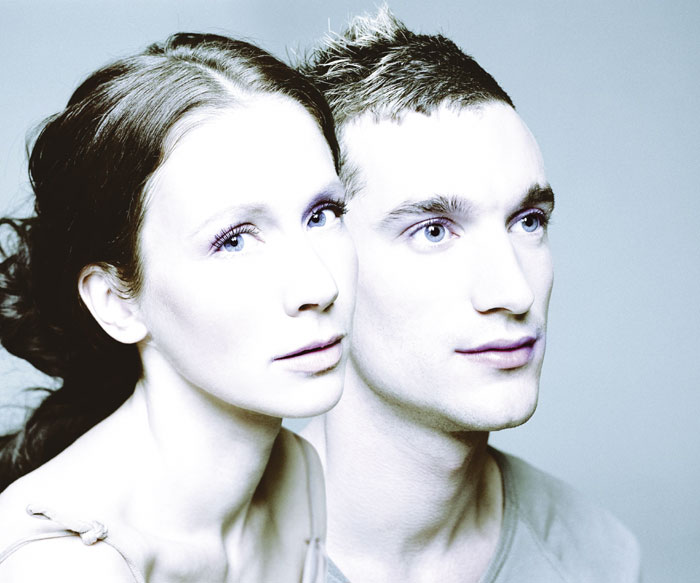
Lou Rhodes (Lamb) interview: 2011

FRIENDLY WITH FIVE

Manchester duo, Lamb were written off by just about everyone – including themselves – come the middle of the last decade. Following a short-lived peek into world-wide success at the end of the ‘90s, vocalist Lou Rhodes and musician Andy Barlow, began to fall out of love with the music once it became a pressure game of commerce and repetition. However, a core of devoted fans had the foresight to not give up on the pair and this year, their devotion has finally paid off – although at a price. Lamb, embracing a little numerology, not to mention some grass roots marketing, announced their long awaited fifth album, 5, funded entirely by fan pre-orders. It may seem a long way from the runaway success of 1997 single Gorecki, but as Lou Rhodes points out, with fans like theirs, who needs labels?

“The scary bit was selling something that we hadn’t even made, so you’re asking for quite a leap of faith from people, you know.” Rhodes begins. “But then, I think it’s a great basis for a creative endeavor. That desire to make something that we felt truly proud of was stronger than ever." Lou explains, “We were making an album for the first time ever with absolutely no funding from some nervous corporation looking for big hits, as was our experience in the past, which definitely had an effect on the music.” After what began as a four-date tour in early 2010, which then grew into months of advance bookings, Lamb were approached to do a short Australian tour in February his year. It was at these shows that for the first time in seven years, their set included brand new music.

“When we were asked to do those shows in Australia, we panicked a bit because we hadn’t even finished the record, but actually it turned out to be a good opportunity to see how well the new tracks worked along side our older stuff. We ended up premiering only four new songs, but that really was the acid test we needed to say what was working and what needed to change.” She continues, “The songs do metamorphose whenever you play them live, so it was important to let the new ones begin their journey of tweak and change.” Rhodes laughs gently. “The process of playing new songs live is like a game of Chinese whispers. You have a blueprint, and you think you know what the outcome will be, but little surprises always emerge in the actual telling.” She adds, “I’d really like to do that a lot more, because the problem with being in the studio, is you usually finish an album and then go on tour and that’s when this kind of growth happens within the songs, but by then it’s too late.” Already 5’s mini road test has Rhodes rethinking the band’s future performances.

“In the past we had always kept in mind what we were going to play live and how, and it was never more than half the record, but with 5, we found that we couldn’t decide what not to play. At this stage we’re doing eight out of the ten songs and we’d like to work in the other two at some point because it works so well in its complete form.” Rhodes adds that she has always struggled with the concept albums judged only by the singles – no doubt a concern that has sprung from personal experience. Lamb’s mammoth hit, Gorecki from their self-titled debut, although rewarding the band with obscene levels of exposure, also bought with it ‘unreasonable expectations’. While recording their second album, Fear Of Fours, the inevitable pressure of matching that song’s success was applied to the duo by their label, causing Rhodes to remark following their split in 2004, Lamb had long felt restricted by what was expected of them. “It was always tough for me to see Lamb as a singles band, because I don’t really listen to very much commercial music or even claim to know how to make ‘hit singles’ on command.” Lou retorts. “In the old days we had to endure conversations that went like, ‘can you sound a bit more like Bis, because they’re selling a lot of records at the moment’, which was quite soul destroying for us.” Lamb released three more albums over the next seven years before acrimoniously splitting. It wasn’t until Lou Rhodes was recording her third solo album One Good Thing in 2009 that she and Andy’s reunion occurred. “I was looking for somebody to produce my album and Andy just said, why not him!” At their rather organic reunion, creative sparks soon began to fly and Lamb’s future was decided on – only with a few clear changes to be made.

“When we decided we were going to make another record, Andy and I had a very honest conversation about what Lamb should and should not be about.” Rhodes explains, “I felt that I had compromised quite a lot on some of our albums and we kind of lost something along the way, but this time we agreed to keep it raw and just gently add to the songs as they needed, like we did on our first record. Also it was really important for us to not overproduce this album. I mean all up it only took five months to make which was very, very quick for Lamb.” Rhodes’ words are suggestive of somebody running from their past mistakes, but Lamb were always spared the often harsh criticisms of the UK press usually reserved for non three-chord rock bands. One doesn’t have to dig very far to then to see Lamb are in fact their own strongest critics, and although many band’s have long lulls following initial peaks, few return with their shit so fully together as they have. Lou reflects on what the refreshed Lamb we hear on 5 was bringing to the come-back party, and some of what was quite cheerfully thrown out.

“I’m a great believer in your first idea is probably your best before the ego kicks in and says oh but why not add this and add that, but simplicity was definitely the key in this case.” She points out, “Also I think for me as a vocalist, too many times on previous albums, my voice had been extremely processed, or rather I was affecting it in certain ways, feeling that I needed to be something that I wasn’t. But having that time off and doing my acoustic albums gave me a chance to let my voice grow and I allowed myself to get comfortable again as a singer.” Rhodes naturally understates her sensational talent as a singer, but evidenced particularly by the tracks She Walks and Wise Enough, is an artist shaking off self-doubt and indulging her love of singing. Lamb’s new-found confidence doesn’t end there, either. Album closer, Existential Itch is a brilliantly executed reminder that in today’s self-absorbed world, we can easily forget that the human experience is a shared one. Lou divulges,

“That song kind of sums up a lot of the record and going through this period of questioning everything I had once believed in. Not just with music, but life in general which I think most of us go through at some point.” She adds, “With the title, I thought existential crisis seemed too strong a word because what I was going through seemed quite natural in a way. I think the word crisis carries the wrong implication, or at least I didn’t see it as a crisis personally, I recognised that it was a much needed time of learning.”

lEIGh5


Ah, the gorgeous Lou and Andy... You know, I never made the Little Britain connection until I transcribed the interview... !!


EPK on Lamb recording their beautiful new album, "5".


Saturday, February 19, 2011

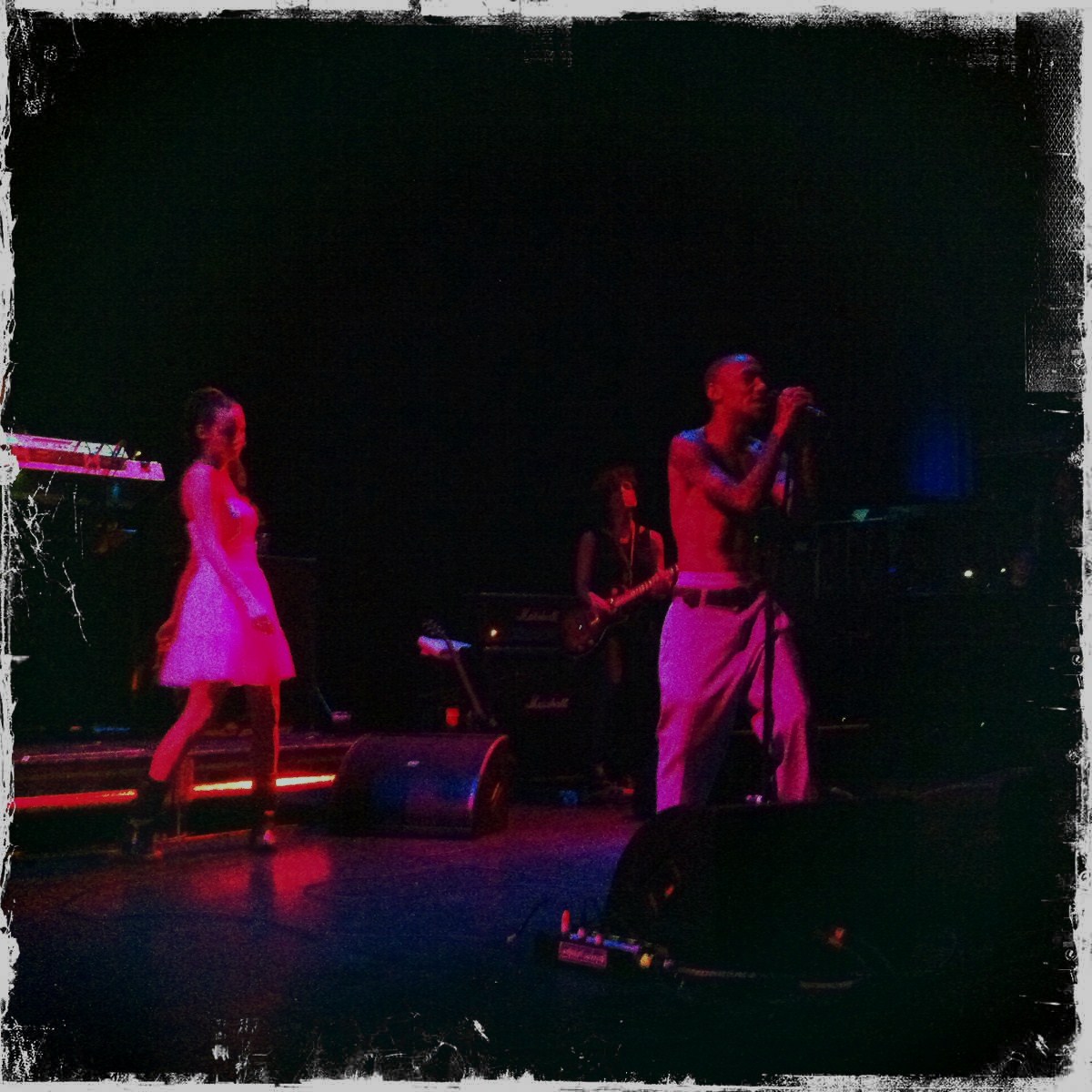
Tricky: live in Melbourne 2011 (review)

Venue: The Forum
Date: 16/02/11


Tricky walks a very fragile line between total chaos and controlled calm at his Forum live debut. To shape the kind of concert experience Tricky offers, takes a kind of mad genius and an absolute disregard for 'expectations'. The world's premier trip-hop artist since releasing his debut album, Maxinquaye, has over time been forced to shrug off the tag he once comfortably inhabited. Massive Attack – his former band – evolved so gradually it was near impossible to gauge, while Tricky as a solo artist hit the slightest bump (a bad review) and threw out most of his old tricks for fear of repeating himself into obscurity. The result of this is one hell of a disjointed concert style-wise, but scarcely a boring one.

Tricky's latest album Mixed Race has failed to really take off in Australia, but his fanbase is well established enough now to fill a decent enough space for the man. In the not-quite capacity crowd, it's difficult to typify a Tricky fan. There's no '90s-era tour shirts… no obvious die-hard hip hop types etc… But then apart from a home-done Tricky t-shirt (drawn with permanent marker, I'll add) made in my youth and long since lost, my own fandom is hardly obvious. Perhaps like myself then, many fans are here tonight to see a curio of the past whose moody, noir-ish tracks and reputation as a volatile individual share a strange connection.

It's a thin-ice walk for almost two hours once Tricky's anti-rock show begins with him leading his band on to the stage and taking his place not at the mic, but in front of his keyboardist – his back defiantly to the audience. He jiggles around for what seems like ages ignoring us on his platform as his live drummer, guitarist, bassist and synth man plough through an instrumental, You Don't Wanna.  Whereas warm-up act Wolfgramm poured their all into grabbing our attention with their slick DJ & vocalist set to little response, Tricky delights in taking the hard road to winning us over. But saying exactly what he does to win us in the show is quite, well... tricky

His vocalist Francesca Riley performs a great deal of the songs solo while Tricky stalks the stage adding only occasional vox. His band, although in top form, are at the constant ready to stop playing or change song as Tricky bizarrely commands. The concert's uneven start - which includes his early hits, Black Steel and Overcome – makes its first sudden shift of this kind when during the serene Pumpkin, Tricky points at his drummer and without warning, the band launch into a cover of Motorhead’s Ace Of Spades. Tricky begins hauling fans out of the pit at this stage and doesn't stop until the band are completely obscured by dancing punters. The shocked security staff can do little but make sure nobody falls during their frantic climb to the stage. Nor do they do anything much about Tricky's almost constant joint-smoking tonight or even stop him passing that dutchie around his new buddies.

There's no doubt from this moment on Tricky's finally found the vibe he needs to work within and the show turn into a soaring, chaotic rumble. He's still in command though, and a quick exodus from the stage invaders is followed by a crazed run through of Vent before Tricky and band flee the stage also. The encore although just offering more of the same madness as the main show, also revealed Tricky's warped motivation for his radical stage shows. A second wave of fans were quickly gathered by the artist - at which point I lost my own shit and joined him – only this time, Tricky wanted more. Security finally begin blocking people once half the packed dance floor's been transferred to the stage. Although I felt a bit of a fake dancing around to a song called Ghetto Stars, (I’m about as ghetto as a pavlova) no one on the stage looked fully comfortable with the situation. Then among the confusion of dancing bodies, I catch the sight of Tricky slinking off stage only to re-emerge at the bar beside the dance floor. The grin on his face as he sips casually from a freshly acquired drink and watches his handy work is priceless. The band power on making their leader proud, until finally security herd everyone back into the arena. I could probably rail against Tricky and say he's a lazy performer, or go on about how much happier he seemed watching fans dancing with his band than actually singing, but the truth is he worked harder than any band I can recall to make sure everyone who came to see him had the fucking time of their lives.

lEIGh5


All pics by myself & Fruitbat

Saturday, August 21, 2010

Skye Edwards (Morcheeba) interview (2010)

FIZZY LOGIC


After fading interest in the UK's trip-hop explosion in the '90s, Morcheeba, one of the scene's biggest success stories split from their lead singer
Skye Edwards in 2003. The band's core, brothers Ross and Paul Godfrey, carried on into the '00s with a revolving door of replacements only to flounder with two underachieving non-Skye albums. It seems they underestimated the popularity of Edwards among fans, but now seven years on, the original line-up are back together with a return-to-form new album to boot. Blood Like Lemonade, has the dark and dreamy quality of the bands' previous best works and Skye, over the phone in pre-launch mode, feels Morcheeba may have their most definitive set of songs to date.

"Well it does feel that way to me," She asserts, "I mean, I do love Big Calm and Who Can You Trust… While Fragments Of Freedom, I do like fragments of, but with this one I am really happy with every song on there so it could well be our ultimate record." After a fleeting mainstream cross-over, the decision was made to return to the sound fans early on identified with on the reunion album. "The first song we wrote together after deciding to make another album was Crimson, which I'm really proud of." Skye beams, "I think it's one of our darkest moments in Morcheeba so far." Listening to Blood Like Lemonade, it's clear that the nonsense bubblegum pop of Rome Wasn't Built In A Day, is long gone. Back in 2000, that song earned Morcheeba its greatest success in terms of sales, while simultaneously pissing off their core fanbase. "With Rome, basically we wanted to get on the radio," Skye admits, sounding a little relieved to put some context into the band's biggest commercial hit, and move away from trip-hop. "We wanted to have a song I guess that people could wave their arms around to at the shows, but at the time I really wasn't very happy about it." She adds, "It's like the way R.E.M. is about Shiny Happy People I think" Skye laughs, "They kind of buried that song, but for us when we go out and play Rome and people sing along to every word of it, I kind of get why you have to make your peace with these things."

Edwards' early dissatisfaction with the song was founded in what she saw as a step backwards personally. "It took me to a different place vocally - at least as far as what I'd done in Morcheeba goes." Pre-Morcheeba, Skye was as a backing vocalist in a funk/pop covers band – something she wasn't keen to re-visit as a performer. "I used to have to sing in this high girly pitch which I wasn't terribly comfortable doing, so when Morcheeba came along it was a relief to be able to use my natural lower register and make less happy-clappy sort of stuff."

Early singles, Trigger Hippie and Tape Loop, made Morcheeba strong contenders in the mid-'90s UK trip-hop scene. Skye even had a 'hangin' with Martina Topley-Bird in the smoking section' vibe. She was a little greener than her peers, but when the second album Big Calm arrived in 1998, Edwards and Morcheeba managed to out-perform most other artists in their genre. It was then the brothers decided to change tact and maximize on the band's commercial clout. 2000's Fragments of Freedom enjoyed a rapid rise in the charts both in the UK and Australia, only to be followed by an equally rapid fall. Skye looks back at their break-out album and its follow-up, Charango. "The songs on Fragments are obviously quite different to anything else we did." She reasons, "The best thing I can say now is that it's a very well produced and well put together record, but I think you can tell Charango sounds like a much more natural follow up to Big Calm." The 2002 album Charango was Skye's last with the Godfrey brothers before now. It hinted at a slinkier, more direct sound and won back a lot of the group's fans who'd baulked at Fragments, yet the group was on thin ice within their ranks and parted ways the following year. When asked if the singer missed working with the Godfrey brothers, she's quick to respond.


"No not really." Skye pauses before she allows a giggle to escape, "It was like the end of a relationship, and you move on and get the new boyfriend – which was, in my case, a new producer. I really enjoyed doing my solo stuff and writing my own lyrics, so I didn't miss them, no." Skye released two original albums between '06 and '09 while Morcheeba carried on with various part-time lead singers. Both parties achieved only limited success. During the separation, Edwards claims she wasn't at all keen on hearing her replacements. "No, it was kind of like seeing your ex-husband with his new girlfriend." She laughs, "I didn't really want to know, however I did hear some of (2008 album) Dive Deep because they actually e-mailed me and asked if I'd like to sing on a couple of the songs, but it just felt a little bit weird." Skye adds, "I won't say I was trying to avoid them altogether but I wasn't exactly seeking them out either."

It seems as if fans may have played a role in getting Skye back with the band, she recalls. "I was getting messages on mySpace from people saying they'd gone to see Morcheeba live and that it wasn't the same without me, which was kind of nice." A chance meeting with Ross after seven years apart developed naturally into a 'why not give it one more go' conversation. Within two months of that agreement Morcheeba had written their first album with Skye since 2002. "Now here we are back again, doing the more down tempo stuff we were known for and with a better range of songs I think." Skye interjects, "It feels like now when we go to do our live shows, we've got a nice cross section of upbeat tracks and songs to get stoned to as well." Edwards speaks emphatically about singing the new, meatier subject matter on Blood Like Lemonade live.

"We haven't done that many shows for this album yet – we're still waiting until the tour kicks off properly - but at the moment I absolutely love singing Crimson. The woman in the song is really psychotic, she tries to kill her married lover by running him off the road, but it's quite fun to be her voice." Skye continues, "There are actually a few songs on this album which would probably qualify it as a sort of 'serial killer record'." She laughs, "You've got Recipe For Disaster, where the woman kills her boyfriend because he's always drunk, and Blood Like Lemonade which is about a vigilante priest who drinks the blood of his victims." I ask Skye if she realises that she's made a Nick Cave album, "Well if Nick Cave was singing Blood Like Lemonade, I think the dark themes would be really obvious, but because it's my gentle vocals on there you're not really going to notice it so much." Skye concludes, laughing. "I can get away with all this carnage because I sound so polite, you see."

lEIGh5

Monday, March 22, 2010

Massive Attack live in Melbourne 2010 (review)

Venue: Sidney Myer Music Bowl

Being inside the Sidney Myer Music Bowl this evening is a pleasure in itself beyond the concert about to take place. It’s a breathtakingly warm, still night deep in the lower seating of the arena making it impossible to entertain a care in the world. The stunning Martina Topley-Bird is on stage cruising through her solo set under a single spotlight, while demonstrating a sunny disposition with occasional smiles and waves between verses. This is her live solo debut in Melbourne, and her first tour with Massive Attack after she recently entered their inner circle following many years of association through her work with ex-Massive rapper Tricky.

Her part in the main show tonight is to be rarely matched despite Massive Attack’s knack for picking great singers. The list of guest vocalists on this band’s work is, well massive, and so it’s down to Martina, along with Jamaican/Brit legend Horace Andy and soul diva Deborah Miller to fill in for those various, equally unique singers. The core of Massive Attack has (almost) always been Robert “3D” Del Naja and Grant “Daddy G” Marshall. The pair’s friendship is well known to be as fragile as some of their music, so it’s with great interest I watch their on-stage chemistry/lack-of as the show unfolds.
 
A few late arriving fans are taking their seats just as the stage darkens and five musicians file on. Ominous synthesised strings are soon being punctuated by loud drum bursts at the same time the blackness is interrupted by narrow red beams of light. Del Naja and Marshall finally appear on stage in silhouette and park themselves behind a table containing keyboards and a laptop. Once settled in, the music suddenly roars into life and Del Naja’s smoky voice raps out the words to United Snakes – a bonus track from new album Heliogoland’s import only edition. There’s a problem though, 3D can’t be heard at all over the dirgey, thrashing synths and drums. Luckily, it turns out that his raspy singing simply can’t compete with the unusually cacophonous (for Massive Attack) music. Things improve by the second track Babel when Martina returns for what will be the first of several vocal duties for her tonight. The new songs, such as Babel, don’t dominate the set tonight as much as expected. The band had even given away with all tickets sold, a copy of Heligoland, presumably so fans would have time to ingest the latest brooding set – a grower for certain - in time for this tour.
 
Instead, commercial highlight Mezzanine (1998) gets a thorough riffling tonight, possibly due to the current album’s overabundance of guest singers. With that said, it’s once again up to Martina to step up and this time, take on Mezzanine single Teardrop. Elizabeth Fraser’s vocal on the original song is such an incredible feat of raw emotion; Martina wisely wasn’t about trying to match it. Instead the song was completely rearranged as a dub reggae piece, perfectly fitting Topley-Bird’s voice. The sight of her silhouetted against a giant graphic of an eye, pouring everything she had into this song is utterly staggering. The performance passes all too soon, but will surely stay with everybody here tonight for a long time to come.

I have to say I’m so much more impressed with Horace Andy as a live singer than on the recordings. The shadowy figures scattered around the stage all but vanish as Horace, sporting a bright red hat appears, hands aloft to perform Angel and Girl I Love You under blinding white lights. The band’s guest singers aside, Grant “Daddy G” Marshall is one very bright star in this show. On Risingson he commands the audience’s attention with his guttural half sung/rapping technique and ‘rude-boy’ dancing. Del Naja’s moment to shine comes in Inertia Creeps – his whisper in stark contrast with Marshall’s booming delivery. A slightly less welcome star of Massive Attack’s current show is the endless feed of slogans, headlines, facts and quotes in huge neon letters flickering up on the huge screen. Underworld use similar seizure-inducing visuals in their show, and although spectacular in colour and movement, Massive Attack’s music is far less suited to this kind of pace. Besides that, it’s a bit wanky in a U2 kind of way.

As the show’s end draws near - and we’re reminded via the screens, how much the war in Iraq has cost - the audience fill up the spaces between the seats and the stage to dance, just as Massive Attack’s final surprise is unleashed – One Deborah Miller. You don’t get pipes like hers from working in mines. This soulful diva of grand proportions gives the roof a tickle with heart-stopping renditions of Unfinished Sympathy and Safe From Harm off Blue Lines. Miller is enjoying her moment too; it’s a long wait for her to do only two songs. The finale Karmacoma is, although a welcome visit to the Protection album, a little flat following on from Miller’s grand styling. Nobody seems to mind though and we take our cue to shower the band with love as the song ends. All hatchets between Massive Attack seem buried as Marshall grabs Del Naja’s hand and holding it up yells, “this is my man, D - give it up!” Grant holds steady on stage as the applause builds; he looks to be reminding himself of why he rejoined the band last year, and what he’s missed.

After this tour Massive Attack will probably fly back to Bristol and hide away in their rooms for another six or seven years with the curtains drawn. But if that’s what it takes for them to share a stage and pull off a show like the one seen tonight, may they never be disturbed.

lEIGh5


SIDNEY MYER MUSIC BOWL SETLIST, 20/03/10:

UNITED SNAKES
BABEL
RISINGSON
GIRL I LOVE YOU
PSYCHE
FUTURE PROOF
INVADE ME
TEARDROP
MEZZANINE
ANGEL
SAFE FROM HARM
INERTIACREEPS
SPLITTING THE ATOM
UNFINISHED SYMPATHY
ATLAS AIR
KARMACOMA


photos by me and Fruitbat

Tuesday, March 16, 2010

Massive Attack - Heligoland (album review)

Massive Attack it has to be said take their sweet time in serving up any product at all, so when an album does arrive it's something of an event. The band so far in their 20 year career have never fully escaped the shadow cast by debut album Blue Lines and are it seems destined to have all subsequent works compared to it. The thing is, all Massive Attack albums are largely blueprint in formula and why shouldn't they be? The recipe's good and nearly always works, and with only five albums in their cannon, you could hardly say they're flogging a tired old nag.

Despite long periods of inactivity, there's still something of an old friend factor to Massive Attack so the time spent listening to their new set was  to be a fairly comfortable experience, surely?. There would be some familiar tales, told by voices reminding me of good times with perhaps some new learned wisdom thrown in...? Well, no. In fact Heligoland actually comes across more like a total stranger. I find myself having to tease information out of the music rather than the expected easy flow of long-time acquaintances. On the upside to this, repeated listens show Heliogoland to be quite a strong contender for slightly sinister new best mate. A great companion to stand with in the 7-11 at 4am, bleary eyed and pretending you're in an American indie film about to pull out a shotgun and say something deadly cool.

So it's a little unfamiliar, but like all Massive Attack albums, there needs to be a bit of environment set-up to really appreciate it. Candles... well if that's your thing, but low light for sure and maybe a jostick and something in the room that hums, such as a fan. The first thing you'll notice about Heliogoland is by half way through the ten tracks, the mood and tempo are set at lucid and are not likely to change. And change they do not, but like thoughts during lucid sleep, so much is revealed if you just allow it to happen. Opening track Pray For Rain begins by layering live drumming with morose strings which eventually turn into popping electronic blips sung over with an increasingly urgent robotic chant until finally a flourish of gentle falsetto 'aaahhh's' come in as the music mimics a breaking drought. This song hails the welcome return of Grant "Daddy G" Marshall who hasn't sung on a Massive album since 1998's Mezzanine. The vocal duties on the rest of the album include the usual long list of guests, Tricky's ex-vocalist Martina Topley-Bird appears on Babel and Psyche - and naturally, it's a perfect fit. Her lazily half sung parts automatically trigger thoughts of Tricky's earlier work, which was always a heavier extension of Massive Attack's.

Regular guest Horace Andy also returns here sounding better than ever on Girl I Love You, backed with a tremendous live horn section. The single, Splitting The Atom, is the most immediate track here, boasting ice cold strings and a hip hop beat suggesting perhaps a Gorillaz influence resulting from Damon Albarn's contribution to the track. However, it's the combined effort of Albarn, Grant Marshall, Robert Delnaja and Elbow's Guy Garvey on Flat Of The Blade that stands out the most. Garvey sings ominously "...I'm not good in a crowd/I've got skills I can't speak of/things that'll chase me to the grave..." over a rising string melody and occasional horn blasts. All the best elements of the album come together on this track, and if you like 'em dark and brooding, it's guaranteed to please. That said, there is a warmth to Heliogoland that was missing from 2003 album 100th Window. The use of live instruments or rather the choice to not bury the live instruments in the mix is a huge benefit to the album overall. There's a good variety of vocalists and collaborators on offer, each given room to breathe and make their individual stamp on the songs which in the past had always served Massive Attack well. Core founding member Robert "3D" Delnaja is still lurking in the corridor, chain smoking and rasping away, only this time he's paused at the door and allowed his guest ensemble to shoulder a good deal of the work. Heligoland ultimately is a grower of an album, if not just for it's detached mood then for it's striking contrast to most popular music currently on offer. Grab it and let it grow, you won't be disappointed.

LEIGH SALTER
.