Showing posts with label UK artists. Show all posts

Wednesday, December 18, 2013

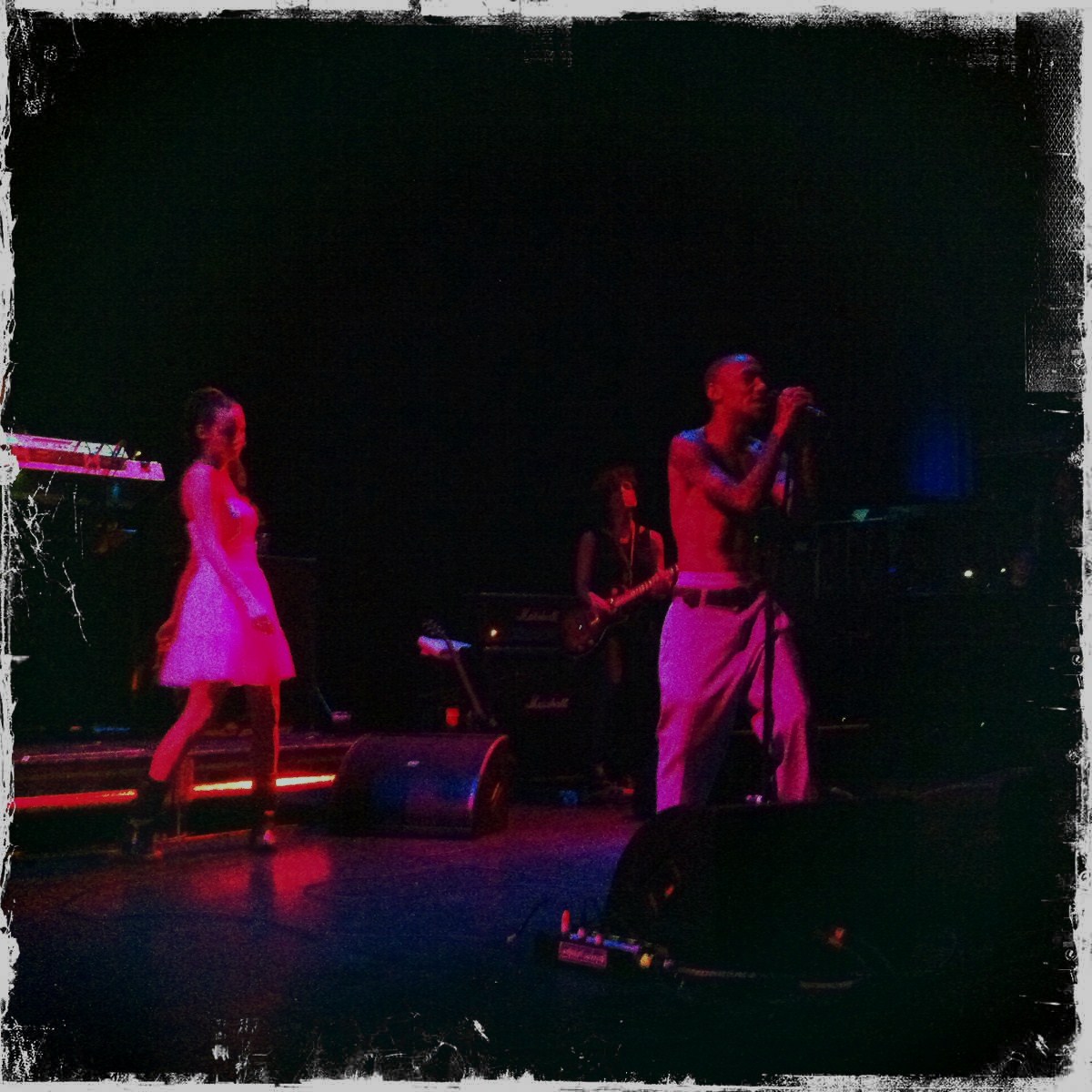
Peter Murphy (Bauhaus) interview: 2013

HAUS MUSIC

Robert Smith, Nick Cave, Trent Reznor, even David Bowie all owe a debt to Peter Murphy and his haunted outpourings as leader of goth-rockers, Bauhaus. According to Murphy himself, that is. It’s a big claim for a man who stumbled into music, only learning of his abilities as he went along. Perhaps his early lack of self-perception afforded him a fearless, unstudied approach to creating music, but Murphy has returned 35 years on to stake his belated claim as unsung genius.

“There is no ‘back in the day’ for me when I talk about the music I made with Bauhaus.” He says of the Northampton-based band he fronted from 1978. “My music did not suddenly grow old and die when we split up.” In 1983, Murphy left Bauhaus after tensions arose from his increasing stardom over and above that of his band mates. This was perhaps illustrated best by his heavily stylised appearance - as himself - in the film The Hunger. Seen performing one of the first songs he ever wrote – Bella Lugosi’s Dead – Murphy’s status as ‘goth icon’ was cemented in those 4 minutes. The film that followed was a modern vampire tale complete with David Bowie in the lead role. On set, Murphy proudly recalls Bowie’s surprising admittance to him.

“He whispered into my ear, ‘I wish we had done Ziggy (Stardust) like you did it.’” He grins. “Almost nobody, including the band, wanted me to do it so when Bowie tells me he likes my version better than his own, it really made think I should just trust my instincts.” The Bowie cover remains Murphy’s biggest hit to this day, but at that stage Bauhaus were already over bar the shouting. While the rest of the band went on to form sleaze-rock group, Love & Rockets, Murphy ramped up the vamp on several solo albums before finding birds of a similar feather (Nine Inch Nails) to hang with.

“Trent (Reznor) was an unashamed Bauhaus fan. When I met him he was just this young guy with one album out – Pretty Hate Machine – and you could hear our influence all over that. We ended up recording a few covers together, which somebody has leaked but they were never officially released.” It was a match made in goth-rock heaven, but the increasing popularity Bauhaus’ music had gained in their absence prompted a return in 2005 and further demise in ’08. “The band I’ve got now, I’ve been working with for quite a few years and, with respect to the other lads in Bauhaus, I can play our music just fine without them there, you know.” He adds, “I learned to play Dan (Ash – Bauhaus guitarist)’s parts years ago and people have long been asking me to Bauhaus songs in my shows, so I thought ‘fuck it’ why not do it. Why not tour just Bauhaus’ songs as Peter Murphy? They are mostly my songs, after all.”

Now assured of his legacy in music, Murphy scarcely sees the point in unraveling the ‘enigmatic genius’ tag he has been awarded by, either his musical peers - or more brazenly, himself depending on how real or not the bravado all is. It’s only in the final few seconds before his deep, arresting voice is replaced by a dial tone does he throw me a clue. “I don’t mind doing press actually, but journalists don’t get the real me. You can only get in as far as I want you to. I hate to be a buzz kill, darling but when you’re the ‘grandfather of goth’, you have to keep at least partway in the shadows.”

lEIGh5


Monday, April 16, 2012

Sinead O'Connor: How About I Be Me & You Be You (review)

Sinead O'Connor -
"How About I Be Me and You Be You"
(One Little Indian/Shock)

Sinead O’Connor came out fighting on her 1987 debut, The Lion & The Cobra, and 25 years on, she still sounds like that girl with fire in her soul and a foot looking for an arse to kick on How About I Be Me And You Be You. Yes, anger has continually infiltrated her work, be it directed at her parents, the opposite sex or the Catholic church, but during the last 25 years, we have also come to know Sinead as a highly contrary artist. One thing that is a constant however, is her dissatisfaction with the status quo. Confusing and confounding fans and critics alike, in the last decade Sinead came out as a lesbian before being ordained as a priest and later rejected both lifestyles when she become engaged to Australian musician, Steve Cooney. No sooner had she announced she would be ‘settling down’, news came through of a quick divorce from Cooney and a further marriage to a man she met online followed. It’s these recent developments in Sinead’s life that forms the basis of How I About I Be Me
 
The album’s title – a re-writing of the traditional marriage vows - and its content deals directly with O’Connor’s brushes with matrimony – her recent wedding to Barry Herridge lasted only 17 days – and the institution itself. As far as wedding albums go, there is little romantic merit in O’Connor’s words, as to be expected, but rather she challenges the suitor to forget the fairytale (and the Catholic church) idea of marriage. On the first single The Wolf Is Getting Married, Sinead owns the public’s image of her as an unstable - even lamentable - woman of contradictions.  Firstly, she decides marriage will bring her unending happiness and keep away the ‘wolves’ – an animal, in literary terms, sometimes associated with depressive syndromes. The question that the song raises however, is how serious is she? At any given moment the listener could expect to be slapped in the face with a renouncement of all this new-found comfort.

The track 4th and Vine further reinforces O’Connor’s belief that matrimony holds the key to her satisfaction, and is nothing short of a re-telling of The Dixie Cups’ saccharine 1964 hit, Chapel Of Love, yet considering the singer’s recent past, a sarcastic subtext can’t be ignored.  The album takes a sudden and more familiar turn on Take Off Your Shoes, where Sinead is all ‘blood of Jesus’ and ‘hallowed ground’, while V.I.P. is good old fashioned theology in verse. Musically, her later releases veered into reggae which is reprised here. The mostly mid-tempo pace and acoustic instrumentation allows the narrative to take the lead, keeping with Sinead’s folk singer styling and the tradition of reggae’s ‘songs of rebellion’. The album overall is a fantastic observation and summary of O’Connor’s often difficult to relate to personal life and favourite subject matter. She offers an even sharper perspective than on many former revelatory releases, and is still one of the most brutally honest song-writers around - “I was always crazy”; she growls on If I Had A Baby. O’Connor is at her best when she flaunts what most of us would be happy to deny. How About I Be Me And You Be You is a purposeful blurring of the singer’s wishful thinking and the stark reality of her inability to settle down and play house. Perhaps she feels such a compromise would be mean disconnecting from her muse, and so within the safety of music, she has dared to go where she just can’t seem to in life.

lEIGh5


 "The Wolf Is Getting Married" official video.


Wednesday, February 15, 2012

Dr Alex Paterson (The ORB) Interview: 2012

SPACE BALLS

UK electro act The Orb, always found themselves lumped in with the narcotic-influenced club music scene emerging in the late ‘80s, while journalists struggled to find a more accurate description; ‘Pink Floyd for the ‘90s rave generation’ and ‘Space-obsessed knob-twiddlers’, are just two of the terms that have been commonly used to describe the duo, and complimentary or not, founding member Dr. Alex Paterson can see no reason to give a shit. “I’m still here 25 years later talking to you, so I think we must be doing something right.” Paterson’s early morning croak assures me his ‘blissed-out drug music’ is a ‘good match’ ahead of the touted double-billing of The Orb with UK sample-monsters, Bomb The Bass. “It’s good; I think we both come from the same school of plagiarism.” The self-appointed/self-medicating doctor laughs.

“As it happens, I used to go out and buy Bomb The Bass’s records for when I was DJing back in the early days.” Paterson recalls, waking himself up a little more. “We’ve both always listened to music with the same ear for working out how you can make something new out of something old, I think.” Paterson’s mention of ‘plagiarism’ is more self-referencing than accusation. In its earliest form, The Orb was an excuse for Paterson and one Jim Cauty to create sampling anarchy. Cauty however fell out with Alex following the debut album, The Orb's Adventures Beyond the Ultraworld and went on to raise hell as one-half of The KLF with Bill Drummond, who’s own free-for-all approach to using copy-protected music was as prolific as their lunatic stunts. The Orb continued on with some-time members, Youth (ex-Killing Joke), Kris ‘Thrash” Weston, Tim Bran and various others, before Paterson’s longest term ‘co-Orbist’, German-born Thomas Fehlmann joined in 1995. With the many cohorts under the bridge, I wonder is Alex the archetypal ‘difficult artist’?

“No, I think it’s more that there’s a kind of snobbery among a lot of English DJs, and many of them seemed to be in competition with each other, and I didn’t want to be a part of that.” He adds, “Thomas didn’t behave in that way, which was a new experience for me. We do things for one another, not for self-aggrandising reasons.” The Orb, although linked to the sample revolution born out of hip hop, claimed their own distinct niche as ‘ambient electronic pioneers’; a term which Paterson is immensely proud of. “I was an A & R scout in the early ‘80s, so I always had my ear to ground, wanting to know what was going on in music, and nobody was doing ambient house music before The Orb formed.” Paterson, as a recreational pot-smoker spotted a gap in the dance-oriented club scene for chill-out music that wouldn’t completely kill the listener’s vibe. “A lot of people were putting on stuff like Neil Young or Pink Floyd after a night out clubbing, so we thought we set about changing that by offering an alternative.” The two premiere ambient house chill-out records were The KLF’s Chill Out, and The Orb’s Adventures Beyond The Ultraworld, which Paterson now admits was heavily inspired by Brian Eno.

“My day-job back then was working for Roxy Music’s record label in London, and Eno was one of the reasons I got into making music of my own.” He exclaims, but Eno apparently was keen to distance himself as an influence from Paterson’s work. The Orb were indeed gaining exposure for a lot of the ‘wrong reasons’ in the early ‘90s, as sampling on the level employed by them was a major concern for labels wanting to release music with the hassle of lawyers banging at the door. “The sampler made it easy for artists like us to completely alter a sound to use in a recording – so much so, we got away with a lot more than most people know about.” He laughs, “I can say that now, because if a sample isn’t claimed within seven years, forget it, no one’s going to go to the trouble, but it got to stage where our label (Island) wanted us to provide tapes of all the different parts to each of our records on separate tapes, so they could see what we were trying to sneak in there. The funny thing was, the samples were so unrecognisable after we’d finished with them, Island couldn’t even tell what they were anyway!” For the artists who may have griped about their work being sampled on an Orb record, there were as many who proclaimed it a kind of honor, Alex recalls. “When Steve Reich heard his guitar turn up on Little Fluffy Clouds, he got in touch with us and said, ‘I fucking love this, I never thought someone could do this with my music. It’s amazing.’ He wanted to go on record as a supporter of what I was doing. It’s just when publishers and record labels get onto you that it all goes to shit. They’re the only ones really worried about losing money; it’s rarely the artists as far as I can tell.”

lEIGh5

Sunday, February 12, 2012

Tim Simenon (Bomb The Bass) interview: 2012

THE BASS PHENOMENON

Bristol-based rag-tag collective, The Wild Bunch flourished as outsiders from what was happening in mid-‘80s mainstream music. The DIY approach they took to making music and various other art forms simply wasn’t in a competitive field, as much of their output was consigned to being played in local clubs or on pirate radio. However, the future had in store an unprecedented level of acclaim and acceptance for the micro-scene’s main players. Massive Attack, Neneh Cherry, Tricky and Nellee Hooper among others, all got their first break in the mostly migrant collective. But the scene, long before launching the globally admired stars of trip-hop, was early on having a rather profound impact on a young Scottish-Malaysian lad named Tim Simenon. Simenon, being a Londoner, was an outsider even among the Wild Bunch, “I became friends with a lot of that group through going to Jazzi B’s Soul II Soul club. They ran a local DJ battle night, where anyone could show off their skills or just hang out.” Like them, Tim was driven by the potential of a new music style created utilizing samplers. 

“I was the guy with the records, basically.” He laughs, “I had been collecting since I was about 8 or 9 years old, and when I started mucking about with samplers I had a shit load of music already to work with, which was essential if you were serious about live DJing.” Simenon adopted the title Bomb The Bass to DJ under, and like his mates in Massive Attack, the emphasis was on devastation; specifically the ‘annihilation’ of hundreds of recorded works for use in samples. However, where Massive Attack became known for the somber, subtle approach, Bomb The Bass’s debut single, Beat Dis! hit the listener with a montage of over 50 samples, kicking open the door for a whole new wave of sample-heavy dance 12”s. He’d created a monster, but his actions also shook up the Wild Bunch crew, most of who were yet to release any of their music/mixes. “DJing was still a new thing, and a lot of the artists on that scene wanted to release records, but nobody knew if what we were doing would have any kind of appeal beyond our little club nights. That’s the beauty of what was happening in that scene, we were just friends doing what we enjoyed doing. Nobody thought it would become this massive thing.” 

One of the first of the Bristol crew to get a record out was Afro-Swedish MC, Neneh Cherry. She and Tim collaborated on the sweet but sassy, Buffalo Stance in 1988, which became so huge, supposedly it was the prompt for Madonna to write Express Yourself. “I have to say, that was one of the most enjoyable records I ever worked on, primarily because Neneh was such a breeze to work with. I’ll always remember that powerful attitude she brought to everything, I mean Buffalo Stance was her through and through. That was her personality, you know.” From that single, the scene began to grow as more and more names linked to the Wild Bunch turned out records that seemed incapable of failure. Bomb The Bass’s second album, Unknown Territory surfaced around the same time as Massive Attack’s Blue Lines prompting talk of a ‘new movement’ in music, however Tim was a far less stationary act, flirting only briefly with trip-hop. His next release would begin to develop from a collaboration with Russian/American hip hop artist Justin Warfield (who’s album, My Field Trip To Planet 9, Tim was enamored with), but who more importantly, shared Tim’s love of William S. Burroughs

Tim's 3rd album, Clear-ly inspired by Naked Lunch.


“I remember at our first meeting, Justin and I talked a lot about Burroughs, and straight after he went off and wrote these fantastic lyrics based around Naked Lunch.” Simenon’s Bug Powder Dust began as a collection of dialogue samples from the David Cronenberg film adaption, before blossoming into a full collaborative rap. The track - a massive hit - pre-empted 1995’s Clear, and a newly acquired use of live instrumentation. Tim was beginning to scratch the surface of Bomb The Bass’s potential as a live band, but it would take a further 14 years for him to fully realise it. For the remainder of the 1990’s, he retreated into production, while his ideas for Bomb The Bass’s future fermented. Simenon worked his magic on Gavin Friday’s inspired Shag Tobacco, and on the ill-fated Michael Hutchence’s solo album – his final recording, it would turn out - then as the decade neared its end, a production project came his way in the form of Depeche Mode’s album, Ultra. The band’s ninth album equated to their revival following a disastrous self-destructive period, while Simenon on the other hand, completely disappeared from view.

“I hadn’t had a break in over ten years… Not since I started releasing music in fact.” He recalls, “I needed to be inspired again, and so it was vital I take a few years off. The Depeche Mode album was a really dark time for me and them, and so rather than push myself even further, I spent a couple of years in my room in front of the speakers just listening to music instead of working with it.” Simenon’s silence was finally broken ten years on with a dramatic new sound in 2008. With a new collaborator, Paul Conboy, the notion of Bomb The Bass as a live act finally began to take shape. ”The key to getting back into music was writing the Future Chaos album.” He explains, “That album came together with such momentum that I found I had regained a kind of excitement about making music which had been missing for some time.” Keeping in mind the festival’s title of 'Future Music' that Tim will be in Australia for, aside from his rich back catalogue, fans can expect some fresh new sounds, he confirms. “Paul and I have been writing the follow-up to Future Chaos, so we’ll be premiering about five or six of those songs in Australia.” The new album, he explains, bares little resemblance to the sample-based work he mastered in his formative years.
 
“On this tour Paul will be singing and playing live bass, and I’ll be making the beats and just playing around with the BPM’s a lot more. It’s exciting for us to have the sort of ‘raw edge’ of a live band, which I’ve been wanting to do for some time, but for the album we will hopefully be getting some guest vocalists in which I haven’t done for ages.” Bomb The Bass’s most successful tracks had always put the credit on guest singers; Loretta Heywood (Winter In July), Justin Warfield (Bug Powder Dust), Jazzi B and Maureen (Say A Little Prayer), yet Tim’s own signature is there in every single piece. “What you’re describing there is ‘The Texture,’” He laughs.” That’s where I come in, I think.” It was Tim’s ‘texture’ that put him in hot demand as a remix artist too. Credited on Bjork’s Play Dead, remixing Massive Attack and Depeche Mode etc.. – everyone, it seems, wanted a sprinkling of the BTB magic, but Tim follows a simple rule when choosing who to mix it with. “All the artists I’ve worked with over the years, I’ve done so because we have shared a connection in some way.” He assures, “It’s important to get along with people I’m working with for me to be able to work. I’m just lucky in a way, that all of the people I have collaborated with have been or become friends. I mean it’s got to be fun, or what’s the point, eh?

lEIGh5


TIM SIMENON'S SELECTED PRODUCTION/REMIX C.V.

Depeche Mode - Ultra (production)
Depeche Mode - Strangelove (remix)
Depeche Mode - Everything Counts (remix)
Depeche Mode - Enjoy The Silence (remix)
Jamie J. Morgan - Walk On The Wild Side (remix)
Bjork - Play Dead (remix)
Massive Attack - Sly (remix)
Gavin Friday - In The Name Of The Father (remix/production)
Gavin Friday - Shag Tobacco (production)
David Bowie - The Heart's Filthy Lesson (remix)
Curve - Chinese Burn (production/remix)
Curve - Come Clean (production)
Michael Hutchence - self-titled (co-writer/co-production)
Neneh Cherry - Buffalo Stance (production)
Neneh Cherry - Manchild (production)
Seal - Crazy (remix)
Sinead O'Connor - You Made Me The Thief Of Your Heart (production)
Sinead O'Connor - Universal Mother (production)
Tim Booth and Angelo Badalamenti - Booth & The Bad Angel (production)


Friday, June 3, 2011

Kate Bush: Director's Cut (album review)


KATE BUSH
Director’s Cut
(Fish People)


Kate Bush fans desperate for new material from the reclusive star have been awarded an intriguing prize in the form of Director’s Cut. Calling this new however is misleading as all songs are entirely updated versions, culled from roughly two halves of previously released albums. The track list is compiled from 1989’s The Sensual World and 1993’s The Red Shoes, with only the former’s title track receiving a completely new set of lyrics. Re-named Flower Of The Mountain, The Sensual World could largely be seen as the catalyst for Bush’s latest move. At the song’s conception, Kate intended to use part of poet James Joyce’s novel Ulysses in the lyric but was at the time denied rights. Last year, with full access finally granted to Joyce’s words, Kate re-made the song as she had always intended and so began work on ‘correcting’ more and more of the songs that have dogged her over time. The fact that the entire album is comprised of music from those two particular albums won’t surprise many long-term fans of Kate.

The artist has been casually critical of the two records in question, just as the media had been upon their respective releases. Now that Kate has put right what she had long seen as errors in her last two pre-millennium albums, I can’t help thinking that the same things that will please many long-time fans are the very same that will disappoint others. As a hopeless devotee, I can’t help but feel heavily critical of the re-workings in both positive and negative ways. Whereas I totally respect Kate’s decision to remake a few songs that she has long felt uncomfortable with, there are mixed results with no noticeable consideration for what her fans may have loved about these tracks in the first place.

My first criticism would be that the vastly different albums (in their original state) The Sensual World and The Red Shoes don’t mesh particularly when assembled as the one piece. The Sensual World – always the black sheep in Kate’s catalogue - had a distinctly down-tempo, almost grim prevailing mood, whereas The Red Shoes was a spiky pagan romp through tales of black magic and mythology. Bush herself always claimed she felt a deep disappointment over how The Red Shoes was received, and in many cases the criticisms were unusually severe for a Kate Bush album. The fact that she disappeared from the public eye completely after, it’s been suggested, was partly down to being so brutally scorned over the album and its accompanying film - The Line, The Cross and The Curve – which leads me to wonder if re-recording that album alone would have sufficed. The Sensual World tracks after all are the least altered by far among this collection.

This Woman’s Work
(from The Sensual World) for example, is thankfully only slightly tweaked here with the most notable change being Kate’s cleaner vocal. She exercises further welcome restraint on Song Of Solomon and Lily – both of which retain all of the magic of their parent versions, and Top Of The City also remains glorious, if not a little less starry-eyed than its 1993 counterpart.. However, the Red Shoes most powerful six minutes – Moments Of Pleasure – has been sheered down to its bare bones, omitting everything from its beautiful, climactic refrain to its strings and all the original’s dynamics. This simple piano and choir version does however carry greater melancholy suited to the song’s meaning, but less is definitely not more in this case.

But all the nit-picking so far aside, let me be totally clear, Director’s Cut is by no means a hatchet job done on some old songs in a vain effort to drag them into modern, shiny perfection. Instead Bush has re-done her vocals - in nearly every case - to simply suit her matured, lower octave range and swept away a lot of the layered post-production in favour of some raw jam-style live band mixes. These versions are essentially concert-ready performances which, considering a snowball’s chance of a full world tour, is a really a massive tease. The biggest tease of all however, is the actual possibilities here not realised on some of these tracks. The brassy rumba of Rubberband Girl (from The Red Shoes) has been reduced – and not improved upon at all – to a vocal, electric guitar, drum and harmonica plod. I find it mind-boggling that Kate would seriously envision this track as needing such a lacklustre makeover.

Far more satisfying is the album’s single, Deeper Understanding, which is unusual here in that it works perfectly in its updated form because of its lyric – written in 1989 – about computers taking the place of meaningful, inter-personal exchanges. However Bush’s own reliance on current technology in making this record is limited to that song with its jarring auto-tune refrain being the only in-organic sound throughout. As the project’s initial purpose was to strip away the slightly saccharine production of these song’s originals, all bar Deeper Understanding have been recorded entirely using analogue equipment which, for the most part, provides warmth to the overall sound. Although the kind of warmth that comes from non-digital recordings is pleasing, especially when it is a rare commodity in music nowadays, it seems odd that Kate should now shy away from these advances considering her ground-breaking use of digital techniques and effects on early albums, The Dreaming and Hounds Of Love. In fact, there’s evidence-a-plenty in Kate’s back catalogue of an artist who could always comfortably marry the timeless with the very latest when making music.

The perfectionist that is Kate Bush coupled with the amount of time passed since these songs were written in theory should really have produced outstanding results rather than a sizable percentage of confounding ones. Perhaps the long-gestating gripe Kate had with the too-many-cooks sound on The Red Shoes and the occasionally flat-lining Sensual World should have been addressed sooner rather than later. A stunning semi-acoustic rendition of Red Shoes’ track Why Should I Love You – originally a messy sounding duet with Prince - was released in the late ‘90s, offering a more tantalizing indication of what might have been, yet it is missing from this set. The best news surrounding Director’s Cut for fans is probably the fact that Kate, when re-imagining these songs, was inspired to write an entirely new album in the process due out later this year. In the meantime, listeners reacquainting themselves with Kate’s newly re-nurtured back catalogue ‘mis-fires’ have plenty to mull over, find renewed love for or even straight-out hate. Which ever her unwavering disciples choose, one thing that is for sure, having Kate Bush back in any form at all is still a delight worth indulging in.

lEIGh5


Monday, April 11, 2011

Imogen Heap interview: 2011

DONATIONS WELCOME

“I haven’t got a lot of time because I still have to write the last verse of my new song before I get to bed. Is fifteen minutes alright with you?” Imogen Heap is at home in London cramming in dinner between phone interviews while she pieces together the beginning stages of an album not due for release until December 2013. Despite this fact, her sense of urgency is high. After all, she has committed to releasing one entirely new song every three months until the project - known as Heapsongs - is completed with a level of input from her fans never before attempted by a singer/songwriter. 


Utilising the social network phenomenon, Imogen Heap has thrown a huge bone to fans of her jaunty pop songs – to suggest song topics, compose music and generally help create what will ultimately be her fourth album piece by piece. “The idea scares me a little. I know I’m really going to have to trust my instincts a lot with these songs. I’m not going to be able to rush back into the studio at the last minute and change anything if I start having doubts it.” She begins. What’s remarkable about Imogen and her decision to leave so much in the hands of her adoring fans is that previously her methods of creating have been almost entirely solo affairs. The Romford-based artist is a producer, multi-instrumentalist (13 to be exact) and composer in serious demand. I wonder then what has pushed the driver to so readily take a back seat?

“Well the original idea was to find a way to develop as a songwriter without the whole process taking over my life.” She explains, “When you make an album usually, you take about two years and think about little else but the album. The exciting thing then becomes those little side projects that come along because you can carry on working but have a bit of distance from your own headspace. Heapsongs is a way of making it all about the unexpected little surprises that keep you hungry and juiced up creatively.” She adds, “I got tired pouring everything into making albums and putting everything else in my life on hold. If I had a group of songwriters, a band and someone looking after my studio I probably wouldn’t have arrived at this decision, but because it’s just me I had to re-think how I was going to make music and keep myself connected to the rest of the world.” Imogen has been making her particular brand of garage-pop since her 1998 debut, I, Megaphone. However the album that should have launched her became something of a cross-to-bear. Heap found herself having to re-promote the record two years after its initial release following dismissal by her label ahead of its take-over. Considering the time spent on promoting her debut and writing its follow-up, 2005’s Speak For Yourself, it’s easy to see why a re-think was in order. She discusses.

“Making albums in a traditional way is very an insular process. I mean you do feel fantastic when it’s finished but I wanted to think more about my future this time. If I was making an album the regular way I would have to put all touring on hold for two years, but working this way means I can come to Australia and do some shows and continue working on songs.” The internet has of course helped turn Imogen’s notion into a reality. She explains. “On twitter or on my blog, I post an idea - it may be just a thought I have at 3 in the morning – and immediately people add to it and it can become an idea for a song or a video.” She continues, “I have a word-cloud on my blog for example that people can add things to and I can see what fans would like to hear me sing about. Most recently the words “Japan”, “seismic” and “tsunami” have been coming up a lot.” Imogen decides, “Songs should capture a moment in time, and so I thought, well this is on everybody’s minds right now, and I do want these songs to mean something to people – I don’t want to just write about nothing. The problem for me was how I could possibly connect with something so large-scale to write a song about it.” She adds, “Then the answer came to me after reading in the paper about a journalist who had witnessed from a helicopter one man on a bike literally peddling for his life with the wave closing on him. I just burst into tears when I read that and I thought what would’ve been going through his mind at that moment?” Ensuring the success of Heapsongs, Imogen’s fans have feverishly pounced on the chance to be a part of the project. She has been sent everything from complete ukulele solos to sound clips of eggs being cracked into a bowl and every day more and more pieces are added to her skeletal song structures. Sorting out what is and isn’t song-worthy however isn’t always an easy task. She considers.

“I have had a lot of quite rough, organic sound seeds sent in that don’t obviously fit into a song.” She says diplomatically, “I’ve been sent things like water being thrown into a hot pan or a squeaky door on a dishwasher from fans who’ve then just gone ‘Hey I’m the guy who sent you the sound clip of water in a pan – can I come to your house for a party?'” Imogen laughs. “But I think all the fans involved in making Heapsongs so far kind of feel like they’re part of a big extended family which is really nice.” The uncertainty of this project’s outcome feels hard to ignore as I speak with Imogen. The album will take two years to complete with one new song released every three months. If she feels any sense of doubt, though it isn’t one she wishes to share. “No well, albums often capture a brief period of time that’s relevant to the artist, but in doing this kind of release, I will be able to look back at the end of the project and have a catalogue of songs relevant to a much greater time frame and will have had a lot more experiences along the way than I would being sat alone in a studio. So my decision to make an album in this way is more a lifestyle choice really.”

lEIGh5
 

Imogen Heap Lifeline video


Saturday, February 19, 2011

Tricky: live in Melbourne 2011 (review)

Venue: The Forum
Date: 16/02/11


Tricky walks a very fragile line between total chaos and controlled calm at his Forum live debut. To shape the kind of concert experience Tricky offers, takes a kind of mad genius and an absolute disregard for 'expectations'. The world's premier trip-hop artist since releasing his debut album, Maxinquaye, has over time been forced to shrug off the tag he once comfortably inhabited. Massive Attack – his former band – evolved so gradually it was near impossible to gauge, while Tricky as a solo artist hit the slightest bump (a bad review) and threw out most of his old tricks for fear of repeating himself into obscurity. The result of this is one hell of a disjointed concert style-wise, but scarcely a boring one.

Tricky's latest album Mixed Race has failed to really take off in Australia, but his fanbase is well established enough now to fill a decent enough space for the man. In the not-quite capacity crowd, it's difficult to typify a Tricky fan. There's no '90s-era tour shirts… no obvious die-hard hip hop types etc… But then apart from a home-done Tricky t-shirt (drawn with permanent marker, I'll add) made in my youth and long since lost, my own fandom is hardly obvious. Perhaps like myself then, many fans are here tonight to see a curio of the past whose moody, noir-ish tracks and reputation as a volatile individual share a strange connection.

It's a thin-ice walk for almost two hours once Tricky's anti-rock show begins with him leading his band on to the stage and taking his place not at the mic, but in front of his keyboardist – his back defiantly to the audience. He jiggles around for what seems like ages ignoring us on his platform as his live drummer, guitarist, bassist and synth man plough through an instrumental, You Don't Wanna.  Whereas warm-up act Wolfgramm poured their all into grabbing our attention with their slick DJ & vocalist set to little response, Tricky delights in taking the hard road to winning us over. But saying exactly what he does to win us in the show is quite, well... tricky

His vocalist Francesca Riley performs a great deal of the songs solo while Tricky stalks the stage adding only occasional vox. His band, although in top form, are at the constant ready to stop playing or change song as Tricky bizarrely commands. The concert's uneven start - which includes his early hits, Black Steel and Overcome – makes its first sudden shift of this kind when during the serene Pumpkin, Tricky points at his drummer and without warning, the band launch into a cover of Motorhead’s Ace Of Spades. Tricky begins hauling fans out of the pit at this stage and doesn't stop until the band are completely obscured by dancing punters. The shocked security staff can do little but make sure nobody falls during their frantic climb to the stage. Nor do they do anything much about Tricky's almost constant joint-smoking tonight or even stop him passing that dutchie around his new buddies.

There's no doubt from this moment on Tricky's finally found the vibe he needs to work within and the show turn into a soaring, chaotic rumble. He's still in command though, and a quick exodus from the stage invaders is followed by a crazed run through of Vent before Tricky and band flee the stage also. The encore although just offering more of the same madness as the main show, also revealed Tricky's warped motivation for his radical stage shows. A second wave of fans were quickly gathered by the artist - at which point I lost my own shit and joined him – only this time, Tricky wanted more. Security finally begin blocking people once half the packed dance floor's been transferred to the stage. Although I felt a bit of a fake dancing around to a song called Ghetto Stars, (I’m about as ghetto as a pavlova) no one on the stage looked fully comfortable with the situation. Then among the confusion of dancing bodies, I catch the sight of Tricky slinking off stage only to re-emerge at the bar beside the dance floor. The grin on his face as he sips casually from a freshly acquired drink and watches his handy work is priceless. The band power on making their leader proud, until finally security herd everyone back into the arena. I could probably rail against Tricky and say he's a lazy performer, or go on about how much happier he seemed watching fans dancing with his band than actually singing, but the truth is he worked harder than any band I can recall to make sure everyone who came to see him had the fucking time of their lives.

lEIGh5


All pics by myself & Fruitbat

Wednesday, January 19, 2011

Mani (Primal Scream) interview: 2011


COCKED AND RE-LOADED

Whether it's a public image he's created or just a day in the life, Gary 'Mani' Mounfield – Primal Scream's riotous bass player – still exhibits a burning-the-candle-at-both-ends young man's energy and wit. But the man at the centre of two of the UK's most influential bands of the last 20-odd years has earned the right to play whatever hand he damn well wants. It was after all Mani's smacked-out bass gave The Stone Roses their signature sound and has since 1996, rumbled through all of Primal Scream's records. But it was while he and his Stone Roses buddies were enjoying what looked like start of a long, exciting career that a little Scottish band, who so far had little to crow about besides two lack lustre '60s influenced rock albums, dropped the biggest acid-rock record of the times. The fast-changing underground club music scene in Britain finally got the benchmark album in Screamadelica it had needed to set the bar high. Primal Scream had arrived and The Stone Roses suddenly seemed to get very wobbly indeed.

20 years on and Mani - who could in another reality have been discussing a Stone Roses 'Don't Look Back' tour - is instead shooting the shit on his adopted band's re-visit to a defining moment in music. While singer Bobby Gillespie has continued to guide his band away from the warped psyche-rock of Screamadelica – Mani, who missed the wild, hedonistic 'Scream of the early '90s, defies his leader's wish to 'chill-out' with age. "I've been bugging the band to get stuck into the back catalogue for years and Bob (Gillespie) was dead-set against it." He begins proudly. In his time as a member of Primal Scream, Mounfield hasn't felt first hand the level of hype that was created by Screamadelica. He's unabashedly in agreement with the media and the public that the album was their peak and in turn had the objectivity to convince the rest of the band to bring it back to the stage.

"Well I think I'm more enthusiastic about it than Bobby or any of the other guys who played on the original album." He says, grinning, "I'm playing like a fucking juvenile you know, and seeing the sheer beauty in it. I mean I've been part of Primal Scream for the last 13 fucking year's man, playing songs off this album but the difference now is we've put a lot of effort into keeping to its original sound by stripping everything back and building it back up again for the shows. We've kept a lot of (producer) Andrew Weatherall's original stuff – and it's been a grind – but I tell you what, it was such a pay-off to see 11,000  people the other week going mad for it at the Olympia in London." He continues, "To me, the songs on that album deserved to be brought to people who maybe weren't old enough to hear them the first time around or weren't even born yet. Playing to the festival crowds, like we have been recently, you're not always playing to the converted you know like in the club shows, so I hope we can turn those people onto something they maybe wouldn't have ordinarily liked or heard before. That's the power of music, man."

Gillespie & Mani
The frank-talking bassist was enjoying Stone Roses first year of success when Screamadelica hit like the freak storm nobody could've predicted considering Primal Scream's patchy past and slow-to-capitalise follow-up. Of the two bands to emerge triumphant years later, most people's hard-earned would surely have backed the 'Roses to carry on. History had other plans for Mani though, and while he saw his old band through to their end in 1996, he'd made a new home in Primal Scream before the amps had even been unplugged for the last time at camp Stone Rose. "I think I've learned a lot more from playing in this band than I would have if the 'Roses had kept going." Mani claims, "I broadened me horizons when I joined this band, no question. I was always a big fan of Primal Scream because they were so similar to us (Stone Roses), if not musically, then personally. We had a lot of the same values and similar backgrounds and so we were all firm friends early on." He remembers, "We used to always be slobbering over each other in clubs, ecstasy'd out of our fuckin' minds out in Glasgow or Manchester and so there was no doubt when the 'Roses split up where I was headed."

Mani (middle back) with Stone Roses
Just as the hazy groove-rock of the Stone Roses wiped out the competition in 1989, the following year-and-a-half belonged to Screamadelica. A young Mani was paying close attention and, he claims he saw a connection between what his old band had done previously to what Primal achieved in 1991. "I kind of looked at it as the natural progression from us having, say break-beats on Fools Gold, and also the progression of a bunch of like-minded guys wanting to do something new." He confirms, "You have to remember, guitar bands weren't being played in the clubs and acid house was taking over and there's nothing wrong with a bit of cross-pollination in music if you can make it work. Primal Scream were ballsy bastards to try it, and only a very few bands have managed to really pull off a thing like that." One of keys to Screamadelica's sound was the work of not one, but five producers. Apart from Andrew Weatherall's overall weaving of samples, loops and thick beats, it was DJ Dr Alex Patterson (a.k.a The Orb)'s co-production on Screamadelica that had dance fiends grabbing for the twelve-inches'.

"It was all just a time of pure fucking genius on many levels, you know." Mani says, "The world's greatest DJs came from that scene and Alex (The Orb) did, in my mind, the fucking best mixes of those songs on Screamadelica." The Orb remixes of Higher Than The Sun and Slip Inside This House have arguably become the essential versions over the album mixes. Those all-class singles extended the album's shelf life for two years as Loaded, Movin' On Up and Come Together continued their assault on the UK top 40 between February 1990 and February '92. Each one demonstrated a different side to the band while remaining identifiable as Primal Scream. The Glasgow lads had somehow tapped into the mystic cosmic funk and nothing they turned their hand to seemed to fail. How else could they have passed as a soul, psychedelic pop, acid house and blues rock band all in one release?


"Too many bands out there now are scared to deviate from whatever their last album sounded like and Primal Scream was never interested in doing that, you know." Mani offers, "I mean if you want to do that you might as well get a job in a fucking hat shop. Music should be a fucking tight-rope walk done by outsiders, ne'er do-wells, junkies and vagabonds mate." Mani encapsulates the 'Scream in this one sentence but his bravado, he reckons, isn't reinforced by any universal love for the band. "Back home we kind of get ignored in a lot of respects. I mean, I don't give a fuck what they say about us in the UK – I still think we're one of the best fucking bands still doin' it, but we don't get a lot of support." He adds, "But you know what, Primal Scream isn't our job, man it's what we do twenty-four-seven and we know how to kick it from arsehole to balls and I don't see any other rock n' roll bands playing with the kind of feeling we give it."
 
While Stone Roses' front man Ian Brown spent most of the '90s in and out of trouble/prison, Mani fought, mouthed-off and shocked for all he was worth, but somehow got away with it. That is at least until last year when supergroup Freebass, on the verge of releasing their debut album, ended suddenly with a very public serve of humiliation from Mani to Peter Hook – the group's founder and ex-New Order bassist. Freebass, which also included ex-Smiths bassist Andy Rourke, was in Mani's words, "Something to keep me match fit while the 'Scream were doin' nothing." He confesses, "I might have tainted a good friendship there, I'm such a gobshite sometimes, but we put a lot of effort into making that album and I should have been there to promote it instead of slagging Hooky off." Mani accused Hook (via Twitter) of getting fat off Ian Curtis's blood money for touring Joy Division with none of original members. "God bless him though, and look, I apologised to Peter and we're friends still, but in the end everybody bailed out of fucking Freebass." Mani laughs, "What can I say, I'm from Manchester mate and we're a bunch of gobby bastards so whatever I said at the time that was just me being me. That's what comes from spending time with the likes of Ian Brown and Liam Gallagher in the pub!"
 
Mani's salutes 'The Man'. 


The big gob, the much bigger than required bass amp and the cheeky stoned grin all suggest Mani has his priorities in order and Stone Roses reunions or failed supergroups aren't among them. Right now his sights are set on winning over his Australian fans again following 2009's sensory-annihilating shows. "I'm countin' the days off on my wall chart until I can get on that plane and come over to Melbourne mate." Mani barks, "Love the fuckin' place, love the people and can't wait to come and play for you all again." He adds in a festive tone, "Melbourne for me is like Australia's Manchester, man. It's got that pure love for music and I never have to worry about having a shit time when I'm there." When the Screamadelica Don't Look Back shows wrap up, it is already widely rumoured that the band are heading straight back into the studio to record album number 10. Mani's sure of only one thing though, the new stuff will be 'unlike anything they've done before.' "Well we could end up doing a fucking skiffle album, you just never know." He laughs, "That's something we haven't tried yet and we've been around for about 8,000 years now so maybe it's time." Mani says, cracking up. "We're gonna turn into travelling freak show freaks like the bearded lady or the fucking human dick, you know what I mean?" He splutters, "There's a kind of voyeuristic way in which people see Primal Scream, I think. They're just staring going 'what the fuck is that all about?' So we can't disappoint 'em can we?"

lEIGh5 

Thursday, November 25, 2010

Krafty Kuts interview (2010)

KUTTING THROUGH THE CRAP


Brighton based DJ Martin Reeves
(a.ka. Krafty Kuts) is shirking the rapidly approaching British winter in true style as he launches his biggest Australian and New Zealand tour ever. Bringing his celebrated DJ sets to no-less than sixteen towns and cities - with the ulterior motive of larking about in the sun – the Bass Phenomenon himself enthuses down the phone from his first stop over in Cairns on all things he loves - and a few he's petrified of - about Australia.

"I know not many DJs come up here, it's a shame really, because when you play these smaller towns people go right off where as in your big cities, they can kind of get used to you and go 'oh yeah, seen him' but when you get out of the capitals you get this whole other vibe because the fans don't get the same opportunities to see many acts." He adds, "I'm playing Byron Bay and Port Macquarie and I tell you, I can't believe how lucky I am to be performing in such beautiful places." His last stop-over in 2006, although a smaller affair, gave Krafty an eye-opening taste of our natural wonders; some of which he wasn't keen to rediscover.

"I saw an 18 foot crocodile up at Cape Tribulation when I was out on the river last time I was here, and it scared the absolute shit out of me, so I said to the guy who was driving the tinny, better turn it around mate, we're going the other way!" He laughs, "I've seen so many films where the guy in the tinny gets flipped out and you know as well as I do if that happens, it's bye-bye Bristol, thanks for coming." Krafty adds, "Anyway this thing was like a fucking dinosaur man, and even the driver was like yeah we better move on. Plus me being an English tourist, I'm sure those buggers know we're the easiest prey!" The fast-talking Reeves'  extended stay in Australia is a chance for him to play tourist as well as to packed dancefloors. He's motivated by a love of Australian fish, "the fucking freshest in the world, man" and a back-to-basics club tour for fans who want a more intimate experience.
 
"It's all about seeing what every place has to offer, rather than just doing a show and then flying out the next day." He confirms, "Up here I've had coral trout, visited the Great Barrier Reef, played a great gig – brilliant, loved it. I'm playing 16 gigs over the next six weeks and so I need that down time in between to recharge and catch up with some friends I've made here." The smaller venues he's favouring this time around, also offer Krafty a chance to run through his new sets. "I'm coming with a batch of fresh Krafty monsters, yeah." He smiles, "If I came out and played the same set I did a couple of years ago, I think people would go 'Ta-ta Tracey, love. It was nice then, but you haven't really moved forward at all have you,' I don't want a pat on the back for just turning up you know, I want to take it a step further than what I've done before." Krafty describes his own set reflects his audience now more than ever.

"You come to a Krafty show, you get the breaks, dubstep and electro-house but fresh, you know. I cover as many angles as I can, but Sydney's different to Melbourne, and Melbourne's different to Perth etc… so I don't have a playlist, I go in there and I read the crowd and vibe off them and they''l tell me where they want me to take 'em, you know." Reeves is obviously a fast learner. He's boned up on his Australian crowds and knows a thing or two about sending home a satisfied audience, no matter where you're from. "Perth are very wild, so you can't go in there and throw too much hype or they'll just burn out, you gotta stabilize it for that crowd. Sydney are a very well informed crowd - they know all your tunes and what you''e all about - and Melbourne are a really fun crowd to play to, you know. So you always gotta go with what your audience are into or it's not gonna work for either party."

Krafty's recent entrepreneurial move into the field of iPhone applications is cause for celebration – especially if you love your DJ clichés. The sampler application - designed more for fun than actual DJing – "The thing tends to go to sleep every few minutes!", revives those rave catch-cry's we all love, such as; "Make Some Noise!", "People In The House!" and "Ex-clusive!". Krafty jumps in, "A lot of DJ's use these sound samples still to this day, right and this application was just a way of making them more convenient." He explains, "Some DJs don't like to get on the mic and say that stuff, so now they can plug their iPhone's into the desk and have my application do the talking for them." Time comes for Krafty to head off into further, crocodile free, adventures on his Australia-wide residency. He's no doubt already making a note-to-self about whatever the next town's crowd are like, and adjusting his set accordingly, but are we ready, I wonder, for a 'localised' version of his iPhone application? "Oh yeah." He enthuses, "the next generation of the app. will have an Australian accent saying with some bloke going, "Sydney… How the fuck are ya!?".

lEIGh5


Monday, July 26, 2010

Johnny Flynn interview (2010)

Johnny Flynn
Johnny Flynn is the dashing prince of the nu-folk/anti-folk scene in the UK right now, if you haven't heard. Flynn's a kind of triple threat artist who at just 27 has released an album of songs, Been Listening, which seem to come from a voice of great many more years experience. Life as a poet, actor, musician and artist has helped shape him into a grounded yet exquisite performer who excels in each of his fields. But it's his musician's hat though he'll be wearing on this tour – a previous stop off in Perth for a traveling Shakespeare production (Taming Of The Shrew) was his only other Australian visit. Although his life sounds like scheduling hell, Flynn begins our talk by discussing a recent foray into some kind of routine – surely the enemy of any artist?

"Any period of working or producing something, it takes time for me to really get flowing I suppose, so it's nice to know everything's set up for me to just go in and get to work." He describes an away-from-home recording studio he's recently acquired. "If I'm working at home, its just endless distractions, you know. I end up in the yard looking at my flowers." He laughs gently to himself, "It's festival season now so I kind of go to work on the weekends and record during the week, which is a nice system for me."
 
Flynn's poetic works are as many as his songs. The heart of his music, despite his ability as a musician, is fine prose and storytelling. "I used to start by writing everything in verse, so the music always came second, but at this stage I usually know whether what I'm writing will turn into a song or a poem." He adds, "I've learned to write verse with enough space around the words to form its own rhythm." Coming from a poetry background and declaring William Shakespeare as an influence is certain to influence how fans view Flynn's lyrics. In a kind of poetic response, Johnny offers, "I think if I'm doing this right, then I should be able to avoid explaining what my songs are about." He adds further, "I'm into songwriters who are poetic in their lyrics and use less literal expressions. I get quite bored with writers who simply translate what they did or what somebody else did into a song, I mean you only have three minutes to tell the story so you might as well make it something worthwhile. It's much more challenging to take the assumption people can read into what you're saying metaphorically, go above expected turns of phrase and then add lots of colour as well."

Outside of literature, Johnny only really claims one songwriter as an influence on him as a young writer. "I really liked Bob Dylan when I was growing up, but I'm not really one of those music fans who thrived in isolation, listening to a great many artists who affected me or my music." He says adding, "I do like this American scene at the moment known as anti-folk. There's some real raw talent coming from there I think." On his journey to making his second long-player Been Listening, Johnny has gathered a solid group of artists to collaborate with. The Sussex Wit go where Flynn goes and have become essential to taking his music on the road. "My sister Lillie's in the band, and the rest are people I played with in other bands and some I grew up with as friends." He beams. Flynn can claim fluency in guitar, mandolin, violin, organ, accordion and trumpet, no less. Good thing then he's bringing his band with him on tour to help out with those, but as earner of two music scholarships from the age of 13, band or not he's studio-ready anytime.
 

"I started out playing on a four-track because I used to have this thing about having to  playing all the instruments myself and so I'd always record all the parts separately into a tape recorder and feed those into the four-track, but you'd always end up with this terrible hiss like some old 78rpm record." He laughs. Flynn's sharing the band duties around now, but on the idea of potentially writing songs for other artists to sing, he's not budging. "No I'm not really interested in doing that because I only really write when I feel I've got something to say and then it's usually quite personal to me." He explains, "My music feels kind of synonymous with my expression of it. At least that's how I feel about it now, but who knows if that might change. Writing for other people I think would feel a little contrived or untruthful, and besides I'm not exactly a Max Martin type hit maker or anything like that." He giggles.
 
Last year, singer Lisa Mitchell, who was probably just shopping for an extra if we're being frank, introduced Australia to Johnny through her video for Coin Laundry. He appeared as the bookish object of her lust in said establishment – a humble cameo, yet oddly memorable. Flynn reveals, "My friend who's a film maker directed that, and I'd never met Lisa before, but it's funny because my girlfriend actually worked on one of Lisa's previous videos as an art director." He exclaims, "So we didn't have any musical connection but we had a loose connection through video, I suppose. I do a bit of acting and so when they needed an extra for that clip my director friend offered me the job. I got on really well with Lisa and by chance I ended up touring with her in Europe along with Mumford and Sons earlier this year."

In closing, I want to ask Johnny if he's a distant relative of flamboyant Aussie actor Errol Flynn. His family come from theatre stock, and are from far flung corners of the globe. Pressed on the subject, he laughs, "I am not willing to deny that, but I have no evidence to suggest it's true." He adds, "I'd like to think there's a connection in there somewhere, but it's one of those things I only want to know if it is actually true. Otherwise I'm just willing to let remain a mystery."

lEIGh5