Monday, June 28, 2010

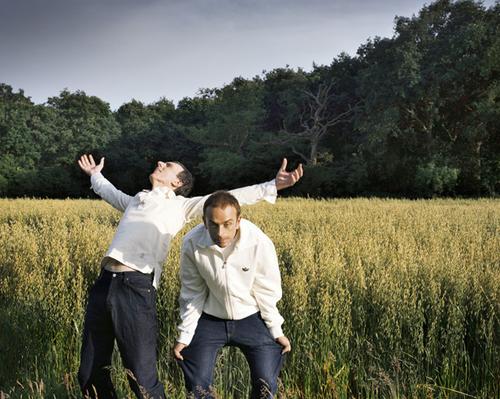
Ray McGinley (Teenage Fanclub) interview (2010)

After Surviving the collapse of taste-making label Creation, scathing self-criticism and the 1990s in general, Scotland's Teenage Fanclub have heralded their 20th year in the biz with a new album, Shadows. According to the UK media, the band fans dubbed 'The Fannies' 1991 album, Bandwagonesque, was the best release of the year (controversially beating Nirvana's Nevermind). Yet critical acclaim rarely seemed to influence, for good or bad, the group's subsequent releases, and they've often seemed perversely self-destructive. Perhaps it's this apathy to outside perception that has helped maintain Teenage Fanclub's creative core over hit song making approach to music. As singer/lead guitarist Ray McGinley points out during our interview, "It is the band that has to live with the songs they make, and love them too, even the ugly ones." That said, I wonder have Teenage Fanclub, 20 years on from debut album Catholic Education, hit their peak with Shadows.

"Whether we're at our peak or not it's probably up to other people to decide." Ray begins on the subject of his band's new album. "I think we're comfortable with where we're at and with the new record so our relationship with our collective, creative sides is fine. With that in mind, I'm sure there are people who will think what we're doing now is crap and only be interested in what we did 20 years ago, but that's fine as well." Teenage Fanclub began in Glasgow in the late 1980s, following a false start as the hilariously named noise-pop band, Boy Hairdressers. Since then they have held claim to the title of 'Creation Records longest post-collapse survivors' now that Oasis have split. McGinley has doubtfully even considered why his band have flourished for so long, as they have continually made music to please themselves above all. "Sometimes when you're in the middle of making an album you forget that other people are actually gonna hear it and so when you release something new and goes out into the world, it can be surprising to hear any kind of feedback from the public." He considers "I mean it's great when you hear people like what you do, because making the albums you lose all objectivity, but I don't think we've ever made music as a way of gaining popularity or anything."

During the bands early years, the emphasis was often on capturing the moment when recording, thus various cacophonous noise-pieces made their way onto Teenage Fanclub albums. The rate at which they recorded was unusual for any band - they put out three records in under two years including The King (1991) – which was deleted within 24 hours of release. However non-rush to follow up last release Man-Made (2005) was a little out of character. Ray explains, "We decided to take some time before we recorded anything to just do other stuff for a time, individually, and that ended up being a lot longer than we initially planned." He laughs, "We didn't take very long to record the actual album, it was all pretty much done back in 2008, but we did take our time mixing it and then had another break after it just to let it mature for a while before we dealt with all the stuff that goes along with releasing an album."

The lack of urgency in finishing and releasing Shadows could be the sign of a band under no pressure to follow up some massive hit album, but more likely it's a confident step forward for Teenage Fanclub who, as their own biggest critics, found a happy medium of music that satisfied them and a workload that wouldn't unduly pressure them. "It's just nice to live with the work for a time before everything starts happening, like all the promotion and rehearsal commitments, when suddenly it feels like a job." Ray adds, "But then going out and playing for people, who come up and talk to us after the show and who've got the new album with them, is a great feeling and then you tour for two years or something and that feeling just stays with you." He continues, "We're in rehearsal at the moment trying to get to grips with re-learning how to play some of the (new) songs again. When you're in the studio making the album, you only need to get it right once and so you're not that well versed in the songs as you would be playing them night after night." He describes, "We're hoping we can work out everything on the record so we can play it live in full like we did with our last one."
 
In performing complete albums on tour, Teenage Fanclub are able to share equally the vocal and written workload. McGinley, Norman Blake and Gerard Love have a long tradition of singing and writing equal percentages of the bands' albums, similar to their '60s counterparts the Beach Boys. A massive back catalogue of work now means an even greater share of live duties, but also the challenge to strike a balance between the ease of familiarity and fully exploring new material.  Ray continues, "I remember, going back to 1990 when we put out our first record Catholic Education, which had less individual members songs, and we'd played that album live, like hundreds of times, and we had a set which we kind of stuck to, then in 1991 we released Bandwagonesque and suddenly we had to play all these new songs and, even to this day it still takes a while until you really feel comfortable playing new the songs along side the old ones." He claims, "There's a real sort of strangeness to them until you've taken them out around the world and lived with them for a time." Ray laughs. "There's a new song called Dark Clouds, which Norman (Blake) sings and there's no guitar on it, so we're trying to work out now how we're going to play it live – as in can he play piano and sing at the same time, because it's quite a difficult song to play, and if he gets someone else to play it, will he feel a bit strange standing there just singing without his guitar!" He exclaims, "So you see what I mean about having to re-learn how to do this thing that we've been doing or over 20 years now whenever we have new songs."
 
There's so much humility in Ray's voice as he speaks about his music. The idea of new songs having to be 'grown into' and old ones being 'comfortable' is the language of a man fully into his craft. Yet the band have been known to give themselves a harsh serve when any apparent 'below par' music's been produced. Ray on the theme of self-criticism, "I think we always try and get our music to be as good as it can be, and that includes playing live as well as studio recordings, but we don't get too uptight about it. I mean you're never going to be able to recreate your record live, it's gonna be another kind of thing and we're always aware of that, but I think we're very self-critical when we play, for sure." Indeed Teenage Fanclub have taken self-depreciation to levels not often seen in music. In one case, at its initial promotional stage, their 1993 release Thirteen was widely dismissed in the UK press – only not by bitchy journalists – but by the band themselves. Not an exercise in reverse psychology, Ray points out, but more a slip of the tongue. "We were probably too publicly self-critical in the case of that album." He laughs, "I think the longer you work on something, and at the time that was our longest period making an album, the more anti-climactic the result can feel. We were genuinely unsatisfied with it and we knew we should have done it a lot better, but the fact that we were so vocal about it meant that the media, of course ran with it."
 
In a kind of unprecedented twist, Teenage Fanclub's follow up to Thirteen, 1995's Grand Prix, was championed as one of the best British album's released all year – and one that the band were this time keen to vocalise their happiness with. The sound on that album was a strong indicator of what was to come, as the lads from Glasgow moved away from their shoegaze roots and onto 3 part harmonies. The latest, Shadows, is close to full with hooks and harmonies channeled straight from 1960s California via Glasgow, and picking up a little XTC on the way. It's on my comparison with Swindon's now defunct oddball-poppers, XTC that Ray interjects; "I don't think I fashion myself on any particular singer, I just try and sing in tune as best I can." He says laughing, "But it's funny because I really like XTC, but I don't think I've ever sat down and actually listened to a whole album." Ray adds, "I do like their attitude though, they seem to be against all the bullshit side of music and just stay recluse and maybe release something every ten years or so." He smiles, "That's something I can definitely appreciate now."

lEIGh5


Saturday, June 19, 2010

Paul Weller interview (2010)

ALARM CALL


Tears For Fears' 1989 single, Sowing The Seeds Of Love
, yielded the line; "Kick out the Style/Bring back The Jam", crudely vocalising the sense of importance Paul Weller's band - The Jam ('76-'83) - had for working class Britain. While his later blue-eyed soul project, Style Council - the ones who would be 'kicked out' - went on to greater success here in Australia, Meanwhile, The Jam's baton was picked up in the UK by earnest newcomers Billy Bragg and Elvis Costello. By the end of the '80s that Tears For Fears lyric coincided with the finish of what many Brits deemed a welcome end to this less honest/confronting side of Weller. Although The Jam weren't seen as punk heroes or gods of mod, it was enough that they had the balls to sing out about how shitty the UK class system had become at the time.

Now, after two decades of growing success as a solo artist, the man they called the Modfather is at last acknowledging his roots on a potent new album called Wake Up The Nation. Talking today from his London home, I begin by asking Paul if he thinks music still has the impact today that The Jam had for England at their peak. "I think it has the potential too," He begins enthusiastically, "but I don't think it's really happening. I guess a lot of it is down to kids have so many more distractions these days, so music is just one platform to make a personal statement by, but when I was a kid, which was a long time ago," He laughs, "There was music or there was football that people gravitated to as a way of feeling a part of something. You have to remember, the technology around now didn't exist then and so your outlet for expression was very limited." Paul remembers, "The bands you were into defined who you were from how you dressed to your attitude and all that."

The relevance of Weller's music ran deep for working class communities who needed a voice. Paul has an inside view of the impact music can have when it's used as a battle cry. He says, "I don't know about all of it, but I'd like to think the majority of The Jam's music was relevant and it's great that people still feel that it is." He pauses then adds "In the shows when we play the old Jam songs, they still sound fresh to me and I feel they're still saying something, because not a lot has changed really… Unfortunately."

A five night residency at the Royal Albert Hall recently gave Weller the chance to showcase his massive back catalogue ahead of a world tour. So how does a man with a thousand songs create the definitive set list? "Obviously we played the new album, but we tried to mix it up each night and have different guests come on with us but I probably covered about 60 songs over the course of the residency."  Considering fan favourites and audience requests, I wonder how spontaneous does he like to get? "To be honest there's quite a few songs I can't really remember, so if it's something not rehearsed beforehand, I doubt I could just play it off the cuff." He laughs. Weller's new set Wake Up The Nation is his tenth solo album, and with a tradition of loose concept albums behind him, I wonder what the bigger picture is fans can look for on this album. "It's just very urban and gritty I think." Paul pauses as he's interrupted by a passing police car, sirens wailing. "As you can hear I'm right in the thick of urban grit right now!" He laughs. "I also wanted to push the boundaries a bit to get away from that whole corporate, safe sounding music that's around at the moment." Paul continues, "Basically I wanted to make the record that sounded unlike anything we were hearing. That was one of the main concepts really."
 
Hardly a one trick pony, Weller's work to date has run between punk, ska, new wave, soul, acoustic/roots and all bells and whistles pop. The raw rock then of Wake Up…, although a new move again, is surpassed – in unlikeliness land - by the album's club mixes bonus disc. Paul explains, "Basically I wanted to be surprised by my own music", He supposes, "I mean I gave permission to the artists who remixed the album to do whatever they wanted with it. I said they could re-sing it, slow it down, speed it up whatever you know, and I was really pleasantly surprised with the results."

So Wake Up The Nation has something new (dance remixes) and something old to boast. The return of Bruce Foxton, Weller's old mucker (and bassist) in The Jam, who hasn't played with the singer since 1982, has had many fans craning their ears to hear a Jam-centric blast from the past on his return. Paul says of their reunion; "It was funny how we got together again, because Bruce lost his wife last year and I went and saw them just before she passed away and that really sparked up our friendship again." Paul explains, "It was the whole life's too short thing, and after years of not speaking to each other I think we came up with one of the best songs we've ever done. Simple as that." The track Paul and Bruce perform together is Fast Car Slow Traffic, and you can't get much more urban and gritty than on this one. It brilliantly manages to sound like 'classic Jam' while avoiding an 'old tricks' routine. It's probably the heaviest rock track Weller has done, but then we've never heard him channel Jimi Hendrix before.
 
Foxton aside, it's the collaboration with Kevin Shields from My Bloody Valentine on the track 7+3 Is The Striker's Name that's surprised fans the most. Paul discusses, "It probably is a surprise for a lot of people but I view it more as two musicians from different backgrounds with the only common ground being that we're both musicians." Paul reasons, "I just thought he would bring something special to the track and once we got into the studio he just did his thing and I did mine and thankfully it worked. Kevin is a great bloke to, a real pleasure to work with."

With so many new and old collaborations and a renewed love of experimenting, I wonder was Weller musically revived a little by his father's death during the album's inception. "I can't say it wasn't a factor, and if you listen to the song Trees, I kind of let it all out on there." He further explains, "It was such a cathartic experience to write that (song), it started out as a poem and I wasn't really thinking of it as a song lyric. I wrote it quite quickly, you know to get it off my chest, sort of thing and I showed Simon Dine who produced the record, and he really liked it and saw the potential to make a song out of it. I was pretty amazed at that really so he gets all the credit for that one." Paul then adds, "Playing that live, it's quite fuckin' hard for me to keep it together actually, but I think it's one of the highlights of the set." Mixing prose and song writing doesn't seem like a comfortable blend to Paul, he says of the distinction. "Well I don't really like 'confessional' records if you know what I mean. I don't like those 'Oh I feel like this or like that, I have to explain all my feelings'" He blurts out, "As a songwriter I'd be bored writing like that, and I think it'd be boring to listen to. Prose is usually about the writer's innermost, but in my whole career I've probably written two or three songs directly about me. That's probably more enough for anyone I think."

lEIGh5


Richie Lewis (Tumbleweed) interview 2010

Before grunge even had a name, five guys from Woollongong calling themselves Tumbleweed were about to become Australia's most obvious link to the global fad Cobain's boys spearheaded. 1990 was Time for the Guru, and Nevermind was still a whole year away, but Tumbleweed, a throw-back in many ways, debuted with a single whose sound would dominate everything for the next four or so years. Early success in the form of Sundial (Mary Jane) and Daddy Long-Legs reinforced Australia's love of this new under-produced, underdog rock known as grunge. However by their own admission, Tumbleweed couldn't beat that first buzz, and as the decade wore on, along with their friendships, the end was in clear sight. Ten years on though, and with a zen-like new approach to life/music/art, singer Richie Lewis is reunited with his old band mates for a second go at the elusive joy of a musicians lifestyle.

The band's 2009 reunion is rumoured to have been slowed by Lewis's objection, so he begins our talk by revealing a few truths for the record. "What happened was I was the most reluctant, but then I didn't really know the others were so keen to do it. I was saying no for a long time, but I was also one of the first in actually doing anything about it." A chance meeting with an old band mate began the process, he explains; "It started with me running into Paul (Hausmeister) for the first time in years and having a conversation with him. I'm a big believer in that if a few coincidences happen simultaneously in your life, then you really should listen to what they're telling you." Lewis continues, "I remember I went to a restaurant one night and there was only one seat left and it was right next to Paul, and we just looked at each all night and finally when he got up to go to the toilet I started talking to his girlfriend and I said to her 'you know how it mentioned in the paper that I'm the one that's stopping the reunion, well that's not exactly true.' She then said when Paul gets back I should tell him so, we ended up back at his place drinking wine and talking about it, and finally we just agreed to plug in and see how we sound and if it's any good…" Richie pauses, "We organised a practice and bang it just sounded right." He states, "I mean we could have had that conversation a couple of years before but it was just the timing was right. There was enough water under the bridge, it was time to let go and sort of bury the hatchet."

As the light went back on in Richie's mind regarding his band's future, he also faced up to his part in its demise. "Form me it was a realisation of the fact that it's okay to be wrong sometimes and just admit it and what I had with those people was great, and it wasn't really worth holding onto this pride any longer. I mean playing and being friends with these guys again has been just awesome man." During 1996, at the band's peak, they split into two parties – Lewis and the Curley brothers, feeling they had a greater say in matters due to them starting the band, clashed with Paul Hausmeister and Steve O'Brien over growing trivialities, before finally asking them to leave. Tumbleweed continued on, but with declining success. "When this original line-up broke up it was acrimonious and we held onto our grudges for a long time." Lewis recalls, "We didn't do the right thing and it was a decision we had to live with for ten years. We ended up, in the later years of Tumbleweed trying to make up for this loss of energy that had come naturally to us before, and although we had some great new musicians in the band, it was a struggle to reach that peak again. When we got back together last year, first of all I had to realise to myself, I was in the wrong. I had done the wrong thing by Steve (O'Brien) and Paul and therefore by the band, and once I was able to confront that we were right back at the start and we could allow ourselves to enjoy making music together again."

Speaking on the reunion, which is already heading towards its first 12 months, Lewis's love of his bands' music has only strengthened now that his friendships within the band have rekindled. "It's a great thing you know, when you hear that sound again, our sound, all this stuff we had kept bottled up for ten years is just gone." He shrugs, "It's also more fun now, in that we're older and wiser and we can enjoy the music more without all the other crap you go through when you're in your 20s. This used to be my reality, but now it's more my escape from reality which is why I think I appreciate it more."

Tumbleweed's first official reunion show was at the 2009 Homebake festival, which was quickly followed by the decision to carry on, prompting the question of a new album. The last one was 2000's Mumbo Jumbo but, Lewis quick to point out, is nowhere near an indication of where he wants to pick up from. "We have been writing and there are new songs but there's still a lot of work to go yet, but we're totally going back to the early days and trying to write from the place we first started at." Richie confirms, making reference to his state of mind as a young musician. ""I don't wanna say too much really, I mean…" He stops himself, "It's early days I can't really talk about it at all actually." Before I can move on, he jumps in again, determined to give an answer; "I want it to be really long and psychedelic and I want it to encapsulate what I thought early Tumbleweed EPs could have been but with a bit more musical knowledge but, I don't think I'll write anything that could be a potential hit."

The band had clocked up several hit songs, such as Sundial, Hang Around and Planet Of The Weeds, but the fall-out from success, Richie explains, was the death of his art; "In the early days there was focus, and something that was really unique to us, and that's what I want to get back to on any new music we make. Back then we thought, "oh such-and-such a song sold quite a few, we better try and write more songs like that' and what ends up happening is things become more contrived as you go on and you end up honing your art to suit what people want." He elaborates, "Its like when you go and see year 12 artwork and there's all this freedom and ideas but sometimes the craftsmanship hasn't quite caught up with the idea, but the catch is as soon as the artist hones the craft, the idea automatically becomes contrived. I'm more about the impetus, the moment of creation and that's what all good art is to me. So that's what we've got to get back to and if we can't capture that spirit of uniqueness, then I don't think there's much point. I'd hate to put anything out anything that kills what we've done in the past, but right now it's still at a pretty natural stage, we're just writing new songs because it's a fun way to start and end our practice sessions."

lEIGh5


Monday, June 7, 2010

Rickie Lee Jones live in Melbourne 2010 (review)

Venue: The Forum

"It's too quiet in here". Nervous laughter. "I guess I'd better play some music then." Rickie Lee Jones is gently pacing the stage at The Forum, seeming so small against the simple backdrop of fairy lights, her speaking voice so soft yet resonant in the room which although full to capacity, is also dead silent. She has just completed one of her signature tracks, Last Chance Texaco, and as the applause dies down only the air-con is audible. This factor is both awkward and mesmerising, and stems more from Jones' incredible tenderness as a performer than the audience's detachment. In fact all present seem to be enthralled to the point of transfixion as Jones works her way into our ears.

Although she has been largely missing from the lime-light for some time, Jones by all accounts is having a renaissance on new album Balm In Gilead. The jazz-pop tunes of her early career eventually gave way to experimental, electronic tracks which have sadly meant her fanbase have often not remained with her throughout. The gaps in consistent exposure have probably kept Jones' invigorated musically though, and has also meant that tonight's show is not a nostalgia trip, but one by an artist still creating and learning new tricks coupled with 30 years of experience.

I'm struck by the ease at which Jones moves between instrument and song choice as she sets up mood after mood, then just as we are hanging on each guitar chord or piano note, quickly shifts tact. The focus tonight seems to be on Rickie's most personal songs, or the songs that have come from key points in her life, as the set-ups between tracks contest. "This song was written by my father decades ago", she says speaking of The Moon Is Made Of Gold. "This next song was written about my family", (The Albatross) and so forth.

As she's performing tonight, Jones' voice noticeably alters on each song as if she's voicing characters, or perhaps even old selves revisited for the purpose of the songs alone. Her formerly tumultuous private life has naturally imbedded itself into her work, and it's only when she performs the ragged jazz number Easy Money, the memory of an intense relationship with Tom Waits in her past emerges for us to witness. Jones prowls the stage, growling and dropping the kinds of quirky names and situations Wait's career is built on. Jones freely displays an acute knack for reaching into her psyche and living out these songs rather than just playing them, and if - as I suspect - she is sharing stories about parts of her life, it's all channeled through with warmth rather than being grossly expunged.

The whole unrestrained feel of the show is further more down to there being no set list and also Rickie's swapping between guitar, piano and drums as she sees fit. At one point breaking from the flow of a track she says, "I'm sick of guitar, I think we need some piano now." On stage with her are a drummer/backing singer and a young bass/loops player, acting as both casual accompaniment and dominating force where needed. On His Jeweled Floor, the band comes together building up psychedelic noise patterns using live loops and splash cymbals as Rickie shuffles back and forth plucking her acoustic guitar. The outcome is a totally hypnotic, spine tingling finale and as it concludes, the audience, completely sullen by the track, suddenly come back to life to give a standing ovation.

Although her music has frequently been overlooked since early successes, Rickie was able to easily perform a set of relatable songs and stories and leave you feeling like she has bared her soul, but also that there's still so much more to her. Live in concert, Rickie Lee Jones was simply THE ultimate 'getting high on music' experience.

lEIGh5


Sunday, June 6, 2010

Chris Bowes (Alestorm) interview 2010

DAVEY JONES' ROCKERS

If you've ever thought what's been missing in metal for years is the unbridled spirit of drunk-sounding, burly Scottish men in pirate costumes, my friend you are in for a treat with Alestorm. Their two albums so far, Captain Morgan's Revenge and Black Sails at Midnight have seen this band from Perth, Scotland forge their own path in the battle metal genre… By dressing and performing as pirates. Tonight, the not-so-sinister Captain Chris Bowes is - after a few ales - at the helm and ready to cast one good eye over a few questions on why life as a drunken, moroding, wench-chasing pirate rocker was so appealing.

"Because Scotland is such a fucking boring country, so you might as well start a band and pretend you're a pirate." The singer says, as a matter of fact. Seriously Scotland suck so many balls. Rubbish place. Chris continues his moan after being asked his opinion on Scotland's amazing musical history. "Its all fuckers with accordions and violins playing crappy granny music. Plus the weather's shit too. There's nothing good about Scotland." A more tactful turn is needed, so we discuss Chris's songwriting. As vocalist and keytar player in Alestorm, it is also his duty to keep the piratey songs coming for the band's singular theme; "Usually after a case of beer and bottle of vodka I'll get into the mood to maybe write some stuff." He laughs, I sit down at my keyboard and start writing and these little pirate songs just come out. It's a magical process.

Alestorm's songs involve any and every reference to piracy you can name prompting me to ask if a serious interest in maritime folk-lore motivates Chris; "None of our songs have any basis in fact or real stories from the sea, it's all stuff you can get from movies and computer games. You know, cursed zombie pirates and sunken treasure… It's all just a bunch of dog crap really. We're just doing this for the alcohol and because pirates are cool and get to wear eye patches. Chicks dig eye patches." He continues, "One-eyed guys get way more sex than guys with two eyes, this is a medically supported fact."

Despite his off-hand remarks, Chris and his band are one hundred percent into the whole pirate schtick. The stage shows, videos and album art all reinforce the band's angle, leaving the listener in no doubt that yep, it's very piratey. Chris says of the roots of Alestorm's fixation; "When I started writing songs I just let my mind wander, and one day it wandered to pirates as a subject to write about. I wrote this song called Heavy Metal Pirates, which ended up on our Leviathan EP, and everyone was like 'holy shit this is amazing, can you write more songs about pirates?' and next thing I find myself in a pirate metal band heading for Australia."

Musically, the band recalls early Dropkick Murphys, with maybe a little nod towards The Darkness. However unlike those bands, it's the keytar that dominates Alestorm's music. Chris interjects, "Oh aye, I can't play the guitar for shit, and I write all the band's songs. So of course everything I write is gonna be keyboard based. Every time I listen to most metal bands, I kinda wish they had loads of keyboards and synths and everything. That kind of stuff gives me an epic boner."

Having an image and a potential-filled theme is all a part of Alestorm's desire to stand out, Chris considers; "From a cynical perspective, too many bands all look/sound the same, so you gotta do something unique to be remembered. It's a lot of what got us where we are today." Audiences are flocking to the shows, too. This previously untapped branch of metal has developed a huge following overseas – although, Chris recons, not enough 'wenches' are showing up; "It's a fucking sausage fest, dudes as far as the eye can see. Breaks my wee Scottish heart."

Despite this set back, he's in awe of the love his band have been shown. "It's ridiculous, I mean we've been a band for probably two, three years maximum and we've toured the fucking world now which is rather wonderful. We've done all of Europe and the Americas so now it's time to hit the Antipodean shores and conquer Australia, as we say." Embarking on new turf for Alestorm has Chris excited, he sees Australian's in general as his ideal audience; "You're all a bunch of fucking criminals." He blurts out. Considering the reputation of pirates - rock'n'roll pirates even – it strikes me that the band might encounter difficulties when getting booked to play some of your more conservative corners of the globe. Chris claims; "Nah, we're a promoters wet dream, mate. Besides we'll do a show for a couple of bottles of cheap vodka, and get a huge crowd, so everyone leaves happy."

lEIGh5


Click to watch:


*

ALESTORM Live at the Corner Hotel (2010): Review

I knew this wasn't going to be just another show when what appeared to be a large pavlova cake sailed through the air out of the crowd landing on stage in front of the drummer with a tremendous splatter after just one song in. Alestorm singer and keytar player, Chris Bowes dips a finger in the mess and gives it a taste before throwing the remainder of the cake at the fans, saying "We're gonna get one hell of a cleaning bill tonight!" Anything seems likely to happen after this, and I joined the band in (probably) wondering if any more desserts were lurking in wait to be added vigorously to their rider.

Scotland's Alestorm, who by song and by appearance could defiantly shiver a few timbers, actually appear scared by the Melbourne audience's rabid response to them at the Corner tonight. I'm now certain they were expecting a humbled crowd, gasping at the primal display of ear splitting metal, instead the real brutes were in the pit en masse, dressed even more pirate-y than the band, making Alestorm appear as late comers to the party. But then billing yourself as a pirate metal band, meant that Alestorm were bound to attract your more debauched landlubber with a given excuse to drain the bar, gob all over the place, throw pavlovas and collect/deliver as many bruises as possible. The band's songs after all are about celebrating the hard living, hard drinking pirate and of course this theme has found a welcome reaction wherever they have played. It's easy to see why, I mean how can uptight emo bands or revered metal giants compete when a fan can leave a concert feeling like the band have just used you to mop the beer off the loo floor with?

Bowes, reading the crowd calls out, "Who wants to hear a song about big tits and beer?" Audience roars, Chris responds; "Good because we just so happen to have one of those!" The song of busty wenches and alcohol cunningly titled Wenches & Meade is too much for some fans and they begin hurling their bodies into each other at bone-cracking pace. All you can really hear coming from the stage is drums and shouting, but the muddy sound is a technicality really. You don't need to explore Alestorm's well crafted lyrics, but rather enjoy the simple repetition, much like listening to rhyming football chants. Despite this, Chris wisely announces each song with a massive build up so as to keep the momentum up.

As a live band, Alestorm are hilarious to watch as they deliver with such passion some pretty ridiculous anthems about beer, pillaging, Davey Jones' locker etc.. all in the single tempo of fast and raucous. Bushy haired singer Chris Bowe's voice is all angry growl, and kind of at odds with his narrow frame and feisty keytar playing. The rest of the band - rocking the beard with no moustache thang – looking as though they'd rather eat razor blades than crack a smile, played for all they were worth, but I still it felt like there was a little water in their gun powder tonight, resulting and smaller bang than maybe expected.


lEIGh5


Thursday, May 27, 2010

The Paradise Motel: Australian Ghost Story (album review)

The theme of Australian-specific subject matter has been a constant in Paradise Motel's music and for that alone they qualify as a rarity. To my ears they are suitable carriers of the torch left once The Triffids expired as a band, especially on this new album - their first in eleven years. In the case of Australian Ghost Story, that torch highlights the dark tale of baby Azaria's mysterious death at the start of the '80s, and the subsequent trial by media - the first of its kind in this country - of the one-time accused woman at the centre of the story, Lindy Chamberlain. 
 
The story of Azaria Chamberlain's death has been told and re-told to the point of fictionalising and wild assumption; perfect fodder for a songwriter, which in The Paradise Motel's case has been generously applied. The band have lyrically always offered fragments of often menacing stories and scenarios of nameless characters, but with their new album set for release on the 30th anniversary of the Azaria's death, the subject of the stories has a name and the scenarios are documented. Really though, menacing is hardly broad enough a term for what is on offer here. Each track's narration jumps from reflection to mythologising to accusation incorporating the viewpoints of all the stories mainplayers, including the unique environment of the Red Centre. On opening track The Witnesses, it isn't apparent who the narrator, vocalist Merida Sussex, is voicing until the line 'my wife tracked the footsteps/we found her guilty' and the listener is suddenly reminded of Lindy's tragedy at having her husband turn on her during the trial. The song quietly berates the witness testimony's given credence at the time, yet avoids dwelling in heroes and villains territory as might be expected.

Chamberlain's trial is touched on during a couple of the songs, but it's the descriptions of the landscape and its role in the Chamberlian case, and when Merida gives a voice to Lindy that really draw you in. A Bend In The Terror for example sees the mother telling her deceased daughter 'now she is free', all the while reassuring herself and questioning her memory of the events, maybe even imbibing them so as not to forget the short time in which Azaria was alive. The imagined letter from Lindy to Azaria, Stations Of The Cross is kind of half spiritual babbling mixed with intruding cold reality, making for an engrossing finale to the band's rendering of this story. Musically Paradise Motel are swimming in familiar waters, they go between bare accompaniment and sweeping orchestral numbers, all while Merida's voice remains a central steady pace and pitch. Perhaps because of the subject matter, the band have gone for a more soundtrack-ish approach to the music. The string laden tunes are memorable but not distracting from the tales being told in the detached way in which Sussex sings.

The mood with which the band tells this now legendary story is at odds with such familiar things as the tragic-comical news footage often wheeled out showing Chamberlain's famous dingo remark. They instead choose to highlight things such as Lindy's deeply religious beliefs at the time of Azaria's death and the betrayal she felt by her husband and country. The Paradise Motel have written a concept album devoid of obvious romanticising about actual events, instead they present an impressionist, cloudy observation as would happen with a familiar story after many years of being retold.
 
I for one am overjoyed that The Paradise Motel have decided to record again after such a long break, and to tackle this particular subject makes their return all the more delicious. At a time in Australia when junk media trialing saturates prime-time TV, it's all the more important that this story and it's consequences for one Australian family are remembered. The legacy of Azaria Chamberlain's death has been a plethora of artistic statements; from the Meryl Streep film (Evil Angels), to countless paintings, and that bizarre opera to name a few. Australian Ghost Story is a fine continuation of that tradition and a very welcome return of The Paradise Motel.
 

Tuesday, May 18, 2010

Karl Hyde (Underworld) interview (2010)

Karl Hyde is positively beaming today. His new album with Underworld cohort Rick Smith is rapidly taking shape; news of a headline slot in Australia at the We Love Sounds festival has him singing praises, and he's in celebration mode for  his newly found sobriety. Life for the Romford (UK) artist is a much simpler all-round affair today, thanks to several well defined turns he's taken over the years. Starting our talk at his first major shift in gears, the death of Underworld – 'the power-rock years' - Karl, in spite of chart action in the form of Underneath The Radar, was far from comfortable with his band's early success.

"Underworld 'MK 1' felt like being trapped and floundering and just searching for what it was that we were about to be honest." Hyde begins. "Rick (Smith) really bought us back to our roots after that first phase. I mean we always loved Kraftwerk and we loved dub reggae and anything with a strong bass structure, but the penny never really dropped until the end of the '80s when acid house came along." He continues; "I remember we were on an Australian tour and for the very first time we started to infuse this acid house sound into our guitar based music. It was something of a revelation for us because up to that point, I felt like there was something really wrong with this band but as soon as we started making dance music, it was like we were finally being honest with ourselves."
 
The truth of Underworld's false start, Karl decides was down to a desire to be accepted; "We were kind of driven to be a part of the broader scene happening in Britain at the time, but I can look back now and know why I didn't feel at all happy with what we were doing. We were listening to the music we loved while playing something completely different and really, we should have been getting to the core of what we were passionate about." It was outside of regular band duties, that Karl and Rick maintained a hobby that would ultimately build the foundation for their future sound; "Whenever Rick and I were out of contract or on the dole, we would make this dub-electronic dance music." He pauses, "It was really peculiar because we never thought to release it as Underworld, yet at the same time we were sitting on these recordings, the music happening in clubs – which was a lot like what we were making – was becoming huge. It's weird to think it, but we actually didn't know much about the club scene at all, so the last ten years has been spent learning what we missed the previous ten years!"

Hyde's lack of grounding in the UK's dance movement has seen him develop outside the standard house influences. As a youth, Karl even harbored a somewhat reinforced distrust of club music; "When we were growing up, the rock kids all thought that dance music was disposable rubbish. Basically the lowest form of music." He claims, "But what we've discovered since then through making it is, it's an intensely creative process absolutely full of challenges. Plus the reaction we get to this music makes it so worthwhile." Karl explains, "The rock culture's quite violent really, I mean people used to beat the crap out of each other at concerts and so moving in to the dance music scene was very appealing to me because the people were so much friendlier." He laughs, "You know, everyone dresses up and there's these fantastic light shows and in a way it's this kind of throw back to the 1960s hippy culture, but it's also a reaction I think to the overly aggressive rock and punk scenes that came before. These days you can see how much the dance scene has infiltrated rock shows with things like The Flaming Lips, whose concerts really embrace that spirit of the rave scene."

Karl as a songwriter has forged an unmistakable style of his own. His usual shout-speak delivery comes across as half rant, half poetry and offers very few legible phrases to pick from. Examining his written work, it's reasonable to think he is just hanging words together that fit with the mood of each track. Yet as to be expected, there's a method to the apparent randomness and, as if triggered by the subject, Karl is not short on words when explaining his outpourings. "People talk about what I write as being like a kind of 'stream of consciousness', but that always makes me think of somebody sat in a dark room, feverishly writing whatever comes into their head, and it's not like that at all for me." Karl explains, excitedly, "I write down literally everything I see, not what I'm thinking. I can be sat in a café or a park and I'll just note down everything no matter how insignificant, in as much detail as I can." Usually, Karl's lyrics would make their way into his songs through a trial and error process until they develop a significance of their own. However, he adds there is still room for the occasional freestyle; "I recently did some shows with Brian Eno, which were all fully improvised performances, and for that I took a load of my note books on stage and just started picking bits out and reading them no matter what it was."
 
Hyde, in his songs, often sounds as if he's urgently relaying information from various sources; of either all or no importance leaving it up to the listener to decode. Karl describes; "Often what will happen is the most significant or most personal lyric to me will sound the cheesiest, which is a peculiar thing really. Sometimes when you try too hard to be honest in your writing, people think it's a bit too much and switch off to it. I mean a song like Born Slippy went over people's heads in a way, because to be completely honest I was asking for help." He reveals, continuing; "I was through with being unhappy and getting wasted to hide how unhappy I was, so I let it all out in that song. Unfortunately it became something of a drinking anthem, but in reality I was horribly depressed about my own drinking and having difficulty seeing a way out."

It's clear that Underworld have developed from the experimental acid house band of the early '90s into a vital form of expression for Karl. Whereas the rock kids of his youth saw dance music as disposable, it was Underworld MK 1 - 'the rock band' that was irreverent for Hyde. Even in the most anthemic of Underworld's club tracks, you'll usually find a voice, busy building a huge scale scenario up from minute detail with dream-like inconsistency. "I can't write in a traditional way though, I've tried to but it just never works." Karl shrugs, "I listen to Lou Reed, and he sings in conversational American. I think he just writes down what he hears people say and builds a song out of it. It's brilliant." He beams, "I'm also really inspired by Sam Shepard - a great play write who did The Motel Chronicles. I could never write as good as him but, I see the world in these tiny fragments which is exactly how he writes. I mean he'll describe the corner of a room or the wheel on a car and it's completely fascinating. He finds beauty in these things and is able to capture it so well in his writing."

One of Karl's objectives in Underworld has been to constantly re-interpret how he and Smith perform the songs live. The duo often records their concerts as a way of guiding them to not repeat themselves and make each show different from the previous; He discusses, "Aside from doing music, I'm  also a painter and as soon as I finish an artwork it kind of looks at me and goes, well then what next?" He grins, "It's exactly the same when putting the shows together, in that the music is never fully stationary. It's already done as a recorded piece of music, so when we play it live, each time it can become something new." He adds, "Whenever we play, I've already done the show over and over in my mind so that way, when it comes to the actual event, I feel I can be open to exploring ways of deconstructing everything and rebuilding it as its happening."

Thursday, May 13, 2010

Tracey Thorn (Everything But The Girl) interview: 2010

CRYING AT THE DISCOTHEQUE

Tracey Thorn recently married her life partner Ben Watt after many years as lovers, parents and the musical duo Everything But The Girl. It's a symbolic move however, as their careers as solo artists have taken them in totally different directions since Everything But The Girl's hiatus in 2002. While Watt - who discovered drum'n'bass in the mid-'90s, continues to tour as a DJ - Thorn has returned to her singer/songwriter beginnings. Yet she has smartly avoided the trap of comfortable familiarity on her new album Love and Its Opposite, approaching it instead with the wisdom and wit of a woman who's been making music her entire adult life. The singer's experience however, didn't make her over-confident when re-emerging as a solo artist on 2007's Out Of The Woods.

"I felt a bit of trepidation to be honest, because I hadn't done anything in music for a few years at that stage and I wasn't completely sure what the outcome would be." Thorn begins from her London home. "Thankfully there were still enough people interested to make it worth my while doing." It's hard to gage exactly where interest in Thorn and her music began. There are artists who claim Marine Girls' (Tracey's first band) as heavily influential; and while it was acoustic period EBTG that drew a considerable following, many die-hard fans baulked at 'Techno-Tracey' on the later, more successful club albums. "At least nobody could accuse me of repeating myself." She shrugs. A constant focus for many fans however is not the vehicle for the songs, but the identifiable situations within. Thorn could always articulate the bit that comes in between the giving of red roses and the slamming of doors, where only the best songwriters dare to tread. Tracey's forte is the day to day happenings of an individual, a significant other and the thoughts many would deem less impressive to build a song around than say, a good break-up story. "I'm usually a very biographical writer, but that doesn't mean the songs are all about me." Tracey explains, "Certainly I take stories from people around me or from things I've read that have an impact on me somehow. At the end of the day, I'm writing stories that are true in the sense that they say something true even if it isn't directly linked to myself. I think that helps make my songs at least relatable." One of the new tracks, Singles Bar - a first person account of a mature woman out on the prowl - stands out in the wake of Tracey's recent marriage. I wonder could it be seen as an aural 'last fling' for the songwriter?

"Well some of the details in that (song) are taken directly from friends' experiences." She offers. "Women who have found themselves in the position of being single again at a time in their life they didn't expect to be. It's harder for them to be out there dating again now they're older and I wanted to acknowledge them. On the other hand," Thorn adds with a twist "It's also a bit of a fantasy. It could be that the woman isn't single and she takes off her ring as she enters the bar. The fantasy of being single again after many years in a relationship is something I think a lot of people have." It seems a safe bet that living and working together with her husband Ben as one of music's most enduring couples - such a fantasy is relevant to the author also; "Living together for so long, Ben and I both know when each other has our songwriter's hat on." Tracey asserts, "There's a line between your actual life and your work and we have enough respect for each other to not be self conscious about what we say in our songs. We give each other's work room to exist outside of what we do together and that's really important."

The last album Watt and Thorn made as Everything But The Girl was 1999's Temperamental. After seventeen years making music together, they mutually agreed early this decade to give the band a break. Tracey eventually began seeking out new partnerships for making music so as to avoid a possible 'EBTG Mk 2' situation. On Love and Its Opposite, Thorn has worked with artists from the dance and rock fields, adding a wider breadth of influences. "There are many ways you can make a record and people often slip into patterns of behaviour I think," she confirms, "But if you step back from that and make a few different choices then you don't quite know what you're going to get and I think that's an interesting state of mind to be in when you start work on something new." One of the stand-out collaborations (on a cover of Lee Hazlewood's Come On Home To Me) is with Swedish troubadour Jens Lekman. I wonder wouldn't his often dry-humoured ballads and spontaneously observed prose be at odds with Tracey - a self-confessed over planner? "It's funny you should say that, because the stuff we've done together came about really spontaneously actually", She laughs, "I met up with him in London a couple of years ago and we got on really well so we decided to try working together. The first thing we did was a cover of a Magnetic Fields song for a compilation, and the recording was just done in one take in his hotel room in London." Tracey exclaims, "We just sang it into his laptop! It was about as spontaneous as it could be." She adds "He's got a very relaxed spirit about music which is just brilliant."

Also appearing on the album are Al Doyle from Hot Chip, Leo Taylor from The Invisibles and members of Lost Valentinos. Yet despite the guest list, Tracey and producer Ewan Pearson have avoided over indulging any collaborators. In fact, Pearson's stark production, following on from his recent work with Delphic and Goldfrapp, is itself an indulgence avoided. Tracey discusses, "That really appealed to me actually, taking a producer and getting them to do the very thing they're not used to doing. Ewan loved the idea too because he was keen to show people that he can do more than just dance music." The partnership developed naturally after the realisation that both artists, Tracey explains, could help each other move in a new direction; "Ewan worked with me on some tracks for the last album (Out Of The Woods) and although I had several different producers work on those tracks, he ended up mixing the record and pulling it all together. In that time we'd gotten to know each other well and I had come to really trust his judgment. At the start of making this album, I ended up going to Berlin were his studio is, and we just did some basic acoustic demos but at that point we both just looked at each other and thought, well this could be really interesting if we actually make a whole album together, but not an electronic dance record. So for both of us it was a step sideways, but it was good I think to get out of our comfort zones a little bit."

On the subject of collaborations, Tracey has publicly hinted at a desire to sing on a Pet Shop Boys track, but has refrained from asking the guys directly. "I have met them a couple of times and I'm sure they know I'm a huge fan." She laughs, "I mean Neil (Tennant)'s done some amazing collaborations over the years and written many songs for women to sing, and I'd be very happy to be added to that list of singers." Tracey's love of the 'Pets' extends to feeling of kinship, she explains; "I have always thought that they, along with us, were kind of outsiders in the UK music scene, which was so steeped in the rock tradition. The Pet Shop Boys seemed to get their influences from a different place than many of their contemporaries, like with writing songs for Dusty Springfield - who I admired so much - and writing these kitchen sink dramas with quite simple, but beautiful melodies. So I did feel a kind of kinship with them even though they were making these very slickly produced disco songs. But then, that's just a detail really."

Living in a three child house-hold, I wonder in closing what Thorn's greatest critics - her children - make of what their parents do for a living? "To be honest they're not that interested really." She laughs, "They're at that age where they only want to listen to what their friends are into, but I think they see it as a little bit interesting that I make music and their dad does too, but really we're their parents and so we're just old and don't know anything." Tracey jokes, "I'm sure as they get older they might take an interest and be able to understand the music a bit better, but it's fair to say the music I'm making now, no 12 year olds are going to get into. I mean every so often one will come in and go 'oh that's nice mum' but you know, the simple fact is I'm just not poppy enough!"

lEIGh5

Monday, May 3, 2010

Ian Astbury (The Cult) interview (2010)

STILL IN LOVE'S EMBRACE


Sitting down to talk to Ian Astbury it's impossible to ignore the staggering sense of history in The Cult singer's words as he unfolds the story behind one of '80s most enigmatic records,
Love. The Liverpool based band's second album resonated with a mix of psychedelic and melodic power rock influences boasting a sound completely out of step with the then musical climate in the UK. 25 years later, Love is now recognised as The Cult's greatest work and so through demand alone, it was decided they would tour the set 'Don't Look Back' style. I start our talk by prompting Ian to take me back to 1985, and the circumstances surrounding his bands' most defining work.

"There was a lot going on at that time and because we made it, it's hard to have any real perspective in a way." He explains, "We didn't analyse it or check the process, but I do remember it being very intense and that we were just so engaged in it." Ian's voice becomes stern as he continues, "We were in the studio all of the time, you know, rather than just going in every other day. We weren't distracted at all from what we were doing, no one was on the phone or just hanging out, we were working very long hours with no breaks at all and experimenting with so many ideas." Astbury ads thoughtfully, "I think that's why that record has a constant unity all the way through, it was probably the most honest album we did, in that we had no career at that time. We were young and making music because we wanted to and everything was still so fresh."

Astbury unlike a lot of his punk peers was always practicing to become a better musician. His group – formerly known as Southern Death Cult – sat very awkwardly next to the bands usually recalled as defining England's post-punk sound. Californian psyche-rock influences – shockingly unfashionable in the UK at the time - were all over their album, yet its success was undeniable. Ian states; "Love definitely took on a life of its own, and we kind of become subject to its whims the more attention it gained. Let's put it in perspective though, I'm lucky to have had success at all, I mean a lot of people I grew up with who were also in bands are either dead now or just gone, they gave up and walked away."

The press at the time of Love's release weren't friendly, while some hardcore music fans took outright offense and, matters into their own hands; "I admit that what we were doing was fairly controversial at the time. It was controversial to be punk rockers and still love Led Zeppelin and to call an album Love in the aggressive post punk era was seen as potential suicide. These things drew a lot of heat from the media but worse still, I remember going out when She Sells Sanctuary got in the charts and some kid come up and punched me right in the face at a concert. There was so much hatred in his eyes, and all that was because we came from the streets in Brixton, we came from punk rock and I think this guy saw us as breaking the code by not pretending we couldn't play our instruments or for having success."

Ian claims his assailant helped him realise he was maybe on the right track with The Cult after all; "It was a wild time and everyone was very emotionally loaded and to cop a punch in the face for what I was doing in some ways was a great compliment, it at least was honest and it at least caused a reaction that is what good art does doesn't it?" Today Ian lives in New York and frequently tours with the remaining members of The Doors as Jim Morrison's 'replacement'. Perhaps he's living in the past a little, but it doesn't stop Astbury from having some strong opinions on what's touted as great contemporary music. So who deserves a punch, I venture; "I'm disgusted by Dave Grohl" He barks, "I mean it's just boring fucking jock rock. Guys like him were the ones that got into fights with the punks at school and were just plain thick." Ian ads, "What do you call them in Australia… bogans?"

It's clear that Astbury's fire is far from quenched as he begins explaining how playing live now the album that launched The Cult 25 years ago makes perfect sense; "I'm technically better, there's more weight to my character and I've had more life experience." He continues, "The good thing about the songs on Love is that they deal with things that are no less relevant now than they were then; life, death, sex, materialism, spiritualism; all the human experiences." He ads, "Because of dealing with a lot of personal issues myself over the years and watching my family growing and dealing with their own issues, I feel like now I'm more capable of fully understanding the weight of songs I wrote 25 years ago."

On a more practical side, Astbury is chuffed to be able to present the set live in a way, not possible at the time of its release; "The best thing is the sound systems we're working with now-a-days are vastly improved, so the songs will obviously be a lot better sounding. Also on the visual side of things, our backdrop screen isn't bad either. We've basically took a load of films and influential imagery, just things we've been into over the last 25 years, and made a huge collage; some of which is specific to the actual songs." He then ads, laughing, "Plus we've all put on a couple of pounds, so everyone can come and check out how fat we've become."

I find it impossible to not prompt Ian to reminisce on the song that earned him that fat lip – She Sells Sanctuary. Of this powerful beast of a song, he reveals; "Sanctuary came together very easily in fact, I took the bass line from a song called Spiritwalker, which was one left over from our Southern Death Cult days. Billy (Duffy) came up with the melody, and we worked out a vaguely psychedelic guitar sound which seemed to fit it well - we were heavily into '60s psychedelic music like The Doors, Hendrix and early Zeppelin – Also the producer, Steve Brown, had had a lot of pop success, so he really knew how to structure a song." Ian sighs and adds "It's funny, you write a song like that were everything comes together far beyond what you could've expected and then you spend the rest of your life trying to write another one as good."

Without a pause, Ian responds when I ask why is now the time to revisit Love and why he thinks it is still so widely championed; "Because of its earnestness, its honesty and depth." He ads, "It's the album that made us, so why not claim our rightful place in the legacy of alternative rock music." Once the tour for Love concludes, I can't help wondering if the album that launched The Cult will also to be the one that ends it. Ian is a keen film maker and producer these days and works more with The Doors than his own band. He explains. "We'll take this show to Australia, Eastern Europe and Japan but after that, we're done with it. I mean there might be enough demand for us to bring it back in a few years time, but I'm not thinking about that now because we're actually recording some new Cult material right now. We're moving forward at the same time as looking back I suppose." He says laughing, "We've got four new songs done and when an album's ready it's going to be coming out in a format called capsule." There's silence on the phone as I'm taken aback by Ian's statement. He waits a few beats before adding. "Do you know what I mean by capsule?" All I can offer in response is the time variety. "No it means it'll encapsulate relevant multi-format articles. It will have music, a film, an object such as a book or a T-shirt and you'll be able to buy it electronically or tangibly, USB, vinyl, CD, DVD, cassette anything." I'm not sure if Ian's joking, but his ambition to expand his next album's release to include cassette has me grinning like a fool. I think of The Cult's early fanbase who remember with excitement Love's original release, making room on their dusty cassette shelves for the next chapter in this unique band's catalogue.


lEIGh5