Wednesday, March 30, 2011

Mojo Juju & The Snake Oil Merchants - interview: 2011

INTERVIEW WITH THE SPELLBINDER

Popular traveling Burlesque show, The Jitterbug Club, has reached the end of a five-year run celebrating all things vaudeville. The show’s originators, an eight-piece rag-tag band called The Snakeoil Merchants, in a further blow to local cabaret fans, will in turn wind down with one last explosive Melbourne show this week (April 2011). Speaking to me today is singer and master-mind behind the double-act, Mojo Juju, a kind of conduit between titillating 1930s escapist shows and modern performance art. Along side tales of drunken home-done tattoos and causing audiences to blush, she enlightens this novice on the finer points of being cabaret star in today’s world.

"There are a lot of performers out there who believe in what they do, and I think when you convey that, your audience can’t help but be disarmed." Mojo begins, "If you go out on stage and don't believe in what you're doing though, I think people can tell and they won’t go along for the ride with you." It's this very approach to her act that has kept audiences coming back to The Jitterbug Club's shows. Juju believes not in quaint, cheap-shock stage shows, but in bringing a sense of fun and danger back to the fore. "For me the aesthetic of what we do is nostalgic but it’s about the transference of the impact cabaret or vaudeville had in the 1930s and '40s to now. I understand that it is not exactly relevant to today, but what you wanna do is make it contemporary being a little confronting which actually still is an anomaly in live shows." She pauses, "You know, it’s not just pretty dancing girls, it has a sense of humour, and it has a shock element… Basically I want my audience to blush when they come to one of our shows." Juju laughs. I wonder does Mojo believe people perhaps like to be confronted, and if that's what keeps these kinds of shows from fading out. 
 
"What keeps the art form alive, is understanding the impact it had in its day, and adding to that what is maybe provocative and taboo today. The differences really aren’t that great I don’t think.” Earnest performers, it seems, have always muscled to the front of the cue, while the provocateurs frolicked down the back. It's a sign of music's bizarre conservative undercurrent – a forever clinging barnacle it picked up once it realised it also had a political voice in decades gone by. Mojo believes that now is as good a time as any to celebrate the subversive when you take in to account the fact that vaudeville began in far less conservative times than ours. "We're living in very self-aware times I think. People seem very concerned with how you are supposed to behave in certain situations or out at a concert, but that leaves me feeling very stifled. Vaudeville throws all of that out the window and gives free expression room to breathe. I honestly think people are longing for that, though they don’t always know, but you see a kind of relief in audience's faces at these shows." Mojo's view on burlesque's shift into the mainstream - via a certain recent film starring Cher – but mostly through acts like The Dresden Dolls is mostly positive. She continues.

"I haven’t seen that film (Burlesque) yet, I’m a bit scared to be honest!” She laughs. “But I think people like Amanda Palmer, Mikelangelo (from Tin Star) and Mick Conway - who's one of the last true old-school vaudeville performers still out there - are incredible. They're authentic, you know – they don't use vaudeville as a gimmick. I think their work only strengthens our little branch of the showbiz tree." As a singer/songwriter and conceptual artist, Mojo by more happy accident than design, found herself gravitating to the underground cabaret scene in Australia. Once she realised her vivid ideas of stage shows were in fact a shared passion, exciting things began to happen. "I guess The Snakeoil Merchants were born in Newcastle at a time when I found myself on a kind of seachange there. There were many musicians this very small area and through several lucky chance encounters I soon had a band of like-minded souls." Juju laughs, "I remember things happening like, our saw player just getting up on stage at an early gig and playing with us with no reservations at all about not being asked" She continues, "We liked his spirit, so after that gig we drank and we drank and we drank until finally we tattooed a skull on his chest and said, he couldn’t leave the band until he managed to scrape it off!" Mojo smiles, "That's one of many weird little scenarios that happened early on and led to us forming this band."  With the band she had always wanted together at last, Mojo felt she was able to unleash her bigger plan of a full-blown vaudeville extravaganza.


"It all started with a bunch of songs as these things tend to do, but there was more to it than that, because when I write I tend to develop the visual side to the music as much as the music itself, so with Snakeoil Merchants, I finally felt I could turn develop my ideas into a cabaret." Mojo adds that a point of frustration for her was seeing bands that weren’t 'engaging their audiences at all' and wanted to 'offer people more'. “I got so sick of watching bands with just four people standing on stage and I felt like there was this whole pool of wonder that they wasn't being drawn from in live shows." She adds, "Who are we to stand on stage and just play and expect everyone to nod along and then go home? I want to engage with the audience and have them engage with me." A room filled with expectant punters can be hard to judge I propose, so couldn't it be equally risky offering too many distractions from the music? "Well I say kudos to people like Jason Webley (from Evelyn Evelyn) who can just go out on stage with an accordion and be utterly captivating. There's something authentic about that you can't deny. Then on the other side there's things like Muse, whose visual side to their show is kind of over-saturating and a bit too clinical I think. That kind of display doesn’t leave your audience wanting more. We try and prod our audience a little bit at a time instead of battering them over the head with stimulus." Mojo adds, "I mean our show is visual yeah, but not in a way that creates a wall between you and the audience."


The Snakeoil Merchants may be putting their Jitterbug Club show to bed, but Mojo is in her own words, 'bursting with new ideas for a show'. The end of a successful run like the 1930s New York-themed Jitterbug Club, is a bittersweet affair, Mojo admits, but as the prime designer she is obviously keen to make some new wow. "Ending these shows is just so sad in a way because of the relationships I've built up with the other performers, but at the same time, I'm so excited about the possibilities of doing something new. I've been working with a collective called the Hoodoo Emporium to help see my next fantasy  through to fruition. One of the shows is a Wild West type performance called The Devil Rides A Rocking Horse, with can-can dancers and all of that kind of thing." Mojo laughs, "I could talk for hours about what I want to do next, but really what it boils down to is working on the Jitterbug Club shows has made me realise my twisted fantasy's can actually become real working within the realm of vaudeville."


lEIGh5

Saturday, March 26, 2011

Chris Geddes (Belle & Sebastian) interview: 2011

LOVE WRITES

The latest chapter in the tale of Glasgow's bookish anti-stars, Belle & Sebastian is titled simply enough, Write About Love. It’s as though a light-bulb went off in their collective heads at some 'new album ideas' meeting and it read 'go do what you always do'. They did and the results were unmistakably Belle & Sebastian; in other words another enchanting and rewarding listen, devoid of any 'Mills & Boon' sentiments.

Although no such light-bulb moment took place, the band did take their longest between-album break so far in their 15 year career. Suggesting Write About Love was an aural face-palm and a reminder of what they did best as a collective seems like a good place to start my talk with keyboardist Chris Geddes today. He says little to re-enforce my thoughts on their new album's title, but instead offers, "We just didn't ever want to get to the point where we are going through the motions and that's partly what lead to us taking a break for a while. Plus Stuart (Murdoch) wanted to work on another project, which ended up taking a couple of years." Chris adds, "I don't think there was any doubt we would get back together though. Without really discussing it, we were all I think under the assumption that there would be future Belle & Sebastian activity.” Experience has taught me that asking the artist involved to describe their work usually results in many awkward pauses, but Chris in interview is almost an enthusiastic fan of Belle & Sebastian’s work, as though his contribution to the band is far from his mind.

"I think it has some very strong tracks on it." He dutifully states, “Sarah (Martin)’s writing is probably my favourite thing about the whole record, but also Tony Hoffer did a really good job with the production again." Tony previously worked with the band on 2007’s The Life Pursuit. Chris continues, "Also, I think Stuart (Murdoch)’s and Stevie (Jackson)’s songs (on Write About Love) are among the best they have ever written in Belle & Sebastian.” Chris claims that it was producer Tony Hoffer who provided the starting point for the new record’s direction. “At the start, he said he wanted me to try using old synthesisers on this record, and I guess because we had already decided we wanted to use less orchestral stuff than we had on the previous records, that seemed like a great place to begin." He continues, "There wasn't an abundance of songs going in either, so we had to work out a lot of the album in the actual studio, unlike on The Life Pursuit, where we had a lot of half formed ideas already on the go by the time we started the sessions." An outsider might see this as a less stressful way of making a new album, but Chris reckons, “It (Life Pursuit) felt like we were trying to keep too many balls in the air the whole way through the process." As a producer in his own right, Chris felt he could 'buddy up' with Hoffer on the album sessions, perhaps more than anyone else in the band.
 
"Yeah I love working over there (in LA) with Tony because its such a brilliant studio, and whereas I work from my little home set-up in Glasgow, being around Tony is like playing with the big boys and seeing how a true professional operates." His own production work, Chris decides after only a brief pause, could never include a Belle & Sebastian album. "No I couldn’t do it because nobody in the band would let me tell them what to do." He quips, "As much as I’d love to do it, and get a proper studio together from the huge amounts of cash I'd obviously make from it, at the end of the day, nobody would listen to me." Poor Chris – the man they call Beans is in possession of one of the softest speaking voices I’ve ever encountered doing interviews. Indeed I had met Chris in person during Belle & Sebastian’s last Australian visit and was struck by how incredibly timid, although engaging, he was. To be the 'quiet one' in Belle & Sebastian suddenly seems like a hilarious concept considering so much of their music, even during their rare moments of gay abandon, is almost apologetic in delivery. Our talk turns to the 'other project' Stuart was working on during Belle & Sebastian’s hiatus and how it inturn lead to Write About Love’s surprising guest vocalists.


"Norah Jones (who guests on Little Lou, Ugly Jack, Prophet John) I think came on board because a good friend of Stuart's from years ago turned out to be an ex-housemate of hers…” Chris laughs, possibly at the sound of himself name-dropping, “And Carey Mulligan, well Stuart just saw her in a film and was quite keen to get her into the studio because he was working on the script for his film, God Help The Girl and he thought she'd be good for a role in that." The script and score for the musical film is entirely Stuart Murdoch's work outside of his commitment to Belle & Sebastian. He had written stories exclusively about women and for women to sing and went about auditioning artists, mostly unknowns, to play the parts. Carey Mulligan was an exception in that she had an already developed career as an actress, mostly in bonnet dramas, however, she makes a rather impressive singing debut on the title track to Write About Love.

Chris featured on the 2nd album's sleeve


"I think she was amazing really," Chris continues, "but I read in an interview she did after that she was extremely nervous about the whole thing." He laughs, "You would never have known at the time though, but I guess that's the actor in her." At this stage in Belle & Sebastian’s career, pre-album release and tour press is a standard activity but I remind Chris that it wasn’t always the case. Back in 1996, just as the media-hyped Brit-pop scene was starting to lose steam, Belle & Sebastian, perhaps disturbed by the level of attention shown to anything new that could be held up as the saviours of Brit-pop, chose to withdraw as the spotlight drew nearer.  It was a renegade card they played but it only served to strengthen their appeal especially once their debut album Tigermilk became the indie buzz album of the year.

"We were just sort of making it up as we went along. We decided to not do interviews or promotional activities because of how difficult we felt it was to portray what we were about through just talking about it, if that makes sense." It does, I tell him. The particular topic reminds me of seeing early Belle & Sebastian promo items, like badges and posters, often featuring basic line drawings of kids on bikes or soft toys with a simple 'B&S' slogan to identify the culprits. These kinds of DIY, anti-publicity bands are common, but rarely succeed in the way Belle & Sebastian have. Chris hints that a desire for anonymity was loosely the reason for this. "When the band first started, Isobel (Campbell) and myself were pretty young, we were still students, and Stuart I think felt quite protective of us. He didn't want the pressure of loads of attention on us because I think he felt it could spoil what we had together." Chris adds thoughtfully, "Think of how many bands that are talented but maybe get to only make two or three albums because they burn out from that first rush of overexposure. Stuart understood this and didn’t want us to suffer the same fate."

It's clear that Stuart takes his role as band protector quite seriously. He has guided them through eight successful albums, from playing house parties to stages the world over and into the fringes of popular culture without compromising their work. Chris probably doesn't spends his time thinking about this fact, but his ease in discussing it suggests he's confident they made the right move. "Obviously you can never know for sure what you're doing is totally the right thing at the time, but now I think everyone in the band agrees, we are happy with how things have worked out for us."


lEIGh5


Tuesday, March 15, 2011

Mark Gardener (Ride) interview: 2011 (Part 1)

ON THE ROAD TO NOWHERE

It's near-impossible to think of a more fitting image to sum up Oxford's Ride than the huge arching wave, captured moments before breaking that adorns their debut album, 1990's Nowhere. The band who would later be dubbed the premier shoegaze act, offered up a whole new brand of guitar-based rock with the emphasis on layering, effects and slow-building walls of noise, which they captured in a rare, startling potency. Now, 21 years after Nowhere, ahead of its anniversary reissue, singer/guitarist Mark Gardener is on the phone from his home studio in Oxford, admitting that the wake of that album was more powerful than he or his band could have imagined… or even hope to have survived.

Unlike many of his Creation records co-signings, Mark Gardener and band have resisted the reunion tour trap, despite their once rocky friendships now fully repaired. Ride had ended badly, but as Mark unfolds his bands' story, he does so affably and remembers it as being a good time, if not always a healthy one. To help jog his memory of those days, I begin by asking Mark to take me back to his last tour with Ride in Australia and whatever lasting impressions he has.

"I did a few solo shows in Australia probably 7 or 8 years ago, but the last time I was there with Ride was too long ago to contemplate!" He says cheerily. In fact it was 1992 when the Oxford lads last toured here. Mark, upon being reminded, snaps his fingers and begins to ease into story-teller mode - his most natural state I discover... "That’s right!" he exclaims, "I mean the years just go by  when you get to my age, but I remember we supported Ratcat and, I haven't spoken to him for a while, but I got along really well with Simon (Day) and we actually stayed in touch for years." Mark adds, "It was a great tour for us to be a part of because Ratcat were so huge that year and we got to play to much bigger crowds than maybe we would have on our own. Australia was our last stop on that tour also and I remember feeling this sense of just winding down a letting some kind of normality creep back in, and knowing we could go home soon." After walking out of Ride in '96, Mark's sense of 'normality' needed some readjustment as he explains later. But despite messy endings, for the 21st anniversary edition of Nowhere, the original four members all sat in on the remastering sessions, "just like old mates". Mark describes his finely tuned ear's impression of the 21 year-old debut and the feeling it has left him with.


"It's strange because at the time we were so involved with it, but now because I'm doing a lot of production myself I listen to it with a kind of producer’s ear I guess and to me it sounds very unconventional.” He decides. "There's a naivety about it but I think it kind of works. Recording it was haphazard at the time, and it felt like we were doing a tightrope walk and we could fall off at any minute I guess." He continues, "Listening now though it takes me back to being in the studio and us all just being nocturnal for the whole process. Alan McGee (Creation label boss) was coming down to the studio a lot too, I mean it was early days for Creation so Alan was very keen on encouraging us and just making himself available for whatever we needed. I think it helped a lot having that kind of support and it's something I always try and do with bands I work with now." McGee, it is proposed, was barely hanging on financially when Nowhere was being made. The recording of My Bloody Valentine’s Loveless record was costing the label enormously, and so is it reasonable to think he was hanging high hopes on his latest signing?

"Yeah at the time, our first two EPs had gone into the mainstream  charts - which was a first for Creation - so Alan was excited but also just into letting us get on with doing our thing. He was a keen observer of our progress though." In those early stages of making the album, I wonder if Mark had the sense of a great plan coming together. "As far as having any kind of plan for Nowhere, we had the material written and just set up as though we were playing live and kept belting out songs all through the night in this old converted church called Blackwing studios." He adds eerily, "I remember just weird, spooky stuff kept happening with the recording equipment and we were convinced there were spirits in the room!" Mark exclaims. Naturally, Gardener is understated when describing Nowhere, but the confidence to pull off such a non-derivative record at the age the band were still seems remarkable, I propose. Mark responds.

"Interestingly when I hear Nowhere back, I totally get that we were all clicking and being very instinctual with the music." He offers, "We were at a place in our minds collectively that was all about fulfilling our childhood dreams of making an album. We knew that if it failed then we would probably just go off to university and get real jobs, so it was also a time of no pressure, let's-just-see-how-we-go, which was a great feeling." Mark adds, "But having said that, I had made a decision, and I think Andy (Bell) did too, that being in a band was all I really wanted to do." Gardener delights in remembering Ride's beginnings without a hint of remorse for what would prove to be a short-lived halcyon time.  "It was the best time of my life (in Ride) and I wouldn't wish to change a thing about it. I mean we had our first record contract when I was 18 and its only really now that I can see it all for what it was – four mates who were incredibly lucky to be connecting with people through music we wholly believed in." Inspiration for the incredible sound on Nowhere, Mark states, was best summed up by Ride co-lead guitarist, Andy Bell.


"Andy once famously said his childhood memory of hearing The Beatles playing while his mum was doing the hoovering had a huge impact on him!" He laughs, "That whole melody and droning noise clash kind of sums up what Ride were about in the early days, but we were all into My Bloody Valentine as well and how they were doing really interesting things with guitars after the '80s big solo thing was kind of dying a death." As a vocalist, Mark added perfectly matched monotone voice-scapes, seemingly more for the purpose of offsetting the wailing guitar, than offering insightful lyrics. He decides, "With my singing at the time, I really didn't know what I was doing so I just sort of mumbled a bit," Mark laughs, "I think I’m a more confident singer now, but listening back to that album I think my voice actually kind of works on those songs." His impressionist singing on the album's most colossal moments, Vapour Trail, Dreams Burn Down and Paralysed gave Ride their only real subtlety, while the main focal point was always on Andy Bell's and Mark's guitar washes filling every possible space in the music, while rhythm section Steve Quarelt and Loz Colbert added heaving bulk for contrast. With the one exception of My Bloody Valentine, no other band had at that time succeeded so fully in stealing soaring guitar music off dreary dinosaurs (fuck you, Santana) and harnessing it with such youthful flair. Sadly though, Ride's rare chemistry was also a timebomb and Mark knew it, or so he claims.

lEIGh5

(Interview continues on next post....)


Monday, March 14, 2011

Mark Gardener (Ride) interview: 2011 (Part 2)


Continued from previous post...

"We left at the right time I think. A lot of great love affairs don’t go on for 20, 30 years just as Ride's season of intense creativity wasn't meant to. I think a lot of bands kid themselves quite well that they can maintain the intensity of their first rush, but we opted not to fool ourselves or our audience by doing that." Gardener adds that his life was becoming all consumed by Ride, "The strange thing was when our bubble burst, I suddenly realised I was about seven years behind my friends who weren't in bands in terms of building an actual life. That's probably why I went a bit funny and ended up living in a walnut orchard in France for a couple of years." As Mark continues elaborating on his life after Nowhere, living with nuts soon stops sounding like such a bizarre life choice.

"When Ride finished, life just seemed to be such an anti-climax really." He reveals, "I filled that gap by turning my house in Oxford into a kind of non-stop night club, but then after a year of that you just go 'shit, this is really not good' and I had to get away from there altogether. So that's what I did." I wonder with time being touted as a great healer and considering some of Creation’s most popular acts are touring again, is the temptation to re-join the party there at all? "How would you feel about maybe going back to your past and reliving a part of it that was so intense and ridiculous…?," He says searching for the words, "Playing together again would be like going back to an ex partner and shagging them long after you’ve moved on…." He pauses again, "I mean we always get gig offers and so it's been brought up a lot and we've all discussed it and agree that no time thus far has felt right." Despite that fact, Gardener has maintained a love for Ride playing acoustic versions of their songs on tour and frequently giving interviews discussing the band at length. But more recently he been integral in a new project celebrating Creation Record's boom-time.

"In the last week, Alan (McGee) and I have been doing press conferences around Europe for a new film about Creation to be released later this year." Mark, who has also written the score for the film, reveals he and Alan have remained close ever since Gardener's initial signing to the label. "Alan, as well as being my manager, used to be my drug brother but our friendship has thankfully lasted longer than Ride or our indulgences." Mark laughs, "I've always seen him as like an older brother really. Alan didn’t bail out when the business or drug side to our friendship ended and that makes him a true friend in my eyes." The film, titled Upside Down, aims to put Creation Records - "The last great independent label"'s - wild story into some kind of context. Mark explains.

"This film is the last word on the whole Creation family. It covers absolutely everything and everyone of the acts Alan signed, but at the same time it’s not a pat on the back to him or the bands involved." Mark adds, "There was no room for big egos when you're in a meeting with the label boss smoking a joint and sitting on a crate." Ride, like many of the acts Alan signed, were there because McGee liked them as people. Mark  continues, "That's probably why in the end he had to walk away. He invested so much of himself into his acts because he believed in us and wanted us all to be great mates as well. In the finish I think he was kind of heartbroken from some of those friendships failing for various reasons and he had a break-down." Gardener has hinted in the past that he himself suffered a near-breakdown in 1996 resulting in him walking out on the band one week before their infamous final album Tarantula was released. "I was starting to get bored with it all, and I'm a restless sod anyway.” He decides. But as far as Ride's drug-use goes, Mark refuses to admit it destroyed the band and that he was "never out of control and just attempting to pass the acid test".

"That can help you decide if what music you’ve made is… you know great or not." He laughs, "Plus when you do drugs with people you tend to cut through the crap a lot. I mean I wouldn't say we were fucked up on it, but for a little period in our lives that was going on and it added a lot of fuel to our fire." He then adds, "The only thing with adding fuel like that is you can get burned quite easily. We lasted just long enough to realise that I think, but you know we when were writing and actively recording our albums we were working fucking hard man.” He confirms, "Working hard to do our best possible music and not just sound like a bunch of wasted guys bashing out some tunes on the weekend."

As the film, Upside Down testifies, virtually no one involved with the label sacrificed the quality of their music for a cheap thrill and a few hits. While the music of the Madchester scene sometimes came second to the band's excesses, Creation celebrated the making of music above all else. Mark, being the musical director of Upside Down, had the mammoth task of making sure all of Creation's bands were represented in the all-important score. "I also did a lot of the incidental music for Upside Down." He adds, "I mean there are obviously two or three tracks by each of the bands featured, but all the music playing during the narratives, I made. It just goes from house music whenever somebody's talking about that scene to this weird discordant noise used when Bobby Gillespie's talking about having a drug psychosis." He laughs, "So it was a kind of fun soundtrack to work on."

As for who had the final word on what music ended up in the film ,that was down to the artists themselves. "I think that apart from My Bloody Valentine, everyone was quite happy to be on it." Mark says, "When they realised the legacy was in good hands and the film wasn't going to be some ridiculous dramatisation or whatever, I think everyone was okay with clearing their music for use in the film." My Bloody Valentine's departure from Creation has been well documented. The general gist of it is, they were "unceremoniously booted off" by Alan McGee for putting the label in debt, coupled with the fact that McGee and Kevin Shields couldn't stand one-another personally. "It was all over between those two parties very early on." Mark confirms. My Bloody Valentine however remain one of the labels greatest success stories, perhaps second only to Oasis - another band who's extravagant demands cost McGee's struggling label dearly. Despite Oasis's familiar bravado however, Mark reveals a surprising reaction by Noel Gallagher to the film during it's pre-production. "Noel said to me, 'It's just gonna be another film about bloody Oasis, mate!'" He laughs, "I think even he was fed up with hearing about Oasis at that stage and about how important they were." He continues, "Oasis in fact come in quite late in the story, you know. They were actually the end of the Creation story as it happened." Mark recalls, "When Oasis played Knebworth to a quarter of a million people, that's when Alan had his moment and said, 'this isn't us anymore. It's not Creation as I saw it.' It was like the moment when the Roman Empire got to its zenith and immediately started to crumble." Mark adds dramatically.

"Strangely enough, it was the early period of Creation when there was no money that felt like the strongest time within the label." Mark says, "We were refusing excesses, refusing to repeat ourselves, refusing to become over-blown or self-important and the same can be said for Primal Scream, Swervedriver, The House Of Love and many of the other bands, but Oasis I think started to repeat themselves after their first two or three albums until they ended up just referencing everything they'd done already." Mark suggests, "Ride were kind of criticised for making album's that didn't sound like our first one, but we simply weren't interested in repeating what we had already done, you know." Mark touches on a good point, but I can't help thinking that making a follow up to such a striking debut album was never going to be a simple task for a young band still deeply interested in experimenting. Nowhere was a sizable bump in the road, and a revelation to my ears at least. In hindsight it was for me perhaps what The Byrds' Eight Miles High might have sounded like to a youth in the 1960s. Digressions aside, Mark shifts his focus from the discussion and briefly moans about how cold he is as I'm suddenly reminded that England is currently going through its worse winter in decades.

"I can't complain too much though, at least its warm in the studio, where I spend most of my time these days." He smiles. His comment sparks a further discussion of one factor in making music I'd rarely contemplated. "I would love to be out in the Australian sunshine all the time but I wouldn't get any work done if I was." He laughs, "There's something about the dark skies and that slight feeling of melancholy that I find creatively stimulating. I've heard people say that because it rains so much in Manchester there's so much music being made. You almost can't deny the connection between that kind of environment and the kind of bands that came from that scene. A prime example of a band that appears to be affected by the climate here in Oxford is Radiohead. If they had've come from LA or somewhere like that, I can't imagine they'd be making album's like Kid A." He says, cracking up.

"I think LA would be the most boring place on earth to live, even though the Beach Boys came out of LA who were genius, but whatever, I see it as being incredibly one-dimensional." He ads, "In Melbourne I know you have sometimes quite weird weather patterns which results in quite interesting music, but LA is pretty much the same season all year round and therefore seems to be a very creatively dead place. I think because of how people need varying dimensions in their environment to keep kind of mentally stimulated, the weather must play a role in that seeing as we are circumspect to it." I suggest to Mark that a global meteorological/musical hot spots map could easily prove or disprove his theory, "All I know is that when we were making Nowhere, it was during many long cold nights and as I said to you before, that is my overriding memory of that time, and the feeling I get from hearing those songs back now is largely connected to the climate." Just as our conversation turns to Kate Bush's 1985 single, Cloudbusting and the songs' proposition that science could possibly harbor the secret of the weather control, and further more what that could mean for music, Mark's manager calls to remind him he has a cue of callers waiting. "I think this means we have to stop talking!" Indeed it does feel like a cliff hanger ending to our talk, but Mark is a man in demand, as you would expect of the creator of Nowhere - one of music's great indefinable pleasures.

lEIGh5


Meeting Mark Gardener: An unforgettable moment!


Friday, March 4, 2011

Jon King (Gang Of Four) interview: 2011

ALL WE MAKE IS 'ENTERTAINMENT!'


Any self respecting punk historian will delight in telling you,
while fingering their well-worn vinyl copy of Entertainment!, Gang Of Four were one of the most important bands there at the birth of the scene. But that album, their debut, was for me an image long before being an aural experience, like the many albums you discover are worshiped long before you actually discover them for yourself. The bright crimson sleeve, slightly cynical exclamation point and the name itself; Gang Of Four, all suggested a cautious approach.

The band's founder, Jon King is on the phone today from his home in Leeds, and every bit aware of the reverence/caution he invites. "All I can hope for is that I might have encouraged and stimulated people to be creative. That's all I would want for." Certainly countless artists have rarely stopped singing Gang Of Four's praises, but now Jon, along with original co-founder Andy Gill, are back with their first new album since 1995, all the man cares about now is getting a few of their famously brutal shows over and done with.

"It's a bit out of the ordinary for us to be touring at all, so I suppose I should be a bit more excited about it." King laughs, "I'd much rather be doing the one-off festival appearances, like we are in Australia. The road rat way of living I've never found to be very rewarding, you know what I mean?" Taking 16 years to record a new album…? The last tour must've been total sensory obliteration, Jon? "Not at all, you just have to be a lot more organised than I am to make much in the way of quality music while on tour. I’m sure it must be nice to be Damon Albarn sitting in a hotel room between shows making his next album on an iPad, but not me mate." Indeed the long wait for any new Gang Of Four material is simply a matter of fact. Bar actually asking why they like to take years off between records, I wonder when the last time Jon felt he was under any pressure to get an album done and released.
 
"Not since our first record, mate." He laughs, "I remember when we were finishing Entertainment!, we were a just couple of songs short of a full album and so we took ourselves to a farm in Wales and stayed there for a couple of months to write, and Andy (Gill) and I came up with Return The Gift down there, so it was obviously worth our time getting out of the studio. But I think very interesting things happen within a band when you've got a deadline. I think all creative people to some degree need someone indirectly involved intelligently managing time for them. I'm like the painter who stands around all week looking at the walls and then on Friday at 5pm works frantically throughout the weekend to get it all done in time." Gang Of Four's notable influence and reverence arguably sprung from a filthy sordid affair between prog rock, New York punk and reggae. They pre-dated the ska-punk movement and unlike many of the late '70s punk bands, Gang Of Four didn't discount prog's musical merit. Punk's a title they still happily own, but Jon’s willing to use a much dirtier word to describe his music.

"I always say - though it’s probably quite wrong - what we do is kind of like jazz, you know where you improvise and try and push things." He says provocatively, "Just take a song like He’d Send In The Army for example (from their second album, Solid Gold), that one is always completely different whenever we play it live. I mean, Andy and I might not play anything at all for a few minutes just to see how long we can stand it before we're compelled to drop in again, which could only work on a song with so many stops and starts." He adds, "Songs that have so many trigger points telling the artists where to come in and what to do next aren't terribly interesting to me." Plenty of "musically deconstructive" acts have declared Gang Of Four as an influence – Bloc Party, The Rapture, Franz Ferdinand – so it's not surprising, Jon took his lead from the original demolition man. He explains.

"When I see artists who I admire, like Bob Dylan, they don't respect their own material." He claims, "Dylan when he plays, will change the melody line, the chords, the whole phrasing of his songs and often not care much about getting the words right either. I think that to me, even beyond his natural ability as a performer, is the most entertaining thing about his shows. We're not quite like that, in the sense we try and keep true to the essence of the songs… what I mean is there's no point in playing a song about aggression in a kind of pussy like way, you know what I mean?" He laughs. Whatever the case may be, the band's debut album Entertainment! released in 1979, was hardly the aggressive powerhouse that Never Mind The Bollocks had been. But it oozed with subtle anti-political content, a lot of which would only take on any great meaning in time. Jon discusses.
 
"A song like Anthrax has taken on a life of its own online from people continually remixing it and reworking it into all these different styles. I’m talking about fans here who have taken it upon themselves to do this with no input from us, and I think it's brilliant to be honest. People have taken that song to heart and drawn out so many different meanings. I’ve seen one which is a kind of allegory to the British landscape and other equally fitting ones where it's all very post industrial and dark, so rather than us holding up our record and saying 'this is important!' its out fans who've shown us what a powerful track that was for them." Jon reflects, "I guess it's become our Star Spangled Banner in a way!" He exclaims, referencing Jimi Hendrix's infamous rendering of the US national anthem at his Woodstock appearance.

If Anthrax was the rallying cry for those who never gave up on the ideals of punk, then what has the latest phase of Gang Of Four got to offer its hungry children? The album is called Content, which I can't decide is pronounced/meant as content (filling) or content (happy), to Jon's amusement, "Well I wouldn't say Andy and I are necessarily contented people, so it can be seen as a bit tongue-in-cheek really. On the other hand, you and I are in the same boat - you used to be a journalist and I used to be a musician but now we're called content providers. That term springs from the media creeps who dominate the world and who make a fortune out of other people's work but don't invest a penny in it." By this statement, it's clear the importance of releasing new music for Jon is low. Indeed Gang Of Four have put out only seven albums in 30 years. Instead King firmly sees his band as very much a live act. "I think I could live without recording music." Jon decides, "It’s the emotional experience of playing live that I’m in it for. It's always been about the rough, sweaty carefree performances and being face to face with your audience for us. The kind of instant joy that comes from that never gets old for me. However, long fucking tours…!"

lEIGh5


Saturday, February 19, 2011

Tricky: live in Melbourne 2011 (review)

Venue: The Forum
Date: 16/02/11


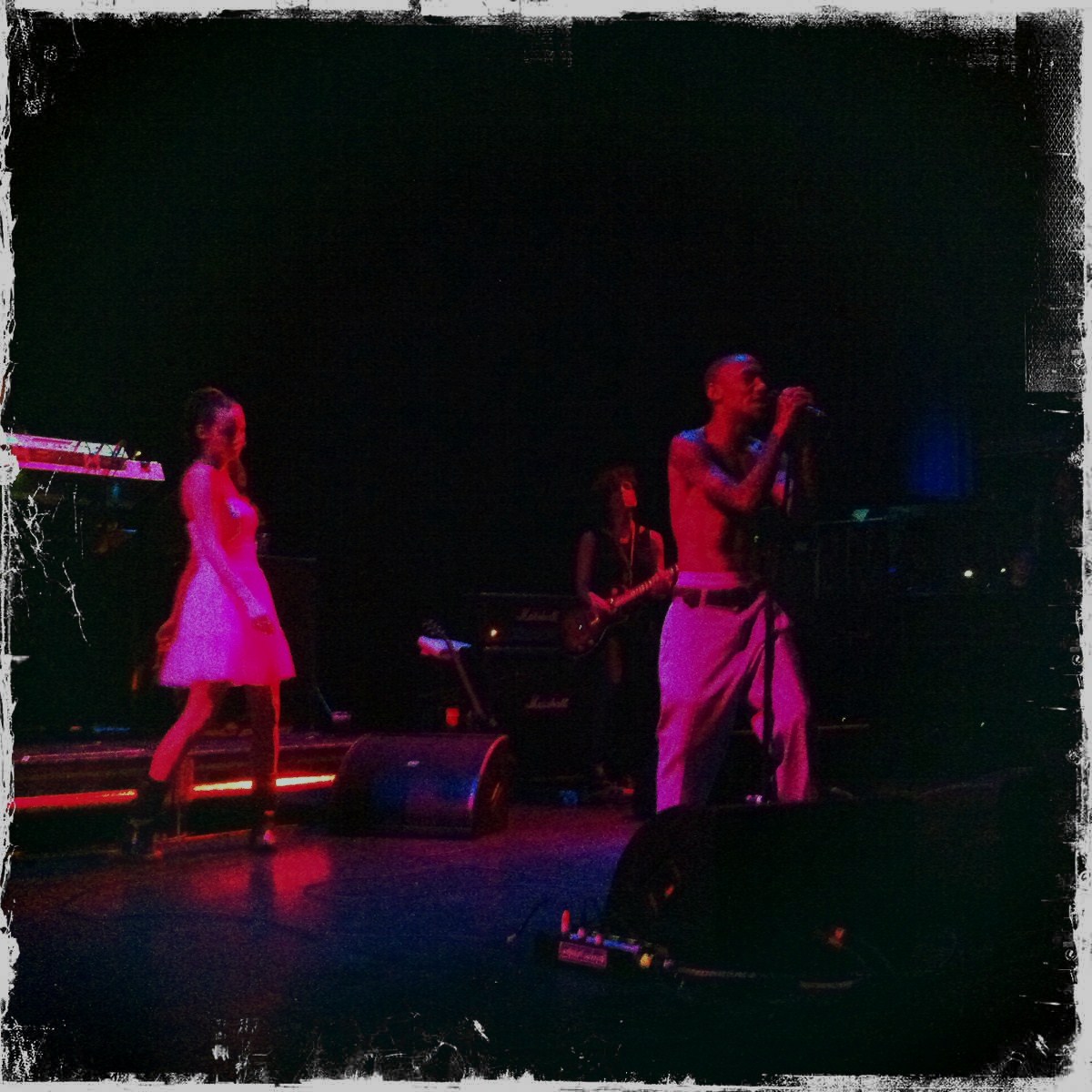
Tricky walks a very fragile line between total chaos and controlled calm at his Forum live debut. To shape the kind of concert experience Tricky offers, takes a kind of mad genius and an absolute disregard for 'expectations'. The world's premier trip-hop artist since releasing his debut album, Maxinquaye, has over time been forced to shrug off the tag he once comfortably inhabited. Massive Attack – his former band – evolved so gradually it was near impossible to gauge, while Tricky as a solo artist hit the slightest bump (a bad review) and threw out most of his old tricks for fear of repeating himself into obscurity. The result of this is one hell of a disjointed concert style-wise, but scarcely a boring one.

Tricky's latest album Mixed Race has failed to really take off in Australia, but his fanbase is well established enough now to fill a decent enough space for the man. In the not-quite capacity crowd, it's difficult to typify a Tricky fan. There's no '90s-era tour shirts… no obvious die-hard hip hop types etc… But then apart from a home-done Tricky t-shirt (drawn with permanent marker, I'll add) made in my youth and long since lost, my own fandom is hardly obvious. Perhaps like myself then, many fans are here tonight to see a curio of the past whose moody, noir-ish tracks and reputation as a volatile individual share a strange connection.

It's a thin-ice walk for almost two hours once Tricky's anti-rock show begins with him leading his band on to the stage and taking his place not at the mic, but in front of his keyboardist – his back defiantly to the audience. He jiggles around for what seems like ages ignoring us on his platform as his live drummer, guitarist, bassist and synth man plough through an instrumental, You Don't Wanna.  Whereas warm-up act Wolfgramm poured their all into grabbing our attention with their slick DJ & vocalist set to little response, Tricky delights in taking the hard road to winning us over. But saying exactly what he does to win us in the show is quite, well... tricky

His vocalist Francesca Riley performs a great deal of the songs solo while Tricky stalks the stage adding only occasional vox. His band, although in top form, are at the constant ready to stop playing or change song as Tricky bizarrely commands. The concert's uneven start - which includes his early hits, Black Steel and Overcome – makes its first sudden shift of this kind when during the serene Pumpkin, Tricky points at his drummer and without warning, the band launch into a cover of Motorhead’s Ace Of Spades. Tricky begins hauling fans out of the pit at this stage and doesn't stop until the band are completely obscured by dancing punters. The shocked security staff can do little but make sure nobody falls during their frantic climb to the stage. Nor do they do anything much about Tricky's almost constant joint-smoking tonight or even stop him passing that dutchie around his new buddies.

There's no doubt from this moment on Tricky's finally found the vibe he needs to work within and the show turn into a soaring, chaotic rumble. He's still in command though, and a quick exodus from the stage invaders is followed by a crazed run through of Vent before Tricky and band flee the stage also. The encore although just offering more of the same madness as the main show, also revealed Tricky's warped motivation for his radical stage shows. A second wave of fans were quickly gathered by the artist - at which point I lost my own shit and joined him – only this time, Tricky wanted more. Security finally begin blocking people once half the packed dance floor's been transferred to the stage. Although I felt a bit of a fake dancing around to a song called Ghetto Stars, (I’m about as ghetto as a pavlova) no one on the stage looked fully comfortable with the situation. Then among the confusion of dancing bodies, I catch the sight of Tricky slinking off stage only to re-emerge at the bar beside the dance floor. The grin on his face as he sips casually from a freshly acquired drink and watches his handy work is priceless. The band power on making their leader proud, until finally security herd everyone back into the arena. I could probably rail against Tricky and say he's a lazy performer, or go on about how much happier he seemed watching fans dancing with his band than actually singing, but the truth is he worked harder than any band I can recall to make sure everyone who came to see him had the fucking time of their lives.

lEIGh5


All pics by myself & Fruitbat

Tuesday, February 15, 2011

Adam Franklin (Swervedriver) interview: 2011

BACK BEHIND THE WHEEL


Oxford's Swervedriver are best remembered for thrilling and enchanting fans into the heavier end of the shoegaze/fuzz-guitar scene spiraling out from Creation Records stable around the birth of the '90s. But from their debut album Raise, up til their final effort 99th Dream, the band experienced the greatest extremes from critical adoration to being left high and dry following the first true wave of mass-label disintegration. Swervedriver's story could've just been another one of those was-never-meant-to-be sidenotes, but in their absence, a notable crop of late arrivals were all but bursting to name-drop them in interviews to grab a little extra cred. So for Swervedriver's actual story, it's over to singer/guitarist Adam Franklin; A generous interviewee, who ahead of his band's long-awaited reunion tour, reminds me that Australia was in fact intricately connected to Swervedriver's initial demise.

"It's true, the last time Swervedriver played together (before reforming) was in Australia was 1998." Adam recalls. It was on an extended break between gigs that Adam and the rest of the and decided to finish the Australian shows and call it a day rather than simply ''fade out of existence''. "Well, there was also a lot of shit going on in the band leading up to that, so the time just felt right to say goodbye." Adam continues, "Doing this interview now, actually reminds me of the first time we played there," he says, brightening up, "I remember we'd landed in Perth and were all completely jet-lagged, so when we got to the venue we just passed out back-stage. Anyway the tour manager was at us to wake up because we were literally due on stage in, like two minutes." He says, "Next thing we knew were walking on stage rubbing the sleep out of our eyes and ''bang'' the crowd gave this huge roar and we were just lifted.... it's still the best kind of alarm call I can think of." But not all of Adam's tour experiences are told with such relish I soon discover. After Swervedriver  decided to bow out in '98, solo touring kept Franklin away from home (and his old band) for much of the next few years - but not exactly for the love of it.  
 
"My take on touring is now much the same as it was then; there's a lot of drudgery about it." He moans, I mean we played loads over in the States in '90s and as great as that all was there were just endless road trips… I know I sound like I'm complaining, and yeah I am, but anybody who tells you touring isn't drudgery is lying." Unlike many of the floppy-fringed Creation acts who enjoyed great success in Britain, Swervedriver found a receptive audience in the US. Put it down to their songs apparent themes of gas-guzzling cars or masculine perspectives on love if you like, but whatever they were selling, America identified with. It's reported that Creation founder, Alan McGee signed Swervedriver after hooning around LA listening to their demo on his car stereo - perhaps the ideal environment, as he saw it, for the then fledgling band. McGee typically got it right with Swervedriver, but despite their initial US interest, timing it soon proved was against the band. Dropped by Geffen before the ink had dried on their contract due to management changes, Swervedriver's taste of victory over their Oxford peers was all too brief. But the second blow to the band's plan came not from overseas, but Creation itself when the label was in its death throes. 
 
"The lack of label support did probably have a huge impact on us looking back." Adam comments, "I think when we first got dropped by Creation, we were still on a roll as I saw it. We had just put out our third album (Ejector Seat Reservation), but Creation had just bought in all these new music biz guys in an attempt to capitalise on Oasis' success who weren't really in the spirit of Creation. I remember one of these executive blokes asking me at the time; 'oh, what are you gonna do now - is Swervedriver breaking up?' and I must've just glared at him and I said, 'no we're not breaking up - the band can survive without fucking Creation!'" Adam exclaims, annoyed in his memory of the exchange. "I think in a way that made me feel stronger for a period, but then Geffen signed us (in America) and they wanted to put out our third album, but we were already recording our fourth." He continues, "The person who'd signed us got that sack and we were dropped right in the middle of making our album, so it didn't look good for us. To be fair though, there were also bombs going off with the four of us at the time, so the end seemed inevitable." Following several reunion shows in 2008, Swervedriver have rebuilt their friendships and, in Adam's words, still play like they've 'never lost that feeling'.
 
"Playing together again now hasn't hardly changed since then. I mean the amount of time Swervedriver was asleep for has been a bit longer, but like that concert in Perth, we just plugged in and played like no time had passed at all." In fact its 20 years since the band first peaked on albums like Raise and Mezcal Head - albums that according to Adam, he can't listen to anymore. "The way people know the songs, the versions we ended up recording in the studio all those years ago obviously sound quite different to how we play them live now and because of this everyone in the band can't listen to the old recordings because of how flawed they seem to us now, but that's the beauty of taking the songs out on the road." Adam smiles, "That's where the songs really exist for me, in their live form…. not on a bunch of old tapes." The band's four albums in 2008 were given the full remastered/reissued treatment, but Adam's detachment from the recorded versions of his songs kept him from overseeing the project.

"No, the last time I went through the recordings was in 2005 for a compilation album Sanctuary records put out." He confirms, "They contacted me and said they wanted us involved in putting it together and it was really good to be there for the remastering and we got to choose the order of the tracks." Adam smiles, "That was the first time we had all listened to those songs in a studio since they were originally recorded." He adds, speaking for his band mates. "I think because so much time had passed, we can listen to the songs now with enough detachment that it's like hearing them being played by another band. We could have ironed out the wrinkles here and there and cut out some excess fat, but at the time when you're right in the middle of recording music, you're taking just a snap-shot of one of many ways a song could be played. I know now that it takes a long time to hear our music the way other people do." In at least one case however, Adam claims embarrassingly, he was caught out 'hearing' his own song as someone who'd never even heard of Swervedriver.

"I remember being in a bar in New York with friends a couple of years ago and all of a sudden someone looked at me and was like, 'Oh hey…!', This music had come on and my friend was gesticulating towards the jukebox, and I asked him what it was… he said 'It's you, you fool.'" Adam laughs, "It was the most bizarre thing. Although, in my defence it was some recording from 1993 which I hadn't heard in ages, so it sounded totally foreign to me." The band's return to the stage in many ways has been one of the least surprising reunions from that epoch of British groups. Poor management cost them dearly, and those who invested in the band, felt Swervedriver had ended long before they'd run out of steam. Adam responds.
 
"Well probably, but I think we were kind of bored with it somehow. It didn't seem like that much fun, you know. I agree that we hadn't run out of steam though, and I continued working on music immediately after Swervedriver, but there was a general feeling that the band had run its course for sure. That's not to say, I'm not proud of what we achieved and it seems so many bands have sprung up since who've cited Swervedriver as an influence, but then that's a relatively new thing. Nobody was saying that in '98 when we split up; that's only hstarted happening in the last few years."

lEIGh5


Dave McCormack (Custard/The Polaroids) interview: 2011

SERVED CHILLED

For the sixth Between The Bays festival,
Custard and Polaroids front-man Dave McCormack has grabbed the headline slot for the popular event. The dapper Queenslander - who for some reason reminds me of the illicit offspring of a Dave Graney/Olivia Newton-John affair – wants to know ahead of our talk, "Do you think a lot of the folks from Frankston go down to Between The Bays?" He doesn't pause for an answer, "God I haven't been to Frankston in so many years. But The Fauves come from down there you know, so it must be a fertile landscape for music."

McCormack's particular way of phrasing his words often leaves the witness wondering if he's serious or not. At any moment you expect him to rail against some point of frustration, "I still watch Channel V and Music Max. They're… um, great." but instead any gripes are only hinted at – and always served up with humour. "I think I'm a pretty easy interviewee these days." But Dave's calm exterior hides a true fascination with disarray. His old band Custard's shows often fell into a kind of chaos, befitting a much heavier band, while Polaroids concerts are centered around Dave as the slightly-creepy Master of Ceremonies. But before we discuss his calamitous Custard days, Dave deadpans on what he's been up to recently.
 
"Let's go back to a year or so ago…" He beckons, "I put out an album called Little Murders, and then did a tour in early 2010 with The Polaroids and then I did the music for an ABC program called Rake." Dave recalls, "I did some kooky sort of soundtrack music for that – all done live which was lovely – and finally Custard got back together to play Meredith in September." To the thrill of Custard's devoted fans, the band Dave retired from duty 10 years ago in favour of The Polaroids, have made a casual return to performing - and casual is the operative word – I discover as Dave reminisces about Custard's whirlwind preparation for Meredith in 2010.

"The thing about the Custard show was we had one 45 minute rehearsal before Meredith a couple of weeks ahead of the gig. Then we went down to Melbourne and played, and just went home. Easy." He grins, "In the early days I was a big one for rehearsals, but in the last couple of years I've become much more interested in people (in the band) vaguely knowing the songs and just sort of winging it. That always feels much more exciting for me." Seeing as Dave's in a playful mood today, I remind him of a rough, seemingly unrehearsed Custard concert I saw in Hobart during 1998.

"It wasn't the show where me and Matt (Strong – guitarist) had a punch-up on stage was it?" Sadly it wasn't, I tell him. "That was an exciting show - so shambolic. We only played two songs and then Matt and I got into a fight and everybody stormed off. I wish more of our shows had've been like that." Staged punch-ups don't appeal to McCormack though, "No because then it just becomes the Brian Jonestown Massacre or one of those bands." He laughs. It's a good thing that McCormack isn't precious about his often unstudied messy live appearances since one fan in particular has launched a warts-and-all Custard YouTube channel. One of its features is an endless amount of live TV footage, particularly from Recovery, acting as a reminder of just how prolific Custard became after their winning Music Is Crap declaration.
 
"It felt like we were on Recovery every couple of weeks back in the '90s." Dave exhales, "I think it was just because we were always around. I worked out recently that Custard – at the height of it all - were on tour for 200 days of the year on average. We were very much a touring band, and when we weren't touring we were in the studio, so it's no wonder we were around a lot back then. Nowadays I just like to pick and choose my gigs." Regular SBS viewers/Dave spotters would recall McCormack's brilliant gig guest-hosting RockWiz a year-or-so back while Julia Zumero was on break. But, I wonder, how does one prepare for the roll of quiz-master?


"I wasn't terribly concerned about preparing…. Once I discovered it's actually highly scripted." He laughs, "They had the autocue and probably half was pre-worded, but you know, it was still live TV and plenty happens on the fly." Dave claims he (possibly) has the TV presenter bug in his system. "I'd like to do a current affairs type of show or host a talk show maybe. A little half-hour interview spot late night on SBS would be cool." He adds, "As I mature I could see myself heading that way." Since 2011 will mark two years since The Polaroids last release, I wonder will McCormack be hitting the studio this year and how does the man plan to follow up the five-star rated record - according to Rolling Stone  magazine - that was, Little Murders.

"I'm not feeling the pressure, but yeah, I got a get a new album out this year and pick up my game. Get my run rate up." He adds, "But that five-star rating - I think they only gave that to me as a long-service reward. It's like one of those academy awards they give people when they're really old… They think oh well he might not be around much longer, we better give him something." He muses, "But now they're gonna have to invent a new six star rating system for when my new album comes out." Like a lot of '90s Aussie groups who gave it a shot, Custard failed to win overseas popularity at the time. There was however no uncertainty about the love for these Brisbanites in Australia, even to this day. Without hesitation, Dave says on the subject of a permanent revival, "Look, anything is possible. After the last gig we had no future plans but now we're doing the flood relief concert up in Brisbane on the 6th (Feb.). We did a gig in 2009, Meredith in 2010 and now we've got another gig in 2011, so if it feels right we may as well just do it I say."

lEIGh5


One dedicated fan has set up an all things Dave and Custard youtube channel - take a look-sie:
"copsrtops" Custard youtube channel


Mayer Hawthorne interview: 2011

THE FUNK SOUL BROTHER
 
Mayer Hawthorne's a realist when it comes to his place in the great musical scheme. He wears his influences on his well-tailored sleeve - see pretty much any of the '60s Motown greats - and thus makes traditional soul music. Pure and simple…? Well no, Mayer Hawthorne is merely the invention of Detroit native Andrew Cohen, who in reality is a hip-hop DJ, multi-instrumentalist and former-headbanger. The work he's produced under the Mayer Hawthorne banner is a funk-lightly album of dissin'-that-ex-girlfriend tunes, called A Strange Arrangement. Cohen's alter-ego, even though he's coy to admit it, is next the progression of the Gnarls Barkley/Mark fucking Ronson-popularised retro soul movement.

Now based in LA, Cohen's life took a dramatic turn once the DJ decided to cut a soul record in vein of his much loved Detroit-based forefathers. He was soon signed to Stones Throw records on the strength of debut single, Just Ain't Gonna Work Out, and the reluctant - "I only really wanted to be a DJ" – singer's fate was sealed. As his second Australian visit approaches, I begin our talk by asking Cohen what it meant for him to grow up in the city of soul. "You kinda take it for granted that it's not like everywhere else, you know." He shrugs, "When I was growing up and getting introduced to music, I didn't realise Detroit was actually the best place in the world for music." He laughs, "But I consider myself unbelievably fortunate to have had that right on my doorstep." While a singing career is the newest aspect to his life, 31 year-old Cohen has actually been performing for crowds since his early teens as a DJ. He talks me through his favourite phases in music and being "underrated" as a disc jockey.
 
"I listen to a lot of hip-hop stuff now, but going back a few years I was a bit of a metal head. I was into Nirvana, Iron Maiden, Smashing Pumpkins and Helmet, which might surprise a few people who only know my Mayer Hawthorne stuff." He giggles. Cohen still plays the decks to this day, but he claims, he's underappreciated in that field. "Nobody who comes to see a Mayer Hawthorne show even knows I've been a DJ my whole life and that that's what my first love is." He rails, "I'm primarily known as a singer now but it still feels weird to me to be thought of in that way. I always wanted to be known as a DJ." Cohen as a singer has been likened to some of the great female soul vocalists due to his extremely high falsetto. Andrew's singing style, he hints, could possibly be traced back to childhood visits to the barber's shop.

"When I was a kid and my parents would take me to get my haircut, I would always have a tempter tantrum and start screaming at the top of my lungs because I hated it so much." He grins, "So they would buy me a record to keep me occupied and to take my mind off this trauma." He adds laughing, "It really was my parents that got me into singing and collecting records, and also that's how I got my DJ name – DJ Haircut!" Cohen built up his collection over the course of many haircuts and gained a deep respect for music and his parents' tastes, "I owe them a lot in terms of educating me about music." Although a typical DJ Haircut set is less about reflecting less of his own tastes, he claims.

"When I DJ I freestyle it, I never put a set together, I just go wherever the mood is taking me." He adds, "But I always throw some Motown in there. I gotta have that in my set every time." Cohen's alter-ego Mayer Hawthorne (named after two streets in the neighbourhood in which he grew up) looks set to break him internationally as a soul vocalist. When asked if his beloved hip-hop and DJing will continue along-side Mayer Hawthorne, Cohen sounds unsure. "Yes… Maybe…. I mean I still listen to hip-hop and pay attention to that scene, but the way I make music as Mayer Hawthorne is quite a bit different to the stuff I grew up with or DJ with. I gotta look after my own style now, but you know it's really not that separate." He adds, "I started making soul records because I wanted stuff to sample when I play my hip-hop records. It was just simpler doin' it that way rather than digging through all those old records to find just a couple of good samples I could use."

lEIGh5