Thursday, July 21, 2011

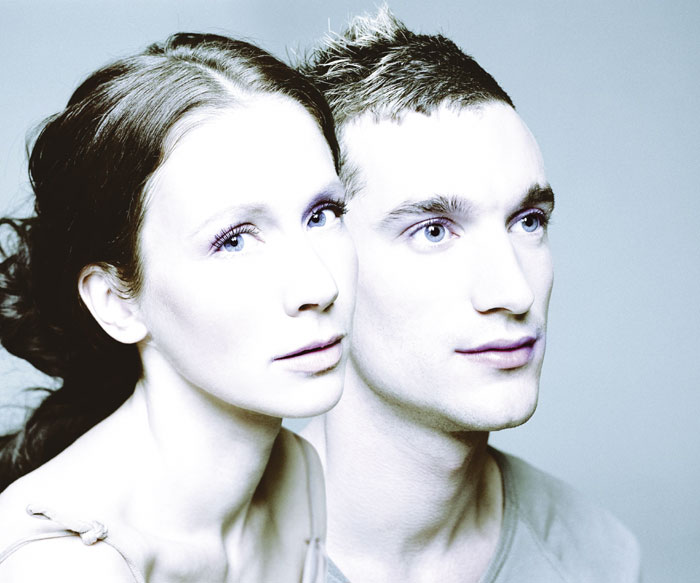
Isobel Campbell interview: 2011

BEAUTY & THE BEAST

Possessing one of the sweetest voices in contemporary music, meant Isobel Campbell slotted rather neatly into Glasgow folk-pop ensemble, Belle & Sebastian – the band she started with former lover, Stuart Murdoch - but just slotting in, by her own admission, was never Campbell's intention. “Nah…. holding back has never been something I’m particularly good at.” Isobel left Belle & Sebastian in 2002, having provided them with their biggest hit, Legal Man just previous, and emerged from her Gentle Waves solo side-project to finally record under her own name from 2003 onward. Meanwhile, across the Atlantic, a serviceable grunge act called Screaming Trees had ended their ten year run with a whimper, and brooding front-man, Mark Lanegan was part-timing with Queens Of The Stone Age. Seemingly adverse to maintaining another full-time band, Lanegan stuck to his 'casual basis only' habit all decade-long, leaving a trail of collaborations in his wake.

Lanegan's reputation as a sleeping bear never reached Campbell ahead of her request for Mark to 'sing on a couple of tracks she'd written'. The voice she had in mind for her songs was, 'that guy from Screaming Trees', knowing nothing of Mark's volatile nature and problems with addiction. Campbell simply says, “All of us have something or other to contend with… I believe”, and whether or not his demons affect their creative output, Isobel maintains, “Everything affects everything else, doesn’t it?” Her attitude to Mark is based on mutual respect and certainly Lanegan displays uncharacteristic warmth in Campbell's presence during rare joint-interviews. Their collaborative efforts to date amount to three acclaimed albums, the last of which, Hawk, released in 2010 spells the end of their partnership. Looking back over their work together, Isobel's lasting impression is, “I would say 99.9 percent of the time we saw eye-to-eye musically. We trust and respect each other a lot, and I think that is pretty obvious by the music we made.”

Isobel and Mark's work has allowed Campbell much greater expression. She utilises their shared vocal lyrically to direct a conversation, often willfully personal, courting comparisons with Serge Gainsbourg and Jane Birkin's explicitly charged duets. In her writing, Campbell has addressed the messy break-up with Belle & Sebastian's Stuart Murdoch, but she's equally at home playing fictional storyteller. “Sometimes it can be a vent for things, yes, but sometimes it is just pure fantasy. If the song is for someone in particular then I usually have their voice in my head, but usually I just concentrate on writing a good song and that may or may not tell some kind of story, or reveal something about me, but either way it's some form of personal expression.” Although Campbell and Lanegan's last tour winds up this year leaving Isobel to pursue new collaborations, she reveals a long-term retirement plan she hopes will include Mark.

“I think when we're really, really old it'd be nice to get together one more time and do something with our combined history and the experiences we've had separately as well.” She laughs, “I'll be like Mark is now – kind of broody and dark – and he might have mellowed out, so it could be really interesting!” While Campbell fantasises about possible future role reversals, she reveals exactly what their current collaborative roles are. “Mark always says I am the head and he's the body in this arrangement. He likes to leave the thinking to me. I think it's worked out well though  because, I was really willing to be that person and it suited Mark also because he needs somebody  to push him to work sometimes.” Geographically, Isobel and Mark are closer now than ever – Campbell recently moved to LA, while Mark calls Washington State home – but her shift to the US has offered Isobel new opportunities, helping her transition away from the safety net of the Lanegan collaborations.

“I'm really proud of the three albums (I made) with Mark, but that cycle is completed for now.” The musically fertile Arizona desert, unlikely as that sounds, drew Isobel in. “I've found it's the perfect place for me, being from Glasgow, you can't get a greater contrast. Also, I've fallen in love with the music scene out there.” She reveals, “I've been writing with a singer called Victoria Williams, and our record is about half done now.” She adds excitedly, “ Calexico play on some of it, as well who are just amazing, but as for what the end product will sound like, I will quote Victoria, who always says…. 'We’ll see….', but you just know she has it all mapped out in her head.” Both Mark and Isobel have grown considerably through their in-obvious bond, and certainly a great deal more than if either had stayed within their respective bands. Between them they've forged one of those, for all intense and purposes, mis-matched duos who like, Kirtsy MacColl and The Pogues or Nick Cave and Kylie, although usually short-lived, we continue to have an enduring fascination with.

lEIGh5
"Is the glass half full, or half empty, Mark?"

Monday, July 11, 2011

Charles Jenkins Mid-Winter Ball, 2011 (review)

Venue: Corner Hotel
Date: 09/07/11

At the third annual Mid-Winter Ball event, host and super-connected musician, Charles Jenkins once again rallies Melbourne’s finest for a heart and hand warming night of song. Jenkins’ band The Zhivagos are joined throughout by enough guest artists to bash out a modern day Do They Know It’s Christmas at the drop of a hat – which we are thankfully spared. Instead, the desperate to stay warm crowd gathering rapidly in the Corner, enjoy the proven talent of the Ball’s wondrous line-up minus the smugness usually found at charity events. This year’s beneficiaries of tickets sold are Foodbank Victoria who distribute much needed grub to everyone from those in disaster affected areas to the homeless.


However the thrill of helping provide some well needed funds to charity isn’t what’s on our minds when opening act, Ron Peno & The Superstitions take to the side stage with zero fanfare. Having the ex-Died Pretty front-man as a ‘warm-up’ act speaks volumes about the  musical acts on offer tonight. This being the first of two sets Peno performs with his new band, the captivating singer takes his time in building up the mood and momentum for the night’s proceedings. By third song in, Death O’ Me, Ron – refreshed, following a recent Died Pretty reunion show – is commanding our attention with a set of entirely new, yet somehow familiar tracks. Peno’s Ian Curtis dance is still a part of his live delivery, as well as touches of the American Wild West in his songwriting (Train Whistle).

Over on the mainstage, Charles Jenkins is preparing to unleash his many guest artists, while indulging us with songs from his latest album, Walk This Ocean. What happens over the course of his first of two sets, is a wildly veering, rough round the edges blast of rock. When singers like Mick Thomas (ex-Weddings Parties Anything) and Lisa Miller cosy up with Jenkins for tantalising duets, the arctic chills of Melbourne at night feel like a memory. Even the decorative cardboard snowflakes hanging from the ceiling seem in danger of melting at the sound of Thomas’s gruff and throaty punctuations. In equally fine fettle, Kat Spazzy (from The Spazzys) brings some youthful energy to the stage, while Georgia Fields cuts through the wailing guitars proving she can work her magic in any situation. It is those guitars in the end that dominate however, with no less than four maestros of the axe whooping it up as he concert draws to an end.

Having never seen one of Mark Seymour’s famed live performances for myself, I was triple-thrilled to see him at last join Jenkins and co. for punchy Hunters’ classic, Everything’s On Fire. Mark’s presence noticeably stirs up the crowd, so Jenkins chooses his moment to surprise us with an unrehearsed, but effective, cover of David Bowie’s Boys Keep Swinging, backed by every one of tonight’s guests. The rabble-rousing glam-rock rendition was a hit, and only topped by the full line-up’s closing number, The KinksVictoria - in the style of The Fall meets the Sex Pistols, or some such brutal marriage. The mess of artists filling the stage sharing mics and trying not to bump into one another while showing great camaraderie, is a warming image to hold onto as the deafening chorus of Victoria throbs in my ears on the long, chilly walk home. The freezing weather is a crappy part of life here in Melbourne, we all know, but with events this good, it’s so worth chucking on the thermals and braving the snap to bask in Melbourne’s other claim to fame; it’s awesome musicians.
 
lEIGh5
Meeting Mark Seymour!

Thursday, July 7, 2011

The Bedroom Philosopher's Croxton School Assembly (live review)

Venue: Thornbury Theatre

For both audience and the many and varied acts tonight at the Thornbury theatre, school is a comfortable enough distance away in time, that mocking its regiment feels like a rite of passage we can all relate to. Justin Heazlewood (aka; The Bedroom Philosopher) who established himself as one of the best observational comedians on the album, Songs From The 86 Tram, taps into that powerful uniting source of mirth and agony we call our school days in this latest in a series of themed concerts. Anybody who grew up attending an Australian school, recognised tonight the painfully accurate bad student poetry/music/acting in a show that - although aimed more at a Gen-X crowd –managed to remain broadly accessible.

Heazlewood’s type of humour works simply by identifying factors specific to average Australians. While Justin might laugh in a different part of the story to most of us, he usually manages to get his audience in on the joke without much effort. School, for those who excelled, was probably not particularly funny or remarkable, but for most of us, the experience is a source of pained amusement, which is precisely what informs Justin’s soft attack. Seated in what could easily pass for a typical school hall, we are presented with the atmosphere of a typical assembly, except for the first time, nobody is really expected to sit quietly and pay attention – or remain sober. The realisation sets in that Heazlewood has thrown his audience a golden opportunity to talk back, lounge around and generally rattle the nerves of those tiresome teachers and staff with no fear of a dreaded parental phone call.

Save from delivering actual canings, the performers in the Croxton School Assembly show maintain an engaging illusion of those uncomfortable, over-long school gatherings complete with authoritarian MC/Principle, (Ben Pobjie) and a better-than-in-reality school band, (Sex On Toast). The mumbling MC, who manages to embody every bored school Principle addressing a restless classroom, ever, becomes a figure of contempt as the night wears on. Between the main acts, he cops a deluge of paper planes and booing and hissing from the cross-legged ‘students’ spread out along the floor in front of the stage. Building on the already realistic atmosphere, he deals out ‘detentions’ in raised voice to even greater objection. But Principle Pobjie’s in-character droning, means reception for the performers is highly enthused whenever he leaves the stage, and with Tripod’s established guarantee-of-fun in place, the boys are swamped by applause after a particularly long head-masterly speech.

Tripod’s routine of songs, ‘unplanned’ cut-aways and geek-ified self-mockery is right at home in the Assembly, as is some stunningly awful poetry courtesy of Emilie Zoe Baker. The broad range of age groups – some with their own kids, some probably just out of school themselves – all respond with the same enthusiasm for being propelled into the horror of an amateur talent-night vibe. Crammed in among the ‘amateurs’ with his cover blown, Damien Cowell - ‘the guy who was in TISM’s’ new band, The DC3 displayed fitting irreverence for the whole event, (and Henry Wagons). Improvisational hooligans, Lime Champions fulfilled the role of class clowns, alongside stiff competition from The Bedroom Philosopher himself, who’s own set allows one notorious local identity to live out a school-age fantasy. Justin and his band, The Awkwardstra, deliver highlights their marvellous 86 Tram CD, plus newbie, I’m Leaving My Hairdresser, before unleashing their surprise guest.

The by-now even rowdier fans, roar their disapproval as Justin asks, ‘who here likes Aussie hip-hop?’ Not to be deterred, he jumps into We Are Tramily, a freakishly spot-on Hilltop Hoods send-up, during which the one and only John Safran, decked out in a silky tracksuit, bursts onto the stage, freestyling like a pro. Anyone who saw Safran’s Music Jamboree series, will recall the failure he endured getting his rap group, Raspberry Cordial taken seriously, but tonight he commands respect. That is, at least until he runs out of rhymes, and resorts to yelling ‘Raspberry Cordial’s in the house!’ randomly until the song ends in total disarray. Yes, it’s unplanned and a complete mess, but so much in the spirit of the Croxton school assembly, no-one cared. The Bedroom Philosopher along with a slightly embarrassed John Safran, file off stage to thunderous approval as our Principle returns to deliver joke-certificates to the performers. Closing the night, the mess of bodies played out on the floor hurling paper at the stage are treated to a medley of ‘90s rock songs by now partly de-trousered school band, Sex On Toast.

Justin Heazlewood took a huge leap of faith in making this theatrical, pretend-amateur show work. Whereas it could easily have come across as confusing and ‘just amateur’, Justin relied on, successfully it turned out, his audience’s willingness to go along with the joke for the duration of an event that gave little indication of what, if anything was expected of his fans. I suspect though, that the sight of half his audience turning up in school uniforms and behaving as if they were extras in the show, was the ultimate pay-off for Heazlewood and co. Other would-be comedy/musical acts should note: The Croxton high class of 2011 final exam results are in, and its distinctions all round people; time to pull your socks up.


lEIGh5


Friday, July 1, 2011

Del Tha Funkee Homosapien interview: 2011

FUNKEE BY NATURE

At hip-hop’s high end, there’s a lot of cringe-worthy behaviour that apparently serves as an enviable lifestyle. While these, often overnight, star’s pavement to penthouse stories continue to impress bogans everywhere, it’s comforting to know that for every overblown clown in a white suit with more jewellery than Kleins’ factory warehouse, there are fringe artists like Del Tha Funkee Homosapien, sharing more in common with the bohemians than the Fresh Prince of Bel Air. This Oakland, California native shunned the potential of an ‘easy street ride’ after cutting ties with his well established cousin Ice Cube, who helped launch the then 18-year old’s rap career. Del’s 1991 debut, I Wish My Brother George Was Here – a reference to his idol, Parliament’s George Clinton – showcased a decidedly less popular hip-hop/funk style, more in tune with Brooklyn based acts like 3rd Bass, than Cube’s/NWA’s West Coast gangsta rap, which was peaking at the time. His break-through single in the same year, Mistadobalina, openly stung the corporate hand which was already starting to dig deep into the hip-hop scene to check for potential cash-in-ability. But while it’s a credible thing to be seen as shunning The Man in hip-hop, Del – one time seen as ‘rap’s court jester’ – it turned out, was a little more serious than many of his contemporaries, and hence is still around to claim a sizeable share of respect, without so much as a hint of white suit-ery.

To celebrate his new album, The Golden Era, and 20 years of solid work, Del is making his first Australian visit since 1992. “I haven’t been out there since back in the 'Dobalina days, man but I got a lot more stuff behind me now.” Anyone who’s followed Del’s progress since would concur, the man is tireless. Nine solo albums, collaborations with Handsome Boy Modelling School, Deltron 3030, Gorillaz, Souls Of Mischief and even Dinosaur Jr, amounts to shit-loads to choose from for his live show. “I’m bringing everything I’ve done in one neat package for you all.” He teases. As for the hotly anticipated new Deltron 3030 album - his on/off group with cohorts Dan The Automator and Kid Koala, who slaughtered the competition in 2000 with their self-titled debut – Del urges ‘it’s coming’. “It’s still under wraps, you know, it’s not performance ready yet, so I won’t be doing any of that on this tour. It’s half-written though, so we’re hoping to get that out this year some time.” It’s often overlooked, but Deltron 3030’s debut was way ahead of its time in terms of where hip-hop was heading. While Kanye’s enjoying his view from the top, he should probably raise a little toast to Deltron – the first futurist hip-hop act on the block.
 
Del's Deltron 3030 persona
“It’s weird because that first record was pretty huge, you know, but we don’t know what we’re gonna do with this next one because the industry’s kinda fucked up now. We don’t know how we’re gonna release it yet, but that’s cool.” He adds, “I like change, you gotta move with the times and find new ways to get your stuff out there.” Del’s a stronger, wiser man these days since deciding to take the fate of his career into his own hands. Starting the Hieroglyphics label in the early ‘90s, Del was able to sustain his and several fellow underground rap acts releases when the major’s all backed out. But wiser still, it proved, Del began teaching himself music theory, and was soon digesting the lesson’s final examination text; How To Write A Hit Song. “For me it seemed natural to learn all I could about music, being a song writer.” He confirms, “If I was a visual artist, I would have my crayons, my oils, my easel and I’d learn about shading and all that; I’d have all the tools. So, by learning music theory I was adding all the colours to my paint box, you know what I’m saying?” He laughs, “But I make music for a living so I knew instinctively from that and from listening to it for so many years the how-to, but music theory taught me all the names for the parts in composition. I got tired of kinda winging it, you know, it was time for me to get professional.” Del’s tidy link between music and visual arts went beyond theorising, when in 2001, he became immortalised as Del Tha Ghost Rapper in Gorillaz, complete with his own animated on-screen character; a genuine dream-come-true situation, he claims.

A ghostly Del haunts 2-D in Gorillaz "Clint Eastwood" video


“When I saw the artwork for Gorillaz, I already knew it was Jamie Hewlett’s work, man!” Del hypes, “I used to collect the Tank Girl comics man, that shit was tight, you know what I’m saying? When Dan (The Automator – Gorillaz/Deltron producer) introduced me to the project and showed me all the artwork, I was into it before I had heard any music just because Jamie was involved. He’s the reason I said yes.” In its infancy, Del was the first artist on Gorillaz, now overflowing, guest list. However, the previous year, he worked with Damon Albarn on a track for Deltron 3030, perhaps even informing Gorillaz ‘futuristic’ musical direction. “I dunno man, Damon already had platinum hits in Blur, right, so he wasn’t trying to recreate that, he was trying to make this cult thing - which was only gonna be online at first - so I think he just wanted it to be as far from what he had done before as he could get.” As Tha Ghost Rapper, Del performs elaborate rhymes - which he claims he wrote in under half-an-hour - on the Gorillaz tracks, Clint Eastwood and Rock The House. He explains. “Me and Dan were just finishing up in the studio on some Deltron stuff, and he was gonna take me home, and then at the last minute he says, ‘oh, do you think you can put some lyrics to this song Clint Eastwood’, and I’m just wantin’ to get home, you know, so I did my thing real quick so I could leave.” He laughs, “They already had a rap on that song, but the lyric wasn’t great you know. Anyway its Dan I gotta thank coz now I got a platinum disc on my wall, it (Gorillaz) paid for my house, and I got my own character by Jamie “Tank Girl” Hewlett. That shit turned out good for me!” Saying ‘yes’ to Gorillaz, learning his trade, starting Hieroglyphics and generally avoiding the rap star clichés, have all clearly helped Del survive in uncertain times. He discusses.

“I got a lot of guidance from Ice Cube back in the days but also, I’m a Leo man, that’s like the super-instinctual sign,” he laughs, “I’ve always just known what to do. What can I say?” In more practical terms, Del offers, “More importantly though (producers on Del’s debut album) Boogiemen and DJ Pooh taught me all about getting my tracks up to scratch.” When Del wrote his first hit in late 1991, Mistadobalina, cousin Cube was quick to bow out. Del recalls, “I remember at early shows, Cube would come on and introduce me and hype me up to the crowd you know, and it was like, well I don’t need that now.” He grins, “I think a lot of people would’ve been happy to sit up under him and get a name just for that alone, but that’s not what I’m about.” Dobalina was Del proclaiming himself rap's dissident from the very start. The music industry’s ‘compliant suits’ - as he portrayed them in this track - could have risen straight from the pages of 1984, with Del painting himself as the stories' protagonist, Winston Smith. In fact even a cursory glance at much of Del’s work, particularly Deltron 3030, smacks eerily of George Orwell’s vision of futurist, near-parallel funk-less world. He responds. “That’s the stuff I like to think about – how the world ain’t what it’s cracked up to be sometimes. It’s not just about corporations though, there’s people who’ll try and keep you down no matter what, you know. I’m from Oakland, California and there’s some serious pimpin’ going on down on every street corner; people will tell you anything just to get something out of you, and that’s what 1984 boiled down to for me. If they think they can, most people will try and keep you in line with whatever their agenda is.”

lEIGh5


Monday, June 27, 2011

Fatty Gets A Stylist: interview with Kate Miller-Heidke and Keir Nuttall (2011)

STYLE AND SUBSTANCE

Fatty Gets A Stylist masterminds, Kate Miller-Heidke and Keir Nuttall are taking tea on a rare sunny June day at a South Melbourne café, discussing the finer points of what constitutes taking a risk in music these days. For one, both agree calling a band Fatty Gets A Stylist earns a big tick, but the most intriguing development in the risk department is, the brand new release – a co-write with hubby/long-time collaborator Keir – is Kate giving a big middle finger to her the sound that made her a star. The self-titled album - which claims XTC, Goldfrapp and Kraftwerk as reference points – started life on-tour as a between shows muck-around project for the couple, before blossoming into a throbbing multi-layered extravaganza. Fatty takes the listener through trash-spiritualism, cartoon theme-song terrain and post-punk with out a hint of Heidke’s sober pop artistry to be found. It seems as if Kate is flexing some newly developed muscle, all while snuffing out her ‘fluffy balladeer’ label in the process.
 
Being a Heidke album though, albeit one with zero relevance to her former work, that voice is, on one occasion, heard carrying a record-breaking sustained note that’s sure to leave even the listener out of breath. “I’m so glad someone picked up on that; it was done in one take you know.” She says of the track The Plane Went Down, “I can’t wait to do that live, but then I might possibly faint at the end if I have to do that night after night.” Kate’s classically trained voice – the one that has served her so well up til now – is the first of many surprise elements on Fatty Gets A Stylist. For a start, Heidke has been discovering the joys of using a much lower octave range than ever before. “I think we shocked ourselves a lot of the time making this album.” She remarks. “But you know, it started out as a passion project, just us two, and the thought of anyone else hearing it didn’t really cross our minds.” Kate adds, “I was singing a lot in the shower and getting comfortable with a lower range to what I’m used to, which is why I don’t really sound like ‘me’ on the record,” she laughs, “and I said to Keir ‘what do you think of my funny voice?’ and that kind of got us thinking about having this album be a completely anonymous thing without our names attached to it at all.”

The projects name chosen to keep an air anonymity could be read as nod towards the overabundance of surface-obsessed reality TV dirge currently on offer, but Keir explains, it’s less about the ‘make-over myth’ but rather an imagined tabloid headline. “The idea was to use a name that tells a story; ala Frankie Goes To Hollywood, who got their name from a newspaper headline, but I think ours is more in line with current obsessions with weight and appearance.” While Frankie suggested we all should relax, Fatty Gets A Stylist go one further with references to Zen Buddhism and pre-religious spirituality. Kate picks up the thread, “Even though some of the songs are very silly, I guess there’s also some obvious spiritual references like on The Tiger Inside Will Eat The Child, which has to with the Buddhist belief that you only really grow through letting go completely of your past systems.” In Wiccan lore, it’s taught that people possess power animals which they have to get to grips with - the intention being, it makes you awesome. After discovering this, Keir shares some concerns over what his animal might be.

“I dream about dogs a lot, but not cool ones like wolves or dingos, its always garden variety spaniels.” Kate, cracking up, adds, “Maybe you’ll graduate to a poodle.” While Keir contemplates his K9 dilemma, Kate maintains that the dream animal concept in songs has become an indie band staple; therefore best avoided. “I’ve got a natural resistance to this dream strength-animal thing, but I do relate to the inner child as a way of helping me creatively. You have to sort of get to that place I your head which is unaffected by just day-to-day crap and allow yourself to be playful and fearless.” Keir adds, “The tiger is more the self-conscious side of your mind – like the battle between the left and right brain that happens when you write or create music.” Although much of Fatty Gets A Stylist was written on a lap-top while Kate and Keir were on tour, it’s liner notes boast a long, impressive guest list of session players. The album was still in its demo form when, while supporting Ben Folds, Kate played him the album who then persuaded her to record it with a full band and release it. With the Folds tick of approval, all was left was to find the right artists for the job. Keir explains.

Ben Folds called it ‘lower chakra music’, which basically meant it was more rhythmic, or more animal so we wanted players who came from that side of the spectrum.”  He adds, “We ended up going with Pete McNeal (ex-Cake drummer) who plays in a band called Z-Trip, who has this strong, crazy improv style. Then you have Justin Meldal-Johnsen, who played bass with Beck, Air and Nine Inch Nails, bringing this really huge range of experience.” He adds, “I think those guys are what Ben was talking about when he said lower chakra music.” Kate then simplifies, “It’s about listening with your hips and not our head!” When Heidke’s solo albums, Curiouser and Little Eve, established the her as a spirited and clearly gifted singer/songwriter, she was probably seen as a safe bet in the industry - especially once the awards began rolling in. To drop the psychedelic bubblegum pop of Fatty Gets A Stylist on the heels of such plaudits, would surely have had a few men in grey towers pulling out their hair. Kate responds.

“Our management were really supportive of us putting it out, but there is a slight scary element to how fans will react to me doing something so different, for sure. I expect some people will think I’m putting on this strange voice, and already I’ve heard people say they don’t like the name and that they think its offensive, but as I said before, we went into this with no fear and I accept that not everyone is going to get into it, or see why I’m doing this now, but as I get older, I feel I’m gradually taking more and more control creatively of what I want to do.” Keir adds, “The reaction has been really interesting so far. I mean before anyone knew we were doing this, I played some of the songs to our band (Transport), and they didn’t spot it was Kate – I just told them it was this new band I’d met in London.” He laughs, “Usually whenever you play something new to friends, it’s a pretty loaded atmosphere and you know they don’t want to hurt your feelings, so this was the best way to get a completely honest reaction from them.” Kate recalls, “They didn’t think it was me, so I said ‘what do you think of her voice?’ and one of them said, ‘oh she’s nowhere near as good a singer as you, so after that, I didn’t want to let anyone know it was me!”

lEIGh5


Thursday, June 23, 2011

Wendy Matthews interview: 2011

STRONG ENOUGH

Wendy Matthews was about as far removed from the meat-pie and beer Aussie rock landscape as her Canadian roots, but persistence in a realm way outside of her initial comfort zone, resulted in the willowy former session vocalist appearing on nearly every notable Oz rock album in the '80s. Finally stepping into her very own spotlight, from 1990 onward Matthews' true passion for poetic tear-jerkers reminiscent of her idol Joni Mitchell’s work was at last successfully indulged. Now, 21 years on from her against-the-grain solo debut, Émigré, the Australian (officially since 2005) vocalist, is celebrating the anniversary in a retrospective tour she’s calling Standing Strong, yet this landmark, I discover, is barely half of her remarkable story.

“I guess now is a good time to celebrate what I’ve been doing for two decade before my next album comes out.” She says in an accent equal parts Canadian and Australian. Work on Matthews’ new album of originals is already underway, following on from two covers sets (She and Café Naturale). Her anniversary tour will help fund its completion as, although despite multiple-ARIA wins and serious chart success in the ‘90s, Wendy found herself out of contract in 2007 and so began her own independent label, Barking Bear to release her music on. “I’m so glad I have this label as a resource, but I am crap at the business side of things. I wish I kind of cared more about how the whole thing works, but I am singer and a songwriter, not a business woman." She adds, "I’ve moved into the category of singers who don’t sell so many records these days, but I’m also part of this world of artists who make great music in their kitchens or whatever and with no record company judging what your musical life-span is.” A passion for singing since very early childhood, Wendy claims, was the only guide in what direction her life was to take.

“I’ve been a bit of a freak for most of my life, frighteningly enough. I’ve never had a real job!” She laughs, “This is all I’ve ever done and it did determine quite a lot how my life would turn out back when I was 15 and having huge doubts about what I was going to be.” Matthew’s continues, “I realise now that I was setting myself up for something that would last and was satisfying for me. I mean if I had’ve been making dance beats, as a lot of people were, it would never have driven me like say a Joni Mitchell record does.” She adds, “Don’t get me wrong, I think music should fulfill many functions – I can get up and vacuum the house to dance music in my undies and its great – but that’s never gonna stimulate me like Joni, you know.”

Her future direction became a little clearer when, while living in LA in 1983, Matthews - who was getting casual work as a backing vocalist - by chance met legendary Australian music mogul Glenn Shorrock, who convinced her to sing backing vocals on his album and fly to Sydney to tour in his band. “Glenn, almost to his detriment, was always passionate about music above and beyond the industry. He was the sort of guy that would come off stage after a gig and still want to sit around the piano and play music just for fun, so we had no problems connecting.” Wendy recalls. Her motivation to start a new life in Australia however was hampered at first by a fear of rejection by what she perceived as an unforgiving pub rock scene. “My first experience of a female singer who’d made it in Australia was Chrissie Amphlett of Divinyls and it kind of scared me a little, because she had this machismo - which I guess she’d developed because it was a very male oriented rock scene - and I thought I was never going to be accepted into that kind of world.” Matthews, in reality was not only accepted into the Australian live music world, but was in hot demand as a session singer with many of the top rock acts at the time.

“There are a lot of years of my life that have gone into making music and sometimes I glimpse back to those times and I’m so grateful to those bands.” Wendy says. For the rest of the 1980s, her singer/songwriter roots were largely put on hold while Matthews bumped shoulders with the crème of Aussie rock – Icehouse, Models, Richard Clapton, Barnes to name a few, were demanding her services – and even found time to dabble in advertising jingles to keep the land lord off her case; “I was the ‘L.J. Hooker… you’re the best’ girl for quite some time.” She laughs, “But you know not everything I did back then I’m proud of!” Her rise to top billing artist was still a way off, but during the late ‘80s, Matthews performed on three of the biggest Australian albums - Models, Out Of Mind Out Of Sight, The Rockmelons, Tales Of The City and Kate Ceberano’s You’ve Always Got The Blues - helping to shrug of any self-doubt she may have been harboring. The turning point came when her Models’ band mates split the group into two halves in 1989, resulting in the James Freud-led Beatfish and, importantly for Matthews, her then partner Sean Kelly’s project, Absent Friends. At last the Canadian chanteuse was on lead vocal for the 1990 single, I Don’t Want To Be With Nobody But You - a cover of an Eddie Floyd song – which was so far as most Australian’s were aware, Wendy’s debut – and they liked what they heard. The single beat huge competition from a Skyhooks come-back, award-magnets Midnight Oil, INXS, Barnsey AND Farnsey to take home ARIA single of the year, cementing Matthews’ Midas-touch run.

“Things come in waves, and I guess that was my time for things to work out, but I know now that it’s impossible to keep the vibration going at such a high level for very long!” Wendy laughs. “I mean the thing about being independent is that you don’t get that level of marketing now, which is what labels are so good at, and so I see that time as wonderful, but also impossible to repeat.” Absent Friends only saw out the year before Sean Kelly went off to form The Dukes, while Matthews - still on her first wave of glory - went on to record Émigré – her solo debut. Nobody But You’s success was equalled by Wendy’s Token Angels single, and again she was picked as the industry’s favourite. Matthews was by now 30 years old, and having spent half of her life performing, acknowledges the weirdness of her bestowed ‘best new-comer’ status. “I’ve debuted more times than I can count!” She exclaims. But, discounting any uncatalogued nappy commercials, technically Wendy’s public debut as a vocalist, was at the age of four, witnessed by half of the Western world’s pre-schoolers… or so a large yellow bird informs me.

“Oh, god.” Matthews’ moans, “I got to do Sesame Street because I think they realised I was kinda able to hold a note.” This debut – which came about through family friends’ involvement on the show’s production - although undeniably glamorous, was hardly a sign of things to come. “All I remember is it was an alphabet song, and I just did the letter ‘O’ part, to which they put an animation of a goat with all letter ‘O’s coming out of its mouth.” She laughs heavily, “So, I guess my debut was as a singing goat on Sesame Street, yeah.” It’s hard not to get side-tracked by Matthews’ Sesame Street connection, but the ‘wow moments’ in her career keep piling up as our discussion continues. During a brief stint singing with The Rockmelons in 1988, a support slot on James Brown’s Australian tour led to Matthews sharing the stage with the Godfather for a couple of songs. “I hear myself talking about that, and it almost doesn’t feel real.” Wendy acknowledges, “It’s like I’m talking about somebody else’s experience, but you know, although it was amazing and everything, really I’m just glad I can say I’ve got a good James Brown story!” Many great music moments have come and gone for Wendy, but her finest hour was less a personal experience, but a song that most of Australia it seemed, claimed as their own.

Wendy's award-winning The Day You Went Away video
 
“I was honestly terrified of releasing The Day You Went Away into the climate of what was on the radio at the time. I mean it was just a piano and heartbeat and I thought I was gonna be eaten alive, but that song proved to me that your average radio listener out there was wanting different stuff to what was being offered.” Released around Christmas 1992, The Day You Went Away - from Matthews' second album, Lily - was arguably given gravitas by the fact Australian’s were still serving in the first Gulf War. Coupled with a video depicting a couple separated by war, the single outsold every other local release that year, which finally dissolved Matthews’ old fear of being seen as an outcast in the ‘hedonistic Aussie rock scene.’ “I’m somebody who loves to be moved my music, and the success of that song proved I was in good company.” She says, “It was a huge compliment to me that so many people responded to it in the way they did, but you know, reactions to it have been so, so varied, I mean I have had women say to me, ‘nothing helps my baby get to sleep like your voice in that song’!” She laughs, “So for a while I thought, ‘Oh my god, I’m going become known as the baby whisperer!’”

lEIGh5


Monday, June 13, 2011

Lou Rhodes (Lamb) interview: 2011

FRIENDLY WITH FIVE

Manchester duo, Lamb were written off by just about everyone – including themselves – come the middle of the last decade. Following a short-lived peek into world-wide success at the end of the ‘90s, vocalist Lou Rhodes and musician Andy Barlow, began to fall out of love with the music once it became a pressure game of commerce and repetition. However, a core of devoted fans had the foresight to not give up on the pair and this year, their devotion has finally paid off – although at a price. Lamb, embracing a little numerology, not to mention some grass roots marketing, announced their long awaited fifth album, 5, funded entirely by fan pre-orders. It may seem a long way from the runaway success of 1997 single Gorecki, but as Lou Rhodes points out, with fans like theirs, who needs labels?

“The scary bit was selling something that we hadn’t even made, so you’re asking for quite a leap of faith from people, you know.” Rhodes begins. “But then, I think it’s a great basis for a creative endeavor. That desire to make something that we felt truly proud of was stronger than ever." Lou explains, “We were making an album for the first time ever with absolutely no funding from some nervous corporation looking for big hits, as was our experience in the past, which definitely had an effect on the music.” After what began as a four-date tour in early 2010, which then grew into months of advance bookings, Lamb were approached to do a short Australian tour in February his year. It was at these shows that for the first time in seven years, their set included brand new music.

“When we were asked to do those shows in Australia, we panicked a bit because we hadn’t even finished the record, but actually it turned out to be a good opportunity to see how well the new tracks worked along side our older stuff. We ended up premiering only four new songs, but that really was the acid test we needed to say what was working and what needed to change.” She continues, “The songs do metamorphose whenever you play them live, so it was important to let the new ones begin their journey of tweak and change.” Rhodes laughs gently. “The process of playing new songs live is like a game of Chinese whispers. You have a blueprint, and you think you know what the outcome will be, but little surprises always emerge in the actual telling.” She adds, “I’d really like to do that a lot more, because the problem with being in the studio, is you usually finish an album and then go on tour and that’s when this kind of growth happens within the songs, but by then it’s too late.” Already 5’s mini road test has Rhodes rethinking the band’s future performances.

“In the past we had always kept in mind what we were going to play live and how, and it was never more than half the record, but with 5, we found that we couldn’t decide what not to play. At this stage we’re doing eight out of the ten songs and we’d like to work in the other two at some point because it works so well in its complete form.” Rhodes adds that she has always struggled with the concept albums judged only by the singles – no doubt a concern that has sprung from personal experience. Lamb’s mammoth hit, Gorecki from their self-titled debut, although rewarding the band with obscene levels of exposure, also bought with it ‘unreasonable expectations’. While recording their second album, Fear Of Fours, the inevitable pressure of matching that song’s success was applied to the duo by their label, causing Rhodes to remark following their split in 2004, Lamb had long felt restricted by what was expected of them. “It was always tough for me to see Lamb as a singles band, because I don’t really listen to very much commercial music or even claim to know how to make ‘hit singles’ on command.” Lou retorts. “In the old days we had to endure conversations that went like, ‘can you sound a bit more like Bis, because they’re selling a lot of records at the moment’, which was quite soul destroying for us.” Lamb released three more albums over the next seven years before acrimoniously splitting. It wasn’t until Lou Rhodes was recording her third solo album One Good Thing in 2009 that she and Andy’s reunion occurred. “I was looking for somebody to produce my album and Andy just said, why not him!” At their rather organic reunion, creative sparks soon began to fly and Lamb’s future was decided on – only with a few clear changes to be made.

“When we decided we were going to make another record, Andy and I had a very honest conversation about what Lamb should and should not be about.” Rhodes explains, “I felt that I had compromised quite a lot on some of our albums and we kind of lost something along the way, but this time we agreed to keep it raw and just gently add to the songs as they needed, like we did on our first record. Also it was really important for us to not overproduce this album. I mean all up it only took five months to make which was very, very quick for Lamb.” Rhodes’ words are suggestive of somebody running from their past mistakes, but Lamb were always spared the often harsh criticisms of the UK press usually reserved for non three-chord rock bands. One doesn’t have to dig very far to then to see Lamb are in fact their own strongest critics, and although many band’s have long lulls following initial peaks, few return with their shit so fully together as they have. Lou reflects on what the refreshed Lamb we hear on 5 was bringing to the come-back party, and some of what was quite cheerfully thrown out.

“I’m a great believer in your first idea is probably your best before the ego kicks in and says oh but why not add this and add that, but simplicity was definitely the key in this case.” She points out, “Also I think for me as a vocalist, too many times on previous albums, my voice had been extremely processed, or rather I was affecting it in certain ways, feeling that I needed to be something that I wasn’t. But having that time off and doing my acoustic albums gave me a chance to let my voice grow and I allowed myself to get comfortable again as a singer.” Rhodes naturally understates her sensational talent as a singer, but evidenced particularly by the tracks She Walks and Wise Enough, is an artist shaking off self-doubt and indulging her love of singing. Lamb’s new-found confidence doesn’t end there, either. Album closer, Existential Itch is a brilliantly executed reminder that in today’s self-absorbed world, we can easily forget that the human experience is a shared one. Lou divulges,

“That song kind of sums up a lot of the record and going through this period of questioning everything I had once believed in. Not just with music, but life in general which I think most of us go through at some point.” She adds, “With the title, I thought existential crisis seemed too strong a word because what I was going through seemed quite natural in a way. I think the word crisis carries the wrong implication, or at least I didn’t see it as a crisis personally, I recognised that it was a much needed time of learning.”

lEIGh5


Ah, the gorgeous Lou and Andy... You know, I never made the Little Britain connection until I transcribed the interview... !!


EPK on Lamb recording their beautiful new album, "5".


Thursday, June 9, 2011

Lou Barlow (Sebadoh) interview: 2011

LO-FI WAY

Lou Barlow’s musically formative years were spent not only avoiding the synthetic sounds of the first new wave, but rather languishing in the potential of low-fi analogue recording before it became the must-have sound of a whole scene. His grasp of what would one day be known as the ‘slacker sound’ and love of chunky, distorted bass was eventually put to good use in indie monsters, Dinosaur Jr. – the band he formed with high school mate Joe (later sheered down to simply ‘J’) Mascis in 1984. But it was Barlow’s home recordings side-project Sebadoh which has reigned consistently in the artist’s life. Now with sackings, bickering and ego-clashes behind him, Lou is back working with both Dinosaur Jr. and Sebadoh; the latter of whom are currently celebrating the reissue of 1994 breakthrough album Bakesale.


Giving his side of the story of two bands, that never really split up but rather went from functioning to malfunctioning in ongoing cycles until their fractured fairytale finally gained its long overdue happy outcome, Lou Barlow begins from the rarely known comfort of his home. “I’ve been home in LA for almost two months, which is so weird. I haven’t been at home for this long… ever in my life!” Barlow’s chosen path – two active bands and a solo career – has of course meant that the road is always calling. Although a self-confessed DIY junkie preferring to work alone, Barlow couldn’t be more removed from loner-dom, but not as begrudgingly as one might expect. The re-formed ‘classic line-up’ of Dinosaur Jr. have been regularly touring since 2005, while Sebadoh continue to have reunion tours every couple of years. But for Barlow, this duality is just the card he’s been dealt.

“The two bands occupy different parts of my brain; they both have their own very distinct musical identities. I play different songs with different people in the two bands and that separation has ruled my existence for most of my life now, so it’s not something I really think about anymore.” He continues, “Dinosaur are touring the US in about a week before I bring Sebadoh out to Australia, so the two are almost overlapping at this stage.” Most fans are in agreement (and Lou himself), that Dinosaur Jr. produced their best work with Barlow in the line-up. Their first three albums, Your Living All Over Me, Dinosaur and Bug - for the most part - defined the growing, underground indie scene in America which culminated in the grunge explosion. Now that the original line-up are touring and recording again after many ‘lost years’ - during which time Dinosaur Jr. produced albums Lou is only too happy to offer his opinion on - Barlow concedes it was an inevitable reunion.


“In hindsight I think, how could Dinosaur not get back together.” He shrugs, “In Sebadoh, we never had the kinds of problems that I did working in Dinosaur, I mean, I’ve never felt the need to split Sebadoh up. We never had a falling out or anything, it was more of sigh than a shout,” he says of their regular hiatuses, “We were like, ah, this isn’t going so well at the moment let’s just go do something else for a while. But Dinosaur felt like a very definite end… for me at least.” Lou laughs, recalling his unceremonious booting out by Mascis in 1988, “I really didn’t know if it would be possible for us to work together again until J (Mascis) was actually right there asking me, you know. It was wonderfully natural when it did happen and I didn’t even have to think about how I was going to respond. The bottom line is, I love the music we made together way more than I disliked anyone in the band or any of the personal bullshit that went down between us.” At the start, Lou and J Mascis bonded well as both were singers, writers and fans of weird, musical cross-pollinations, but Mascis soon began throwing his weight around as leader in Dinosaur Jr.  Lou’s contributions to the albums became lesser as Mascis’s in-band domination grew until there was no room left for anybody else. Barlow continues,

Dinosaur Jr; "Going somewhere, Lou?"


“Music makes it all better for me, but looking back I am really glad I was kicked out of Dinosaur. It was an amazing gift awarded to my mental health.” Lou laughs, “Murph (Emmett Murphy – drummer) and I talked about this - he stayed on longer in Dinosaur than me - but we were both having these panic attacks and neither one knew at the time about the other. When I got kicked out of the band, my panic attacks stopped and the same happened to Murph.” He adds, “When we both rejoined the band (in 2005), thankfully they didn’t return, but the difference was I knew what I was getting myself into rejoining that band. I wasn’t going like ‘yay, it’s gonna be all different now’, it was more like I felt I could take it.” When Barlow found himself out of Dinosaur Jr., he already had his own back catalogue of music – some of which had been released independently – to continue adding to. The name Sebadoh was given to all his home-done tape albums, which had up until the late ‘80s, all been solo recordings. Although free to do as he pleased, Barlow didn’t automatically jump at the chance to launch Sebadoh – the band – onto the world.

“Well I never really wanted to be in another band after Dinosaur. I kinda just wanted to be on my own and play my ukulele,” He jokes, “But Eric Gaffney (Sebadoh co-founder) convinced me to make it into a proper band, and so we got Jason (Lowenstein) in to play drums and I decided that after Dinosaur, if I was going to be in a band again, it was going to have to be fun.” Lou suddenly had the resources to make his own mark alongside Dinosaur Jr. with Sebadoh - only in his band, Barlow insisted on an even, split-three-ways approach that Dinosaur Jr. had completely lacked. “Just the way in which Sebadoh formed, and the fact that we all wrote and were equally responsible for the output of the band, meant a natural democracy kind of happened anyway. Dinosaur was J’s deal – he was The Man and that was that as far as anyone was concerned.” J Mascis, carried on with Dinosaur Jr., replacing Lou and Murph with Mike Johnson and George Berz, having some post-Barlow successes with the albums Where You Been and Without A Sound. But the momentum - and any shred of a recognisable ‘Dinosaur-sound’ - had dried up completely by 1997 and the band ended with a whimper.

"Yeah I thought the records J made after I left were just awful.” Lou recalls of this time, “They were kind of like this weird hair metal version of Neil Young.” He dead-pans, “It just sounded like a bloated half-assed, crap version of Dinosaur Jr. and so I was glad to be off doing Sebadoh and not making shit records.” Lou finally cracks up after his onslaught, taking the edge of his harsh words. “But J totally needed me back in the band. I don’t think either of us realised how much better we worked together until we completely fell out and went our own ways.” After signing to Sub-Pop in 1992, Sebadoh gained moderate popularity with their wistful, unpolished rock albums before making their breakthrough record; 1994’s Bakesale. Having dropped a lot of the more experimental sounds found on previous Sebadoh albums, Bakesale felt like a push towards a broader audience which, if in fact true, worked for them. Now as its fully tricked-out reissue is set for release, and a Don’t Look Back-style tour is to follow, I press Lou for his honest opinion of Bakesale, and if it at all matches the general consensus that it was Sebadoh’s finest hour.

“I liked the record when it came out.” He pauses before adding, “I remember it being a really happy time in my life and there’s a good spirit on that album, but I guess as time went by I found I didn’t think it sounded very good. Then when we had to go back and listen to it for the tweaking and remastering, I think I finally - for the first time - got why people think it’s our best album. I mean I don’t personally think it is our best, I like our earlier, fucked up shit more, but I do think it is our most consistent record.” What has always driven Barlow from the time spent making his strange and murky home demo tapes to his clashes with J Mascis over Dinosaur Jr.’s direction, may well be the belief, as he was quoted as saying in an interview, that all music is mired in clichés. Lou, no doubt thankful our time is nearly up, takes the opportunity to explain his possibly off-hand observation.

"The reality is, whatever you do is gonna be clichéd once you’re aware of avoiding clichés.” He sniffs, “The way I make music is with an economy of sound in mind, if you know what I mean. Instead of adding layers and guitar solos or any of that, I like to strip it back and to sing in the purest, most unaffected voice I can find. If there’s any clichés I’m avoiding, it’s just in having nothing where the guitar solo should be, and clipping off extended intros and outros, I guess, and there’s your economy of sound.” Lou adds, brightening up, “You know, I just thought of that expression today and I decided I needed to use it in a sentence. I hope that ‘economy of sound’ comes across better than ‘music is mired in clichés’ as a quote - I think that sounds a bit fatuous now. I actually love clichés; I love pop music, and none of my pleasures are guilty ones, but I guess when I’m writing my own music I just try to side-step all that is what I’m saying.”

lEIGh5


Sunday, June 5, 2011

David Bridie (My Friend The Chocolate Cake) interview: 2011

RECIPE FOR DISASTER

In 2005, Melbourne musician David Bridie toured in support of his second solo album, Hotel Radio, playing to small pub crowds around Australia. When the night of his Hobart gig rolled around, I found myself in a state of barely suppressed excitement to finally see an artist who I’d revered - albeit from some distance - for a time, without really knowing what to expect. Ahead of his set, I overhear a pre-show conversation in which Bridie was surprisingly referred to as ‘the guy who used to be in The Reels’. While David Mason’s ears where hundreds of miles away, burning, it saddened me to think an artist like David Bridie should face such indifference after 20 years of creating so much beautiful music. He went on that night and performed one of the most astounding concerts I have ever seen, despite playing a set devoid of songs I previously knew, and no doubt confounded those mistaken Reels fans in the process.


Bridie was however wearing a very different musical hat that night, perhaps making him harder to spot for the more casual fan. This was, in a way, the start of a new era in his long career. Not Drowning Waving – his former full-time band – had recently split after 20 years while My Friend The Chocolate Cake – his stop and start second band - were on one of their regular hiatuses. Bridie had started living between Melbourne and Papua New Guinea, which was having a notable effect on his music, but while Hotel Radio reflected his island life, Bridie, back fronting My Friend The Chocolate Cake, has released a new, fully localised album. Location aside for now, Bridie, on the eve of My Friend The Chocolate Cake’s latest release, Fiasco, is the first to admit he is a man hard to pin down, especially when drawing from his broad musical interests.

“I have a low boredom threshold, but also being a musician in Australia, I think you have to multitask a little bit.” He begins, “Doing my soundtrack and production stuff is really important to me, seeing as My Friend The Chocolate Cake is an all acoustic outfit. Those other things mean I get to play around with the resonator button and synthesisers a bit which can be just as much fun.” David had long worked world music into Not Drowning Waving’s records, can talk for hours equally about programmable synths and folky acoustic pop. He continues, proudly. “I’ve got pretty diverse tastes is all. I can spend a day just listening to string music from Papua New Guinea and then the next getting out my old punk records or some Nick Drake, so I think keeping in touch with the broadest range of music I can helps me become a more interesting musician.” MFTCC began in 1989 while David and co-founder, cellist Helen Mountfort, were on holiday in New Zealand and having a break from commitments to Not Drowning Waving. There they wrote a set of acoustic-based songs, clearly in oppose to all previous NDW material which would ultimately form the start a steady side-project, ultimately outlasting NDW.

Not Drowning Waving was my first passion and they were a great bunch of musicians, but we had a much different agenda in what we were trying to do with that band than we do in ‘Cake.” David surmises, “Also NDW was an expensive outfit to operate. It was a large group with a lot of equipment and so it would’ve had to get a lot bigger than it did to really pay for itself in the long run. But with my solo records I get to satisfy a lot of the urges I had doing NDW, but with MFTCC I get to have that collaborative, social urge fed as well.” Not Drowning Waving, you could argue, fitted awkwardly within the Australian music landscape of the mid-to-late ‘80s. Their lean towards world music and sparse instrumentals probably kept them from reaching the broader audience MFTCC has. Indeed by the time MFTCC had released their second album, Brood in 1995, they were gathering ARIA's and landing on radio playlists.

MFTCC was a priority for me from very early on.” David adds on transitioning between bands the first time, “Working with somebody like Helen in Not Drowning and then us both shifting into MFTCC was great because she has always had such a different ear to mine in arranging and producing and so forth, so it was always going to be fascinating to see where we could take this little idea of an acoustic chamber band with our kind of opposing views on music but also with respect for the way we each did our thing.” Wearing their boffin hats, production on the band’s sixth studio album, Fiasco was down to David and Helen - as has been the case on all MFTCC albums - with mixing by Tim Cole. David describes his relief as the final piece was added to the long-awaited new ‘Cake album.

Bridie with Helen Mountfort - The core of  'Cake


“I remember on the last night (of mixing) sitting with Tim Cole and realising with some satisfaction we really had done the best album we could. I think over time we have developed a kind of ‘Cake sound’ if you like, and when I hear that, I know it is a good indication that we’re clicking.” So in sync they appear to be, that even violinist Hope Csutoros’s baby arrived right at the start of the band’s usual extended between album break, meaning her band commitment wasn’t compromised. “Hope happily was able to come back on board in time for this album after some time off for motherhood duties and that was obviously special to Helen because of how they work so closely together in the studio on the string arrangements.” David confirms, “Also it helps to have the same band in the studio as you play with on tour.” Aside from the predominant dueling strings, another constant in MFTCC is the suburban landscape oil paintings and collages that adorn most of their CD sleeves. Fiasco’s cover at first glance feels a little familiar, and then it dawns that this street scenario had graced the cover of Brood – only now the developer’s have been through.

The "Brood" sleeve-art
Warwick Jolly’s done most of our album artwork so far and I think, like the music, the more you look at his collages the more you find.” Indeed you’ll see a train track tearing up the middle of the image, surrounded by cut-outs of Melbourne buildings and people past and present. In the centre, sits the unmistakable red brick overpass on the way to East Richmond station – an often by-passed location for metro travelers - which forms a tidy subtext for an album concerned mostly with journeys big and small and those who get left behind. “I guess the metaphor is fairly obvious isn’t it?” David laughs. As for the title, Fiasco, Bridie claims he was forced to compromise. “I wanted to call it Somewhere Between The Sacred and the Bleeding Ordinary but was somewhat dissuaded because of how long the band’s name is – like it wouldn’t all fit along the spine of the CD - so I was a bit disappointed about that. But Fiasco in this instance is more a bun fight in a bakery than a tragedy. Despite it being an Italian word, I think a lot of Aussies happily use it to add gravitas when describing something like a failed relationship.” It seems a natural choice of words considering the album’s centrepiece, Madang Panic Attack. This uncharacteristic, somewhat guttural release from the band – written by Bridie in Papua New Guinea - is one of the few tracks David will admit to being a very personal one.

"Fiasco"
Madang Panic Attack was me going through a break-up and being in a different country with a bottle of duty-free whiskey.” David recalls, “Some of the locals had set fire to the store and the church in the village so the air was just hot and sweaty.” He adds sighing, “Anyway my troubles got on top of me one night and I just spewed forth all these lyrics trying to make sense of everything.” Madang Panic Attack stands as MFTCC’s darkest song thus far, both lyrically and musically. David describes, “It’s pretty edgy stuff for us and after we had it down in the studio, Andrew (Richardson – guitars) put a load of electric guitar on it, but Helen rightfully said, ‘look we’ve stuck to this acoustic thing all along, there’s no point in breaking from that now’ so it was redone for the album, but at some point I wanna put out that other version. I think people who have followed us for a long time might get a bit of a shock with Madang... but then I sometimes think being in a band, surprising your audience is one of the things you’re supposed to do.” Further hints of personal loss lurk throughout the album, but none is more startling than on Black Ice with its eerie refrain; ‘Black ice took her away from me’. David responds.

“I’m really using Black Ice as a metaphor here. There was no real car crash I was describing.” He reveals, “It was more to do with childhood memories of being driven on these winding mountain roads and seeing black ice warning signs. To me they always seemed to imply life’s greatest dangers are the ones unseen, which is just one of those things that has stayed with me through my own life.” Changing tact, David adds, “I’m actually really pissed off AC/DC called their last tour Black Ice because now we can’t use it for ours.” He laughs, “They kind of pre-emptively stole our thunder there… those bastards!”

lEIGh5